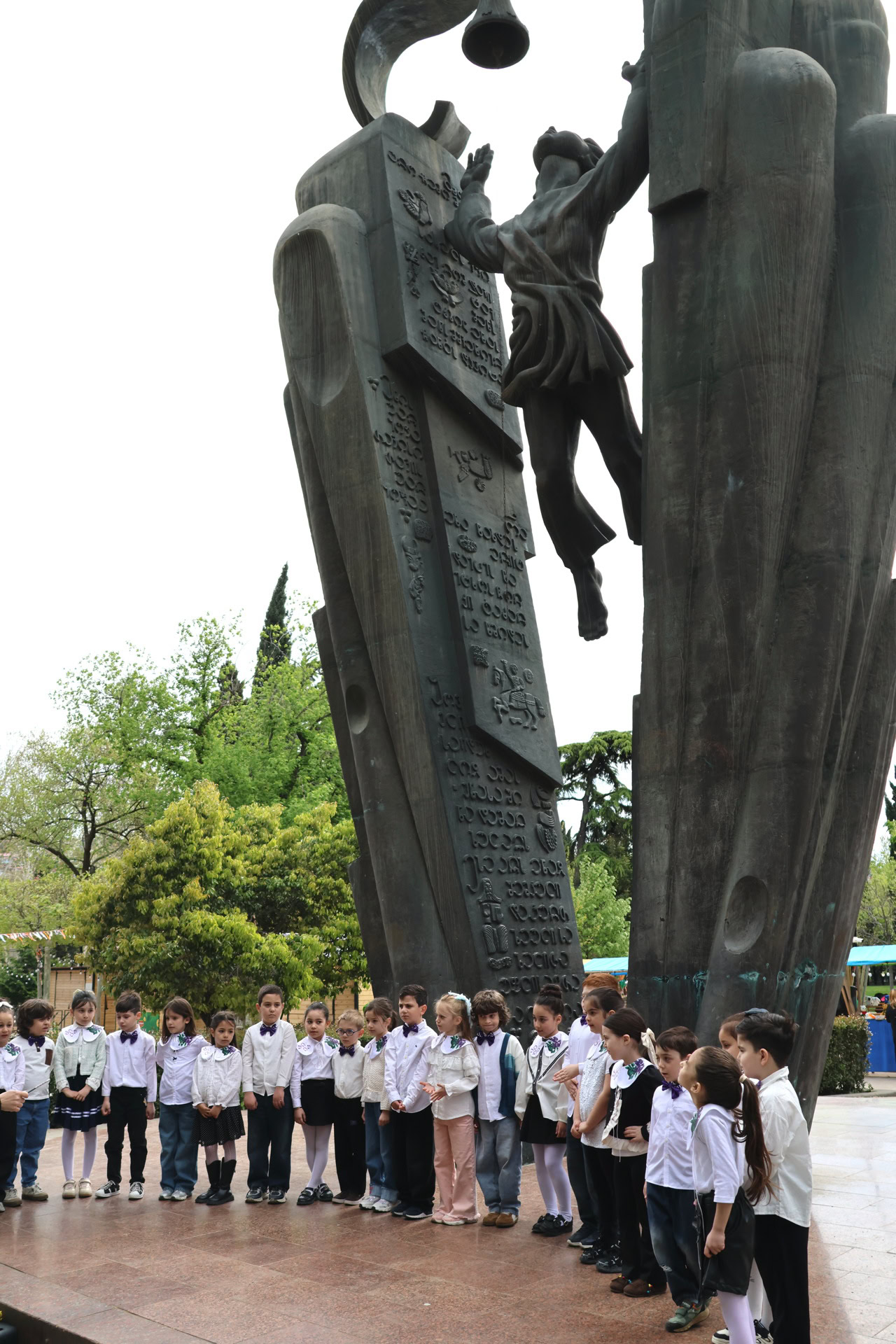
We checked out of the Hotel Twenties at 9:00am and began our travels through what was originally planned to be the theme of “Soviet Georgia”. Of course, we had already seen Stalin’s former printing works the previous afternoon, but true to the theme’s promise, our first stop was indeed Soviet. After a drive along the Mtkvari River (also known as the Kura River), we stopped for a view towards the Palace of Ceremonies and Rituals, a striking Soviet-era building constructed in 1984 and known for its unusual, almost futuristic architecture. Originally used for civil ceremonies such as weddings, it was purchased in 2002 as a personal residence for the oligarch Badri Patarkatsishvili. After his death in 2008, the building was leased to a private events company for use once again as a venue for weddings, fundraising events and corporate functions.
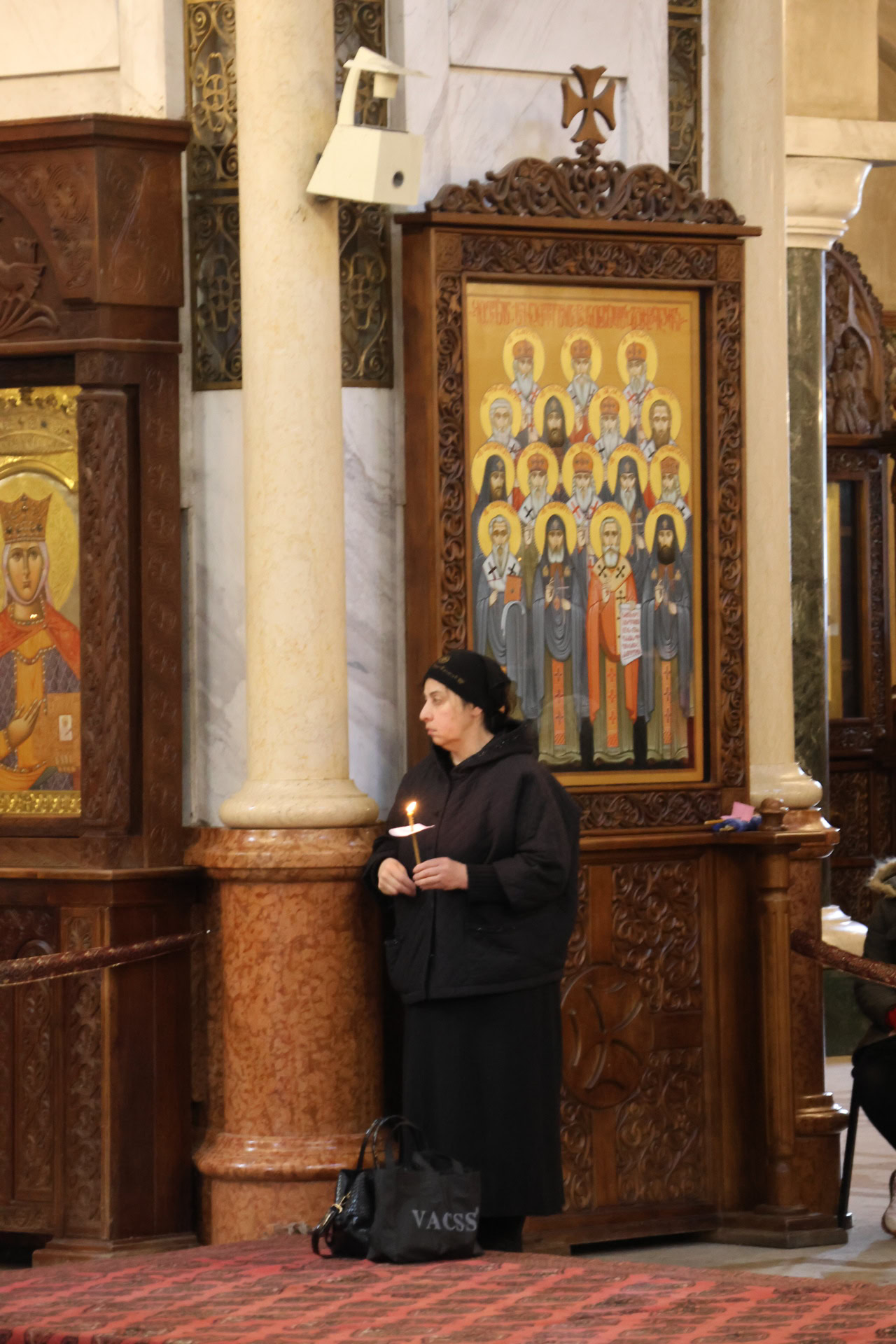
Our second visit for the day was emphatically not “Soviet Georgia” – it was the postponed visit to the Holy Trinity Cathedral. Also known as Sameba Cathedral (“Sameba” is Georgian for Trinity), this is one of the largest Orthodox churches in the world. Built between 1995 and 2004, it is clearly post-Soviet, and now represents a major spiritual symbol of modern Georgia, with impressive golden domes and panoramic views over Tbilisi. Despite its relative youth, the Cathedral had a very attractive interior, and we were treated to the start of a Georgian Orthodox Eucharistic Liturgy while we were there, giving us an opportunity to appreciate the building’s superb acoustics which were used to full advantage during the chants.
Our next trip was an attempt to find “retro Soviet” life at the Dry Bridge Market, located on a bridge and the adjacent green space known as Dedaena Park. I had visited this area eight years ago and was impressed by the array of Soviet memorabilia available for sale in the flea market. The array was still impressive, although understandably much of the stock seemed to have been sold to buyers in the subsequent eight years. Nonetheless, it was great to experience the artworks, antiques, quirky collectables and thriving activity in the market.
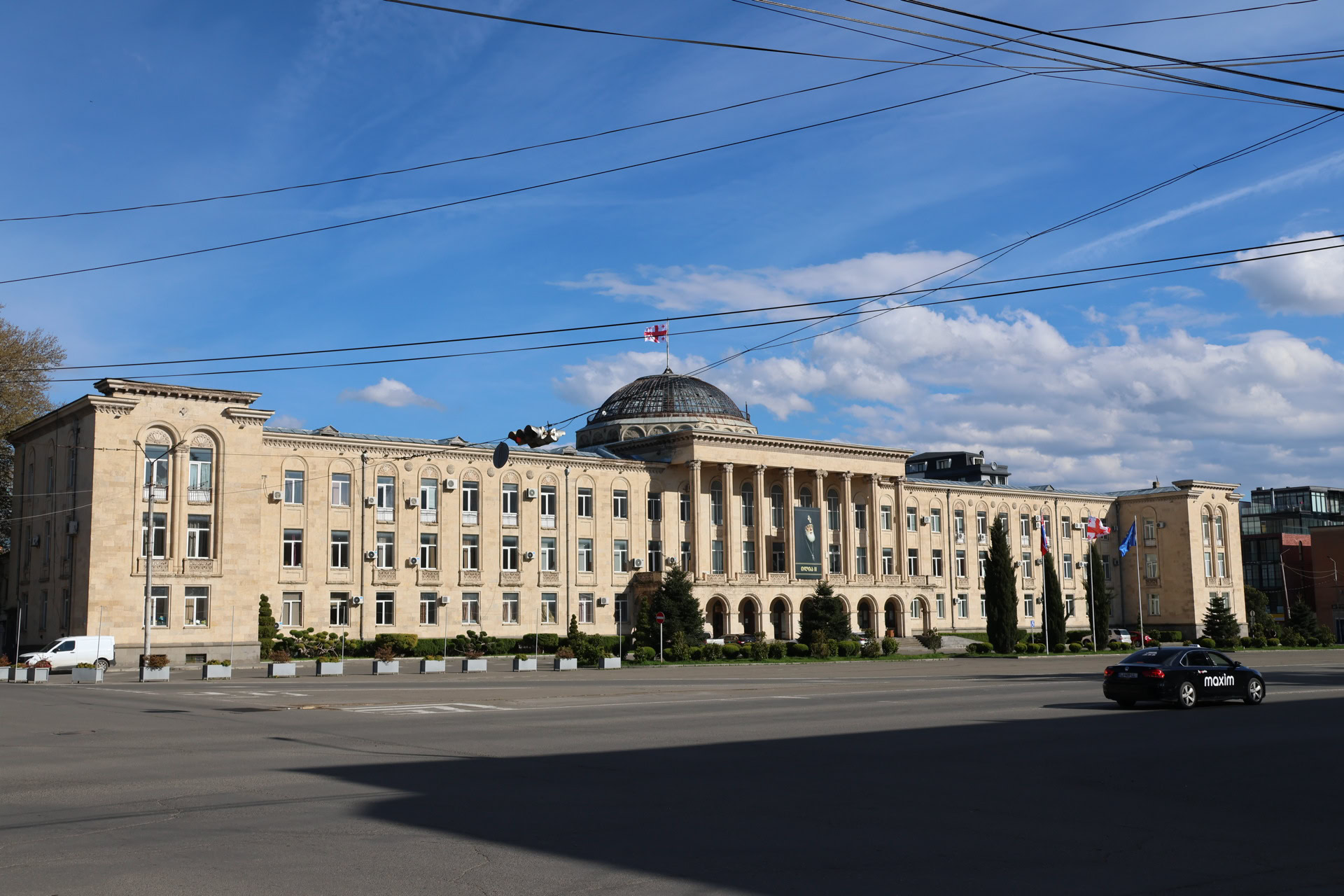
The rest of our “Soviet Georgia” experiences within Tbilisi came as the drove northwards out of the city – the Auditorium of the Industrial College (a Soviet-era educational building), the Georgian National Museum (an Archaeological Museum built in Soviet times), and the Bank of Georgia Building (originally the Ministry of Highways, an eye-catching example of Soviet modernist architecture famous for its bold, stacked concrete design that looks like interlocking blocks symbolising roads crossing landscapes).
Towards the outskirts of Tbilisi, we stopped for lunch at the Sharbati Restaurant and Beer Garden in the Dighomi district before proceeding west to Gori, Josef Stalin’s birthplace.
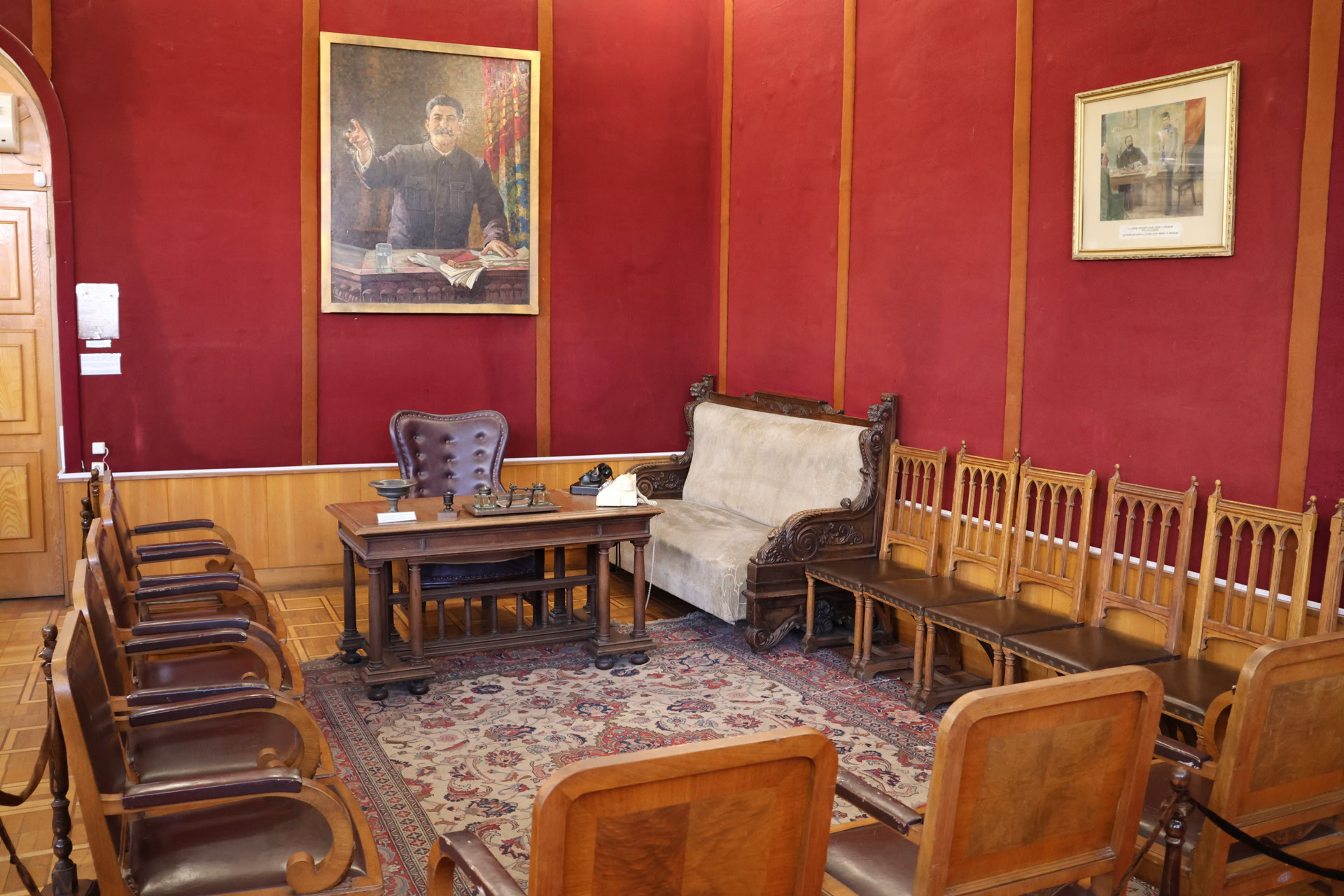
Located almost in the centre of Gori is the Stalin Museum, an early 1950s Stalinist-style building (of course!) constructed on the site of the tiny cabin where he was born (and which is still preserved in the grounds of the Museum). I had visited the Museum during my visit eight years ago, and although the building was largely identical, some of the nearby buildings had been “de-Stalinised” and the guide we had to tour the Museum was quite different to last time. In stark contrast to eight years ago, today’s guide was terse, succinct, almost robotic and definitely intimidating. No-one dared ask any questions, and the tour took about one-third of the time it had taken eight years earlier. Nonetheless, we saw his childhood house, personal belongings, his armoured train carriage, and even one of his nine death masks – an experience not to be missed.
Given that the tour was so quick, we found ourselves with several hours to spare, as dinner had been booked at a restaurant in Gori before proceeding to our hotel for the night in Borjomi, 83 kilometres away. Inexplicably in my view, a visit to the extraordinary bronze-age settlement of Uplistsikhe on the edge of Gori had not been included in the itinerary, so we filled in the next few hours walking around the streets of Gori (which were really interesting) and climbing to the top of Gori Fortress for the views – without doubt the windiest place we experienced during the entire Caucasus trip.
We enjoyed a fairly early (5;30pm) dinner in Gori at Sinnda Gori Restaurant. Gori is famous for its hearty Georgian dishes such as khinkali (dumplings, which were yet again not served to us) and khachapuri (cheese bread, which we did receive). Having finished dinner, we departed for the one hour and 20-minute drive to Borjomi, finally arriving at our accommodation (the Hotel Emerald) at 8:40pm.