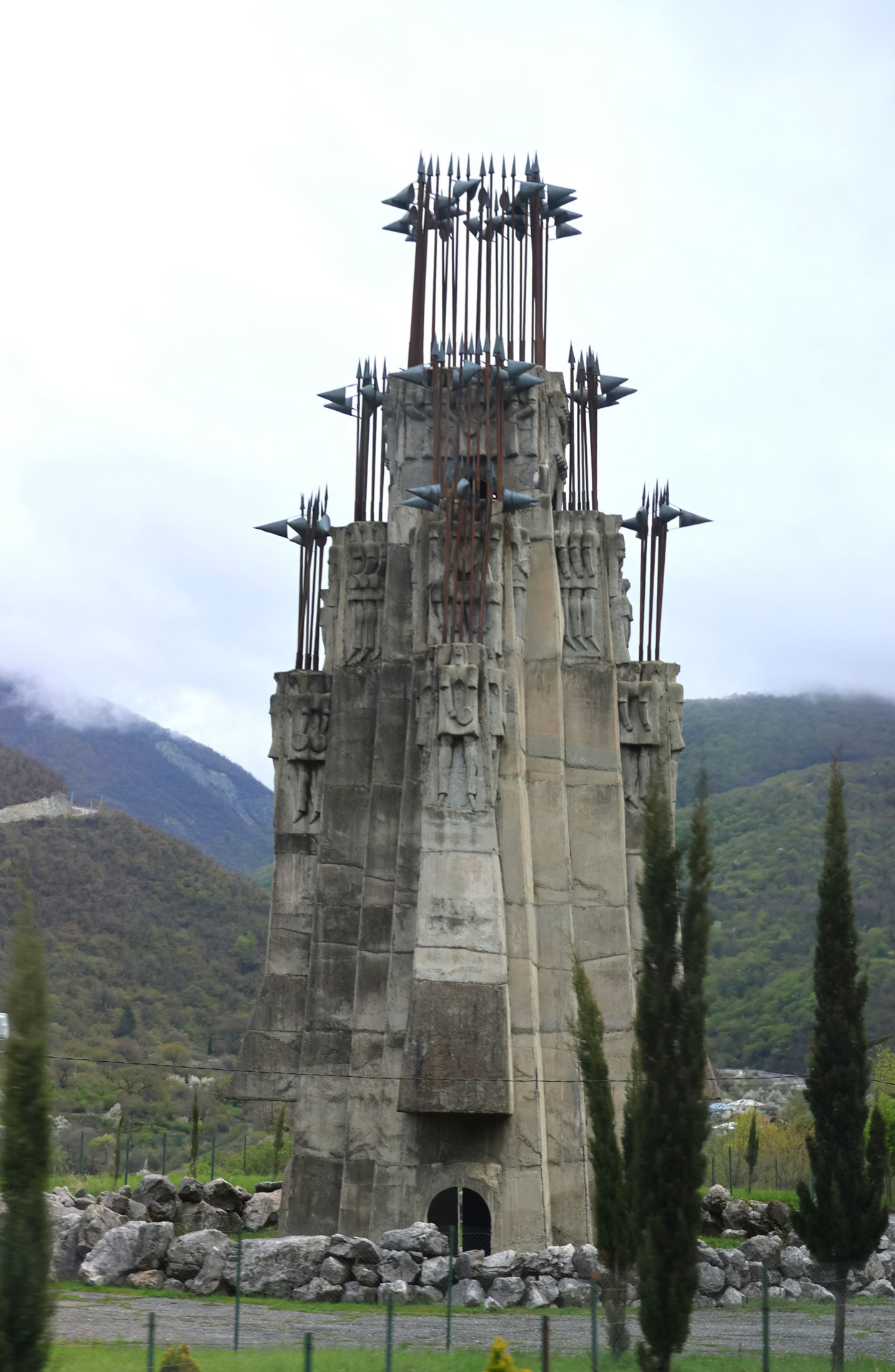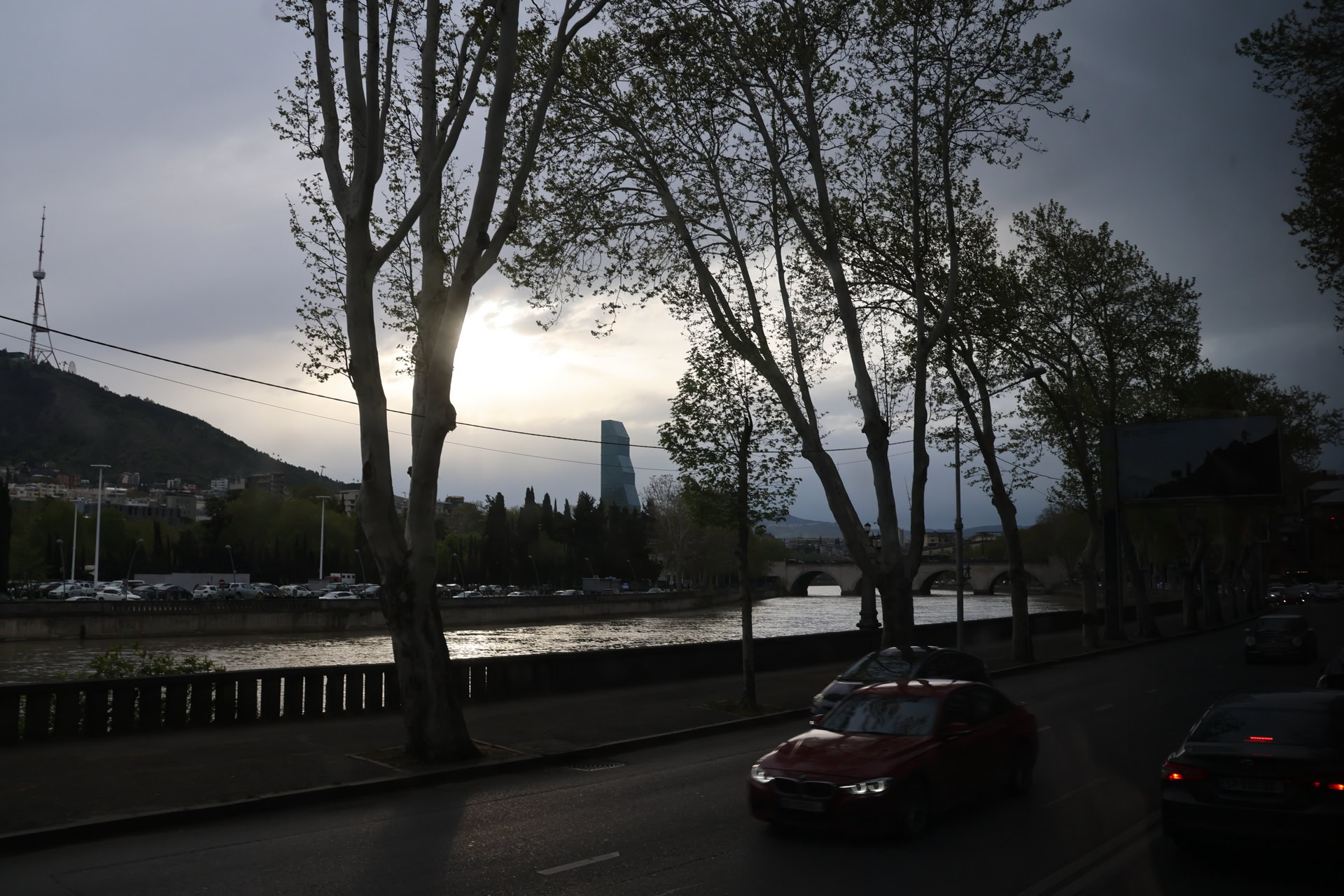
Our original plan for the day was to travel along the Georgian Military Highway north of Tbilisi towards the Russian border to admire the mountain scenery, with a special highlight being the iconic Georgian-Russian Friendship Monument. I had visited this monument in torrential rain in 2018, getting thoroughly saturated as I did so for the sake of getting the photos, so I was really looking forward to getting some better, well-illuminated photos today. Sadly, it was not to be.
We were advised that that unfortunately the cold, wet weather was persisting, and that avalanche warnings had been issued for sections of the Highway. As an alternative we conducted an abbreviated series of visits on the southern, lower altitude portions of the Highway.
Starting the drive northwards along the Georgian Military Highway, our first stop was the seldom-visited Jvari Monastery. Built in the 6th century on a windy hilltop (of course) and overlooking the confluence of the Kura and Aragavi Rivers near the town of Mtskheta, Jvari Monastery was a UNESCO-World Heritage Site. Like other monasteries we visited in Georgia, it was a solid combination of ancient architecture, vibrant worship and what would have been great panoramic views on a sunny day.
Our second stop at Zhinvali Reservoir overlooked an apparently turquoise (but grey today) artificial lake created by the construction in 1986 of a hydroelectric dam on the Aragavi River. Cold and windswept, it did provide a few (very few) peeks of snow-capped mountains through the low clouds swirling through the valley.
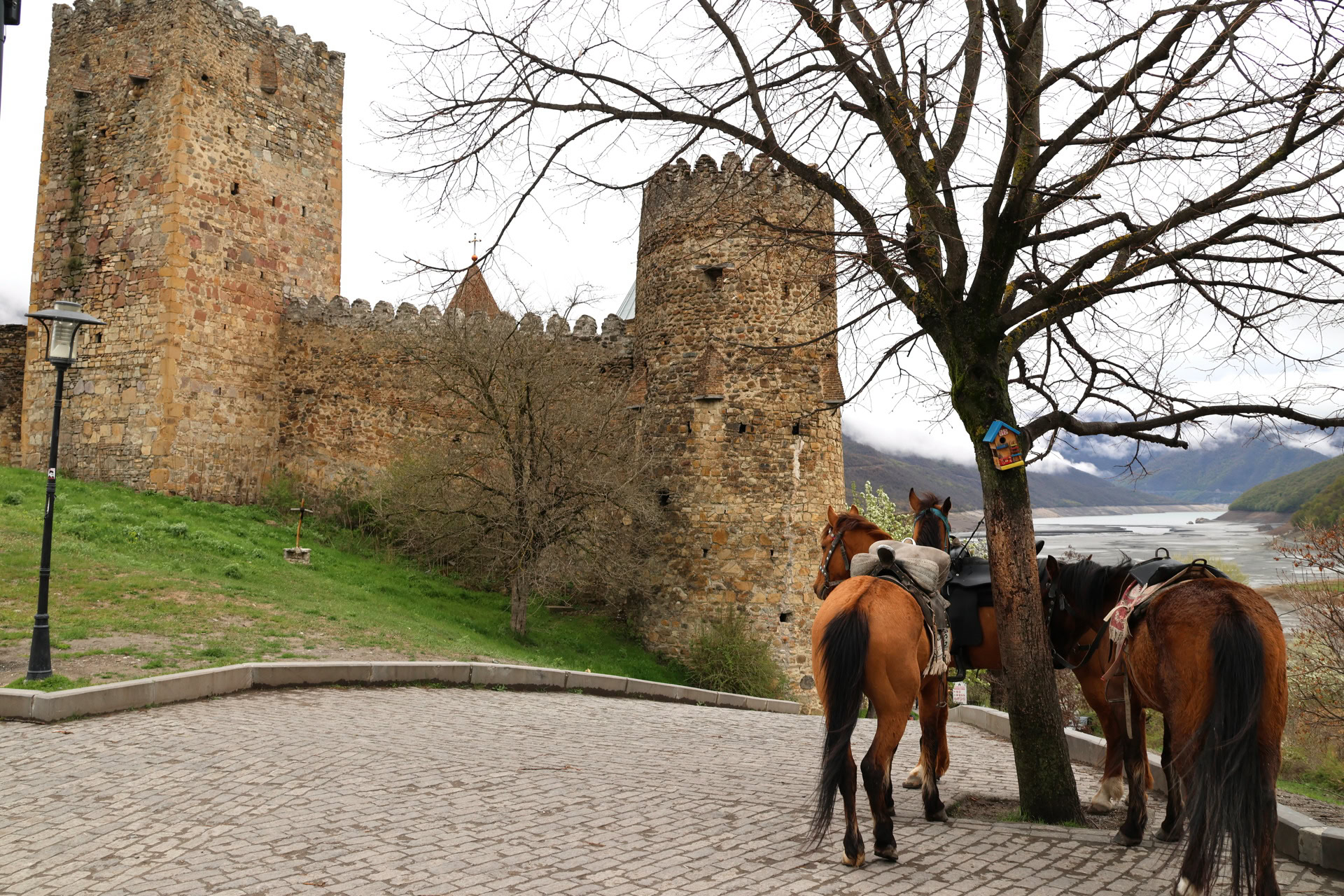
Our third stop was a true highlight of the drive, not least because we had a few moments of brighter conditions during the visit. This stop was the magnificent Ananuri Fortress, situated right beside the Highway and overlooking another section of (the still grey) Zhinvali Reservoir Lake. Built in the 16th and 17th centuries, the Ananuri Fortress was once home to the powerful Aragvi feudal dynasty. The fortress complex is an impressive mix of medieval military architecture and more traditional religious design with two castles, joined by a curtain wall, together with two churches and several other small buildings. The churches are beautiful, both with their exterior carvings and their interior frescoes.
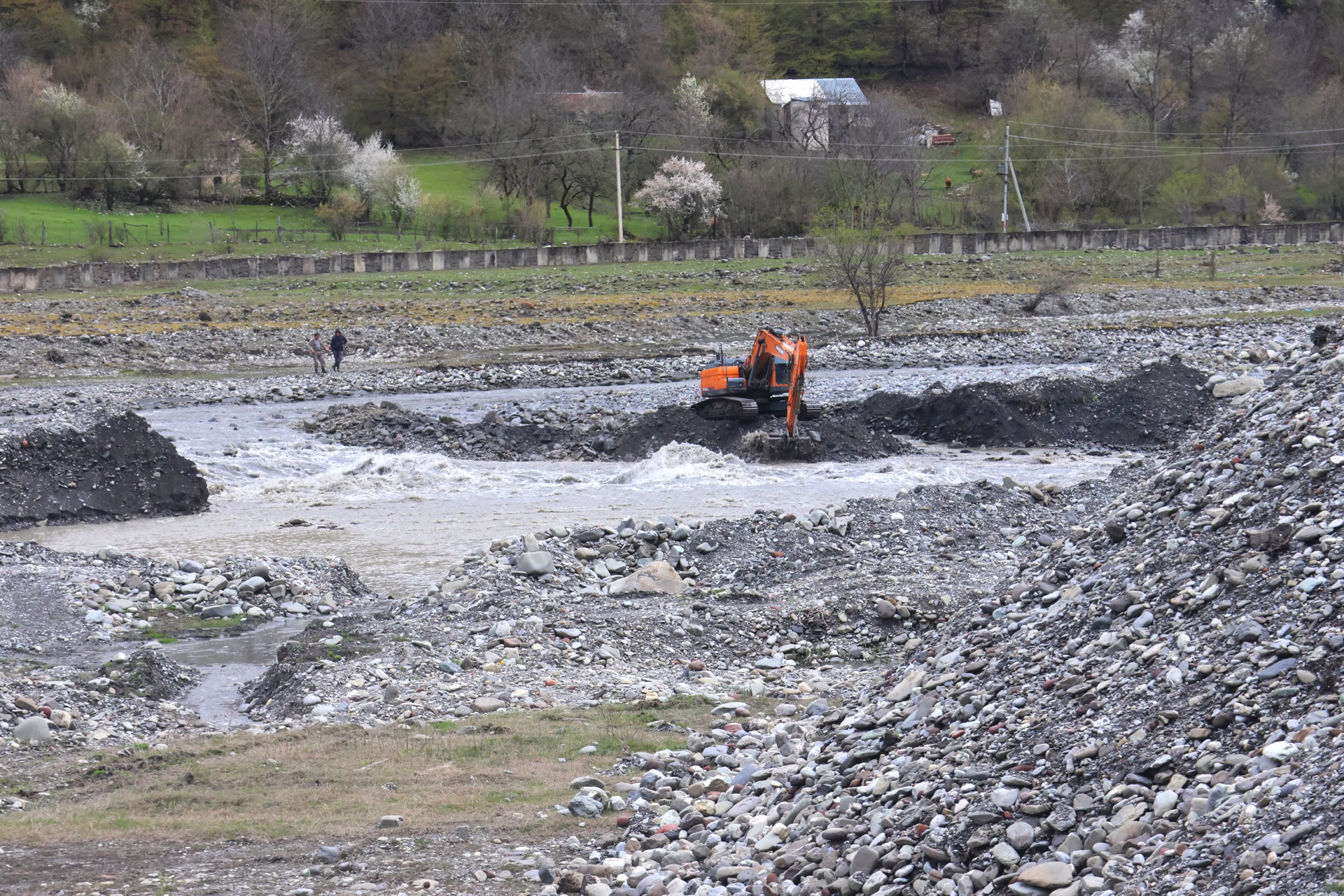
After exploring Ananuri Fortress, we continued to our northernmost point for the day, our stop for lunch at the Restaurant Mere, just south of Pasanauri. •This small village is known as the birthplace of khinkali (Georgian dumplings) , which makes it difficult to understand why they were not included on our menu. Nonetheless, this represented a pleasant stop beside the Aragavi River, opposite the Mere Fortress and just upstream from some impressive gravel mining for a traditional lunch.
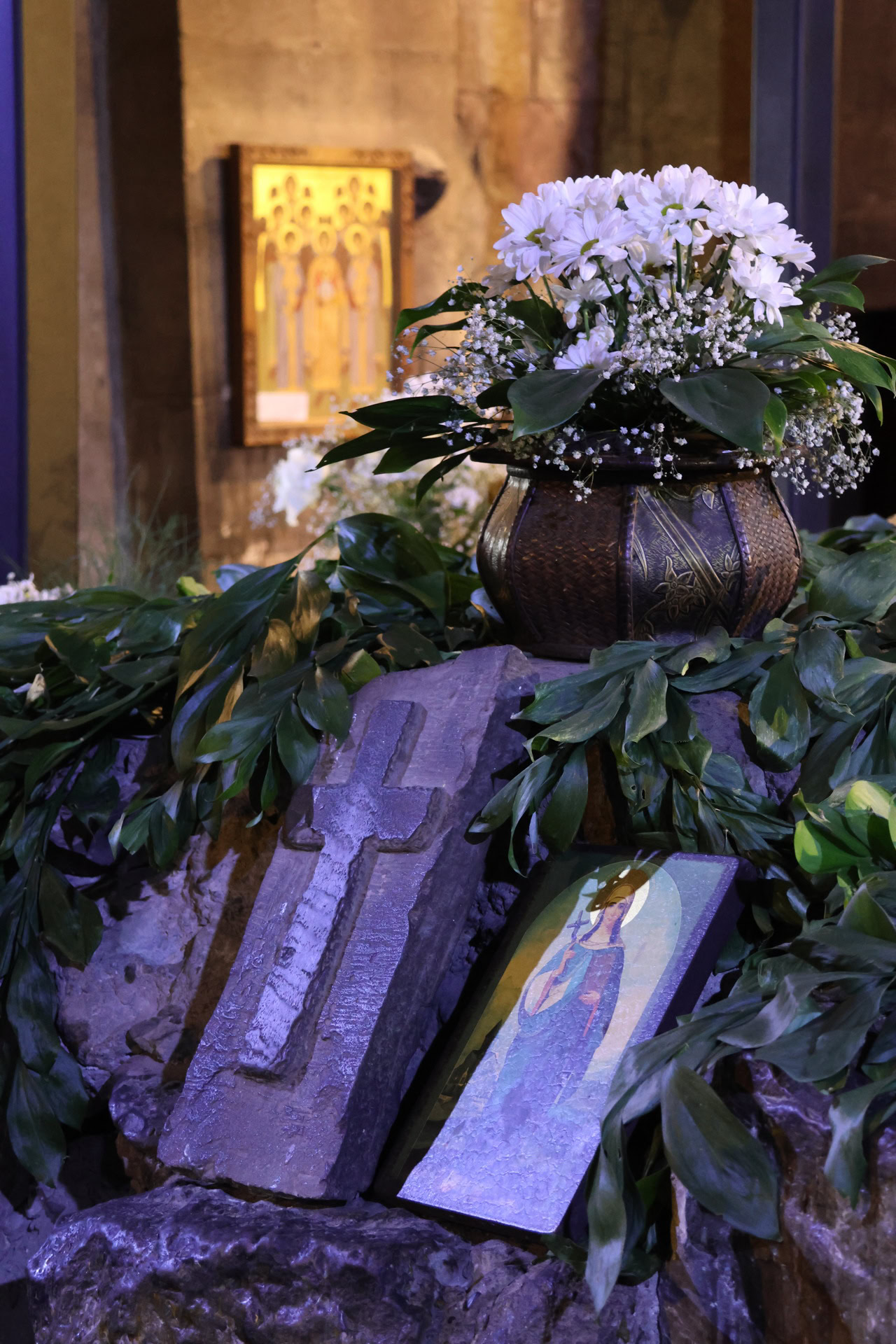
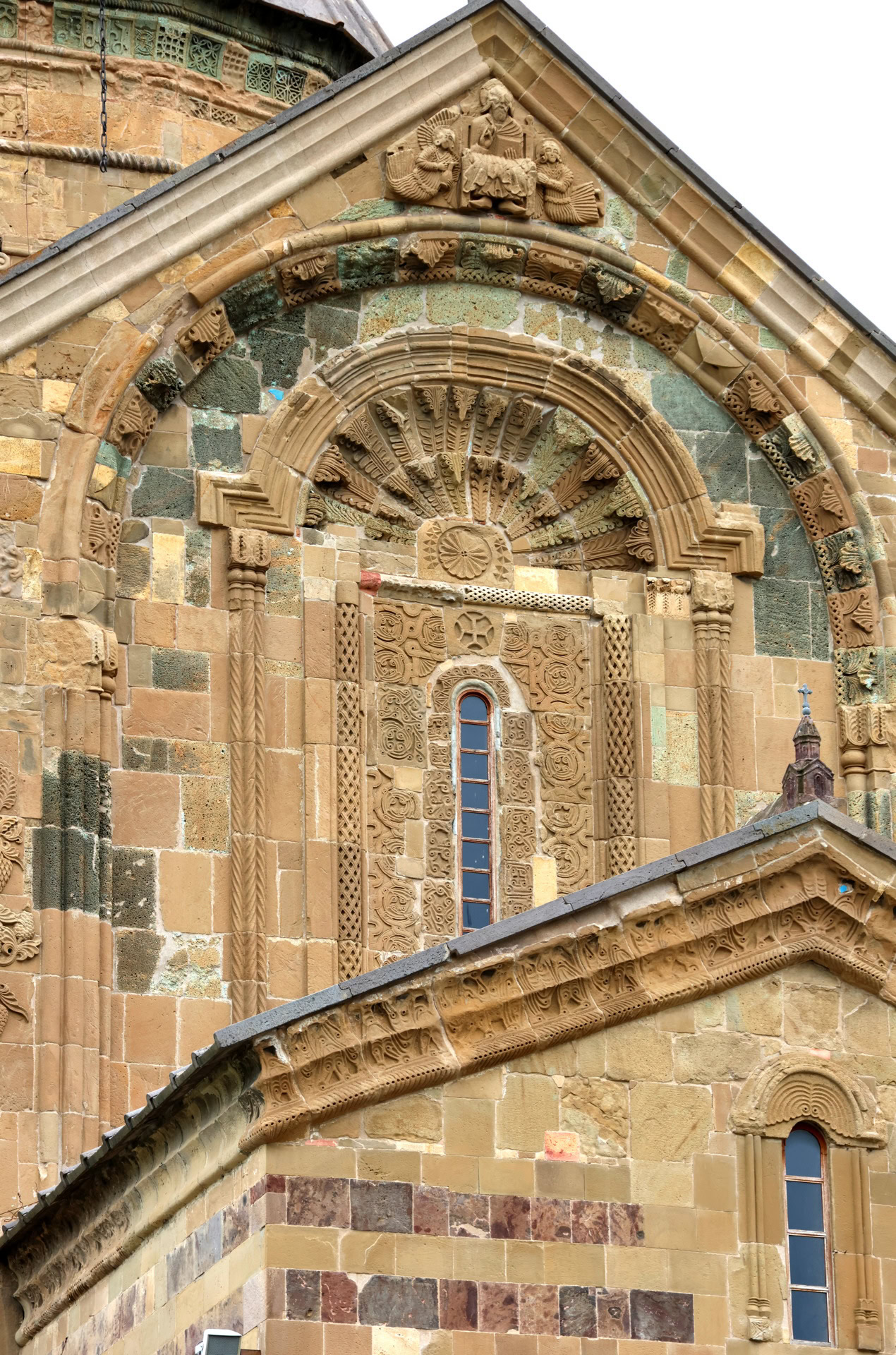
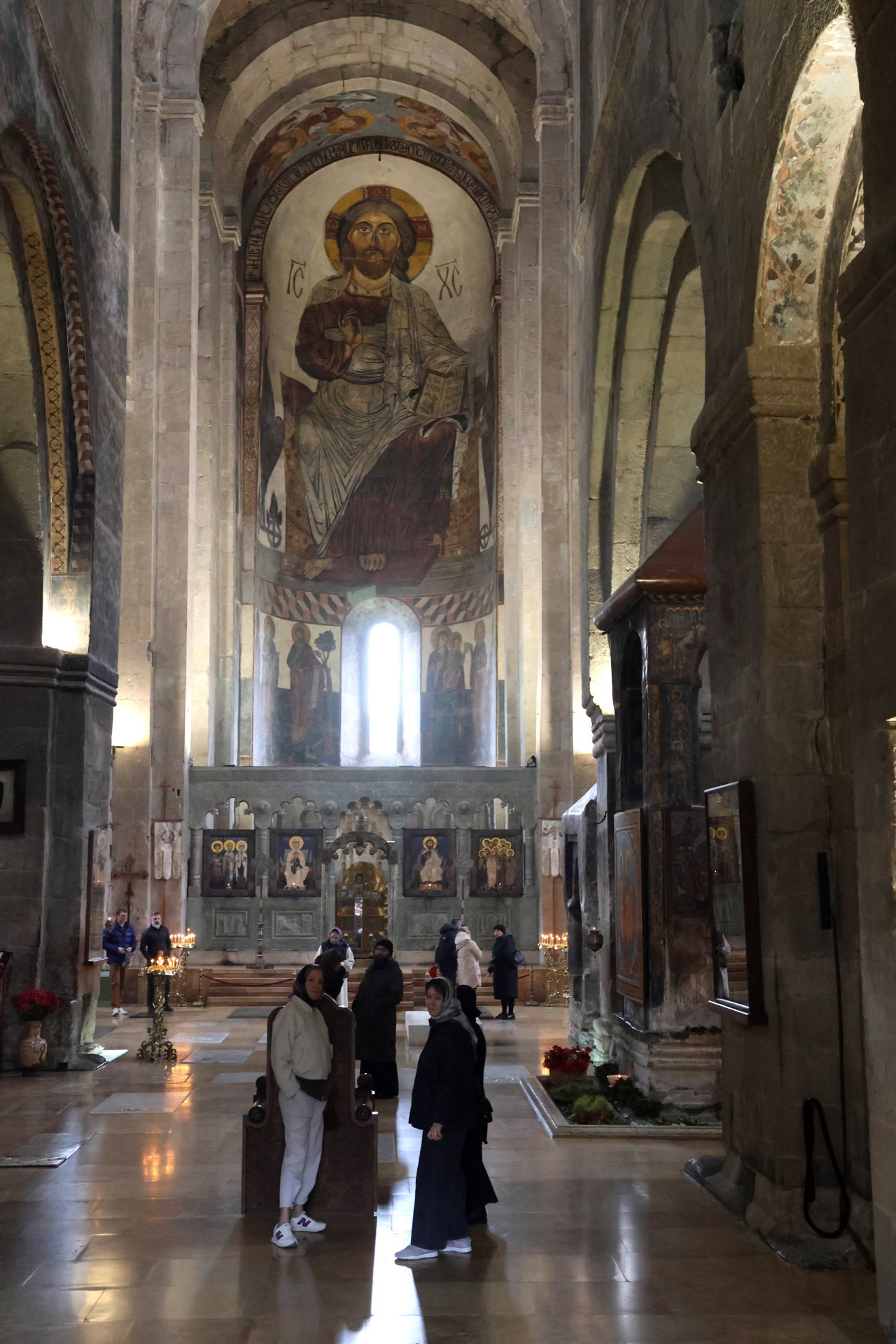
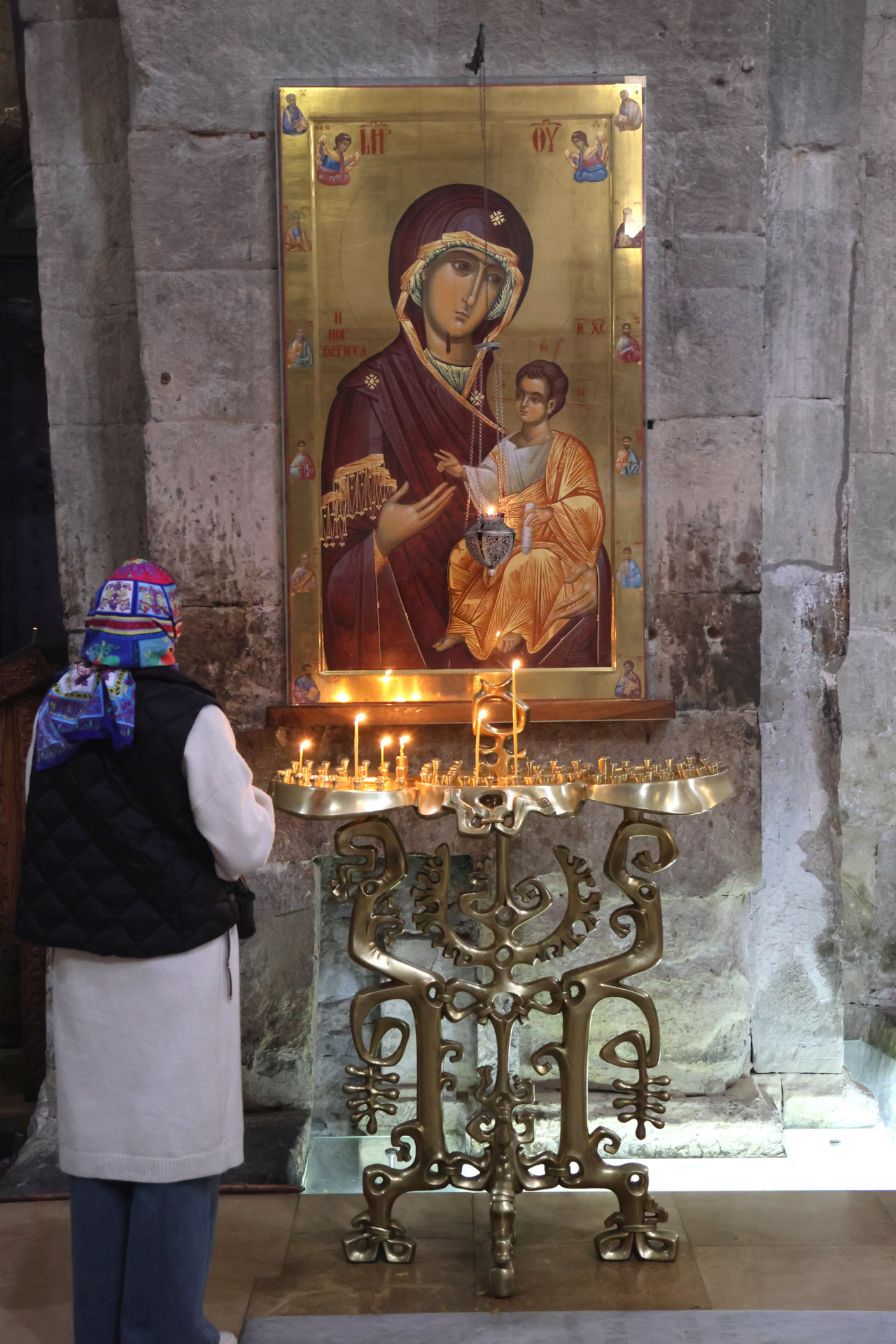
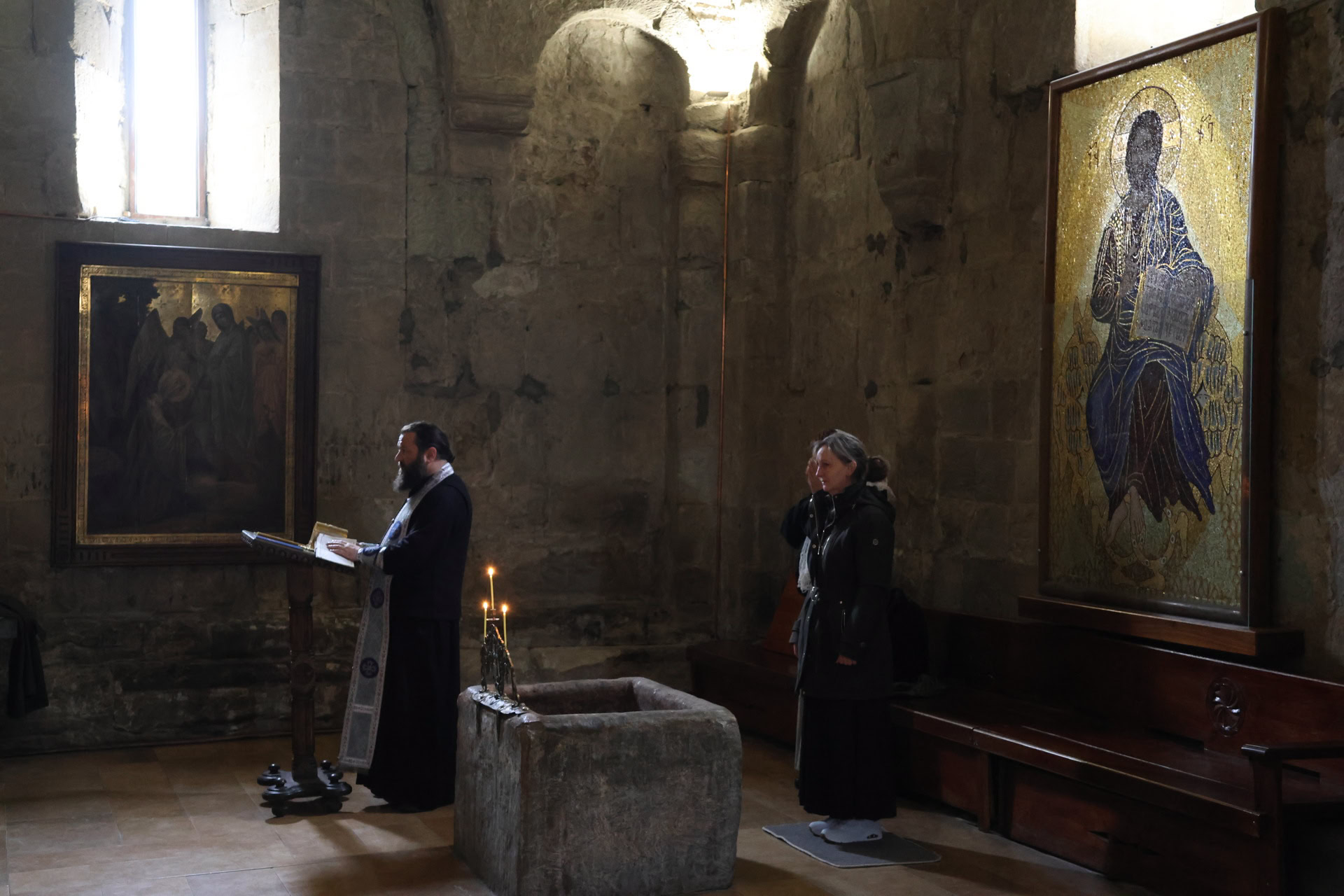
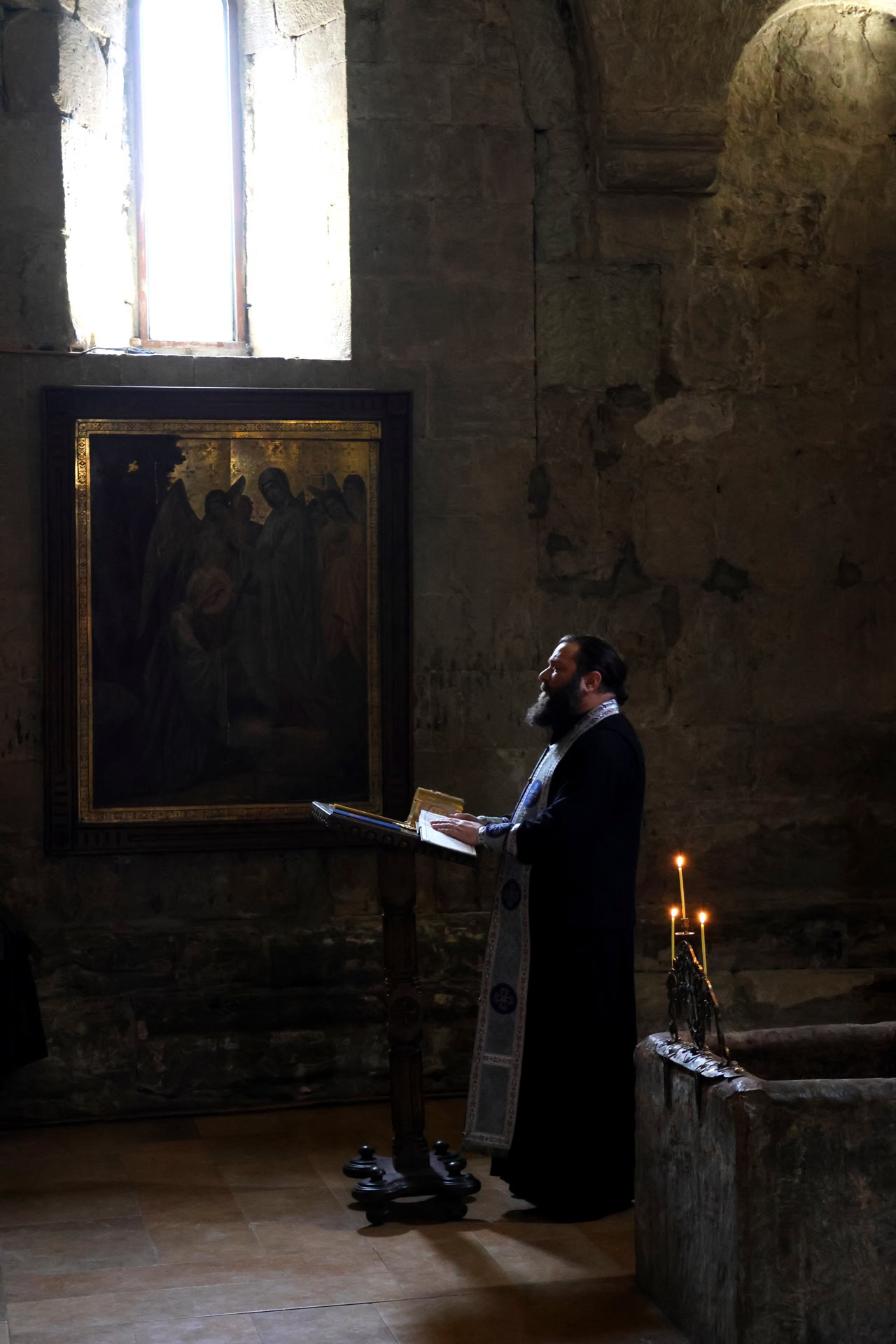
Returning southwards towards Tbilisi, we stopped 20 kilometres north of the capital for a visit to Svetitskhoveli Cathedral in the town of Mtskheta. Another UNESCO-listed site of huge significance to the Georgian Orthodox Church, Svetitskhoveli Cathedral is the second largest church building in Georgia (after the Holy Trinity Cathedral in Tbilisi). Originally established in the 4th century, the current building dates from 1010 and was the burial site for Georgian kings over many centuries. Although aesthetically a little dark inside (some exterior sunlight might have helped!), the cathedral was an artistic treasure house humming with vibrant religious life.
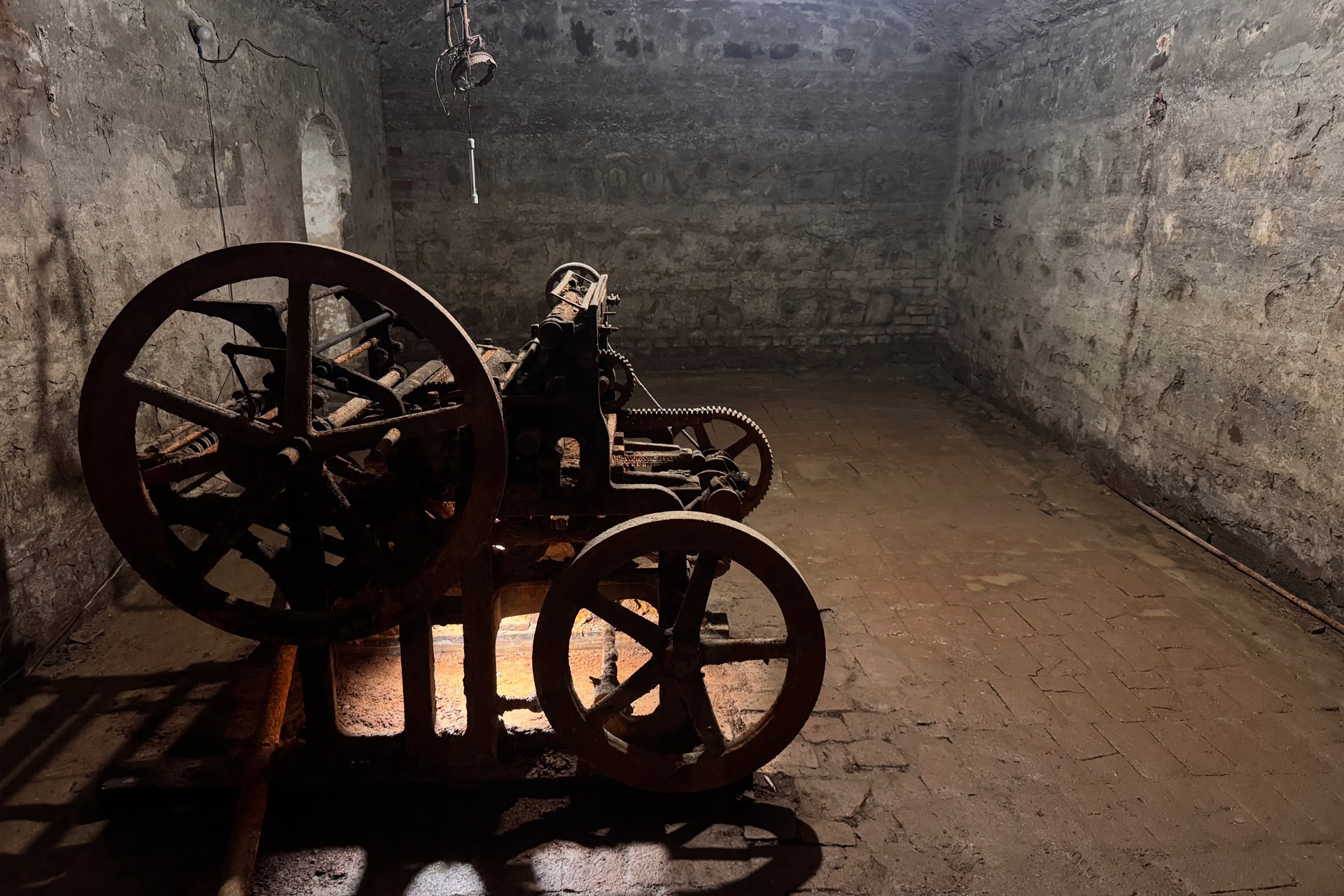
We were going to finish the day visiting the Holy Trinity Cathedral in Tbilisi, but one of the visits we had scheduled for the next day (tomorrow’s theme being “Soviet Georgia”) had to be moved to today. Therefore, we postponed Trinity Church to make room for the Underground Printing House Museum in Tbilisi, the site of Stalin’s underground printing press. The museum on the site was established in 1937 and has been operating without a break ever since.
Located at No.7 Kaspi Street in Tbilisi's historic Avlabari District, the museum houses the underground printing press used by Joseph Stalin to produce revolutionary literature in the early 1900s. Access was concealed by entry down a deep well, and only after descending into could a hidden doorway be discovered. To preserve its secrecy, the masons and artisans who built it were only allowed to work on small sections, never seeing the full layout.
The atmosphere is both eerie and inspiring, offering a rare glimpse into the covert operations of the past.
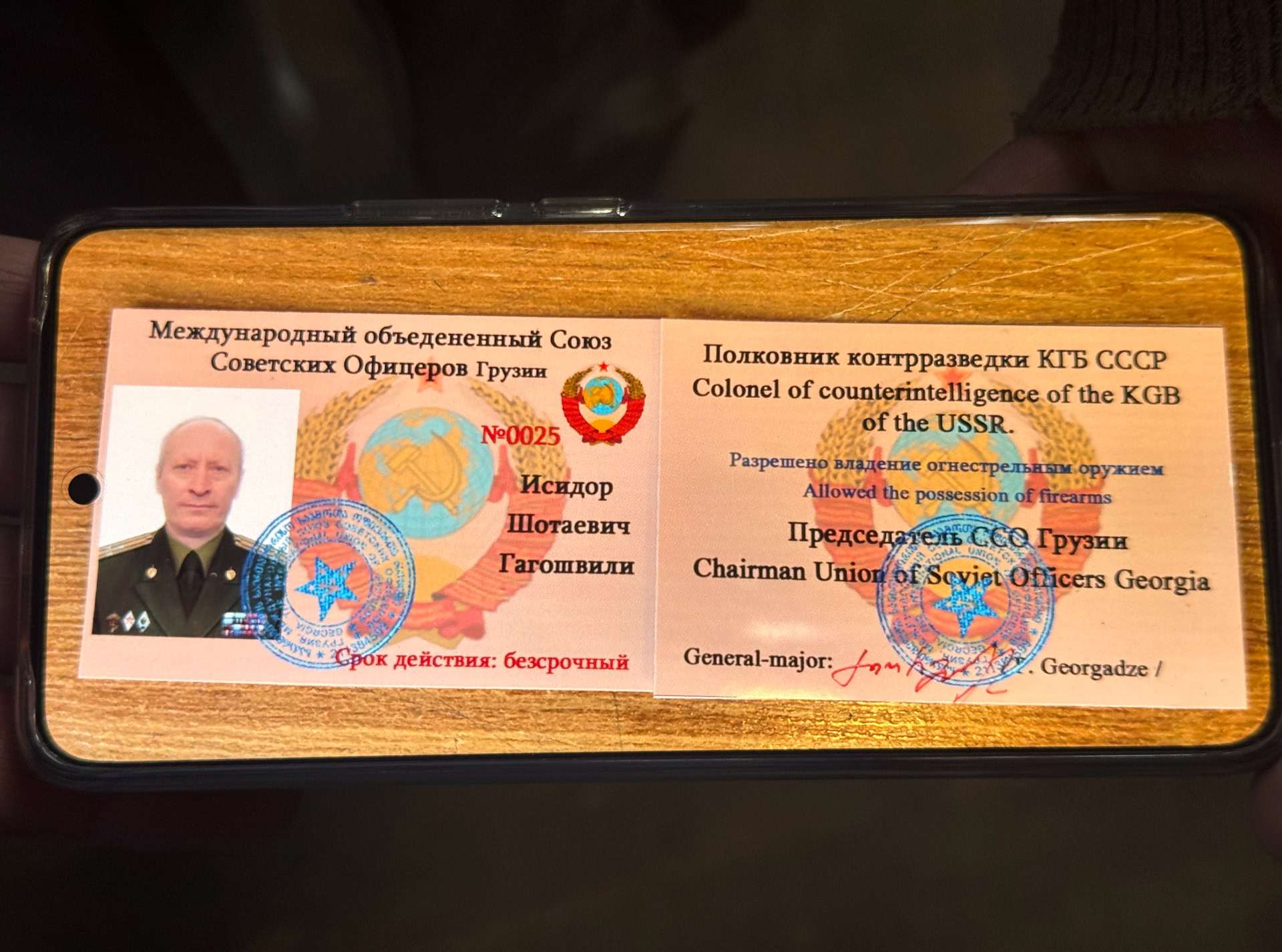
The curator of the museum was a former Soviet KGB Colonel who called himself “Mr SoSo”. (He had told us he hadn’t felt like coming to work the following day, which is why we had to reschedule our visit). He was an energetic, passionate, unreformed Communist who was not backward in expressing his views on the evils of capitalism and how democracy was only possible under Communism. His personal anecdotes and stories were fascinating and really made the visit enjoyable.
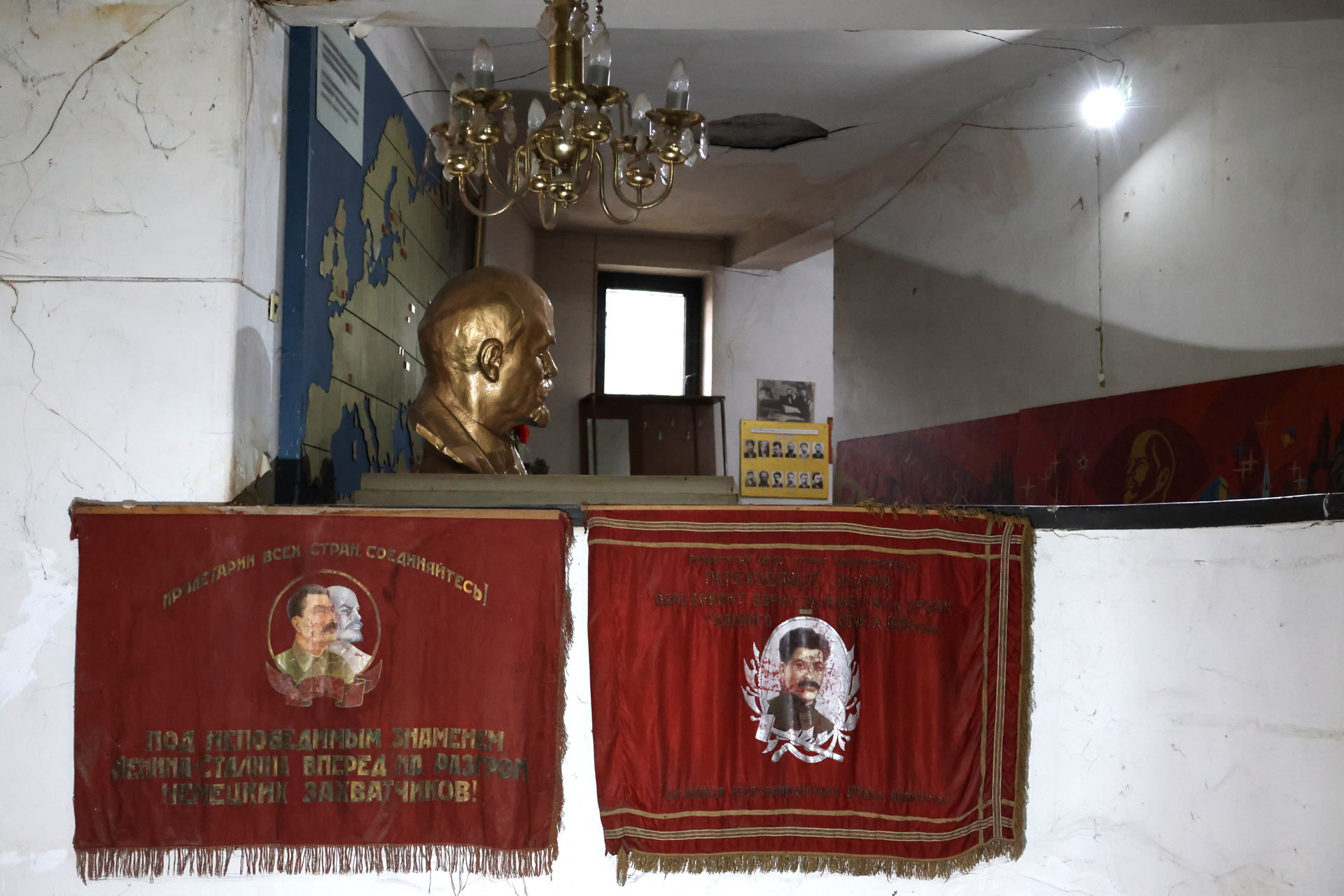
After visiting the printing press, we returned to the surface and proceeded to another building that housed an incredible collection of photos, portraits, newspapers, documents including letters by Lenin, newspapers, etc, as well as Soviet era memorabilia. I thought it was incredible that something resembling a Soviet-era museum would still exist in post-Soviet Georgia, although the advanced age of the curator and the crumbling condition of the building suggested the museum’s days may be numbered.