We woke to a heavily overcast day with a temperature of just 2 degrees, the coldest we had experienced during our mid-spring trip through the Caucasus.
Fortunately, the heating was working for the overseas work-related Zoom call I had scheduled for 7:00am. Breakfast began at 8:30, and we departed to begin our drive south to Yerevan, capital city of Armenia, at 9:30am.
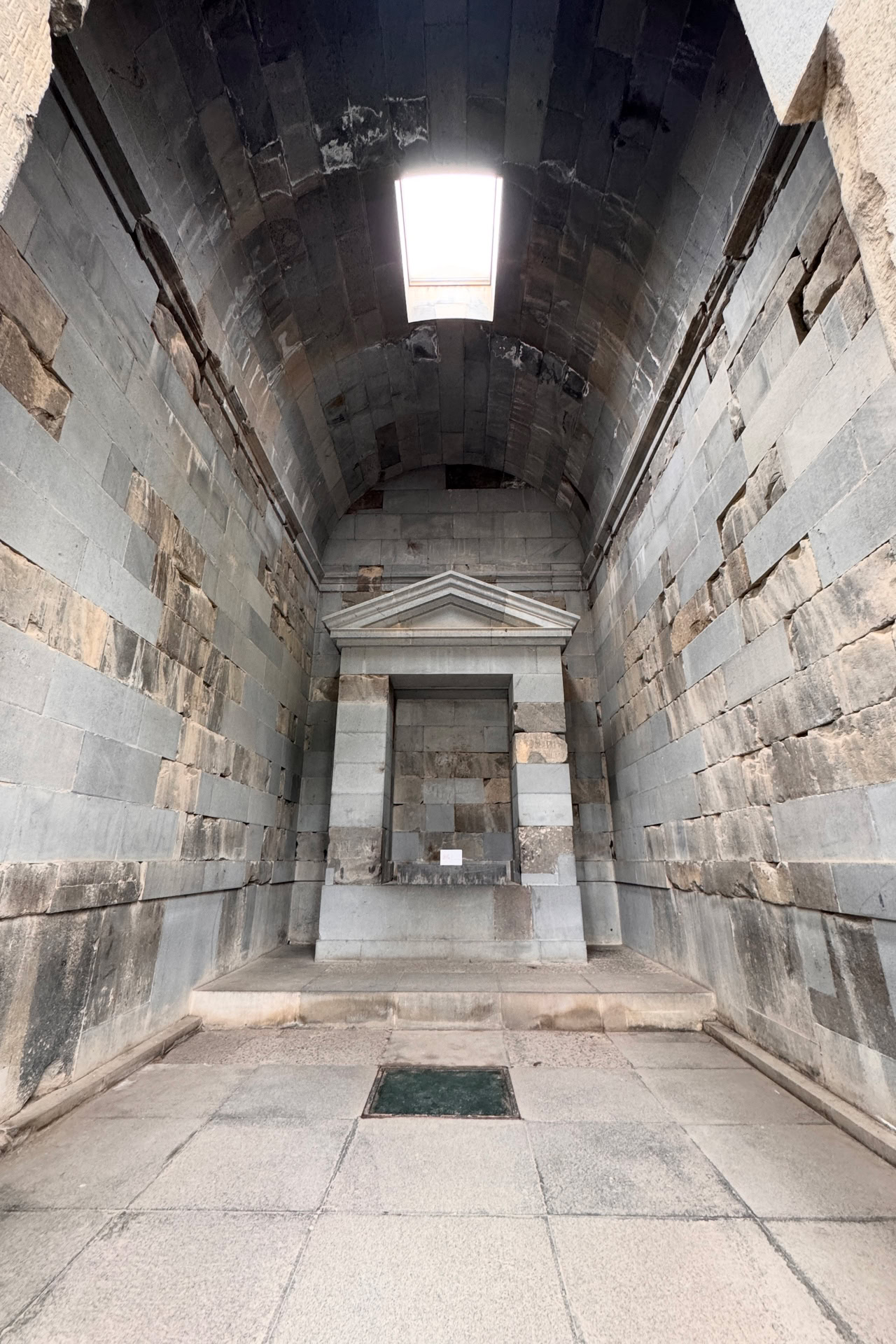
The first destination on the drive was on the outskirts of Yerevan at Garni. Our initial stop in the Garni area was at the Garni temple, a 1st century Greco-Roman-Armenian temple which is the only surviving pagan temple in Armenia. Built in a classic colonnaded style following a mix of Green and Roman architectural features, the temple overlooks a spectacularly deep gorge on three sides. It was destroyed by a large earthquake in 1679 and subsequently re-built between 1969 and 1975 by the Soviet administration of the day.
After thoroughly exploring the Garni Temple, we proceeded through the town to an entrance to the gorge below where a pedestrian pathway took us town to see what is known as the Symphony of Stones. This amazing rock formation is columnar basalt, with many of the basalt columns being as long (or as high) as 50 metres, formed when molten lava cooled about 127,000 years ago.
We proceeded back into the town for lunch in a home known as Sergey’s Place (Sergei Mot) in Garni, before continuing to the nearby Geghard Monastery. This UNESCO-listed complex is partly carved into the rock of the canyon-side cliffs, and is renowned for its medieval architecture and spiritual atmosphere. The complex was originally founded in the 4th century at the site of a natural spring (that is still visible) by Gregory the Illuminator, the missionary who founded and became the first official head of the Armenian Apostolic Church in 301. It was an amazing structure, half excavated into the cliff as a network of carved caves and half extended outwards from the cliff in a stone construction. Moreover, it was full of lively activity with local worshippers lighting candles and a fairly large wedding underway, supplemented by the colourful market stalls lining the steep pathway up to the monastery entrance. If only the skies had not been so grey and overcast, it would have been photographic perfection, although I did manage to get some sunlit images during the few minutes of sunshine that surprisingly arrived at one stage.
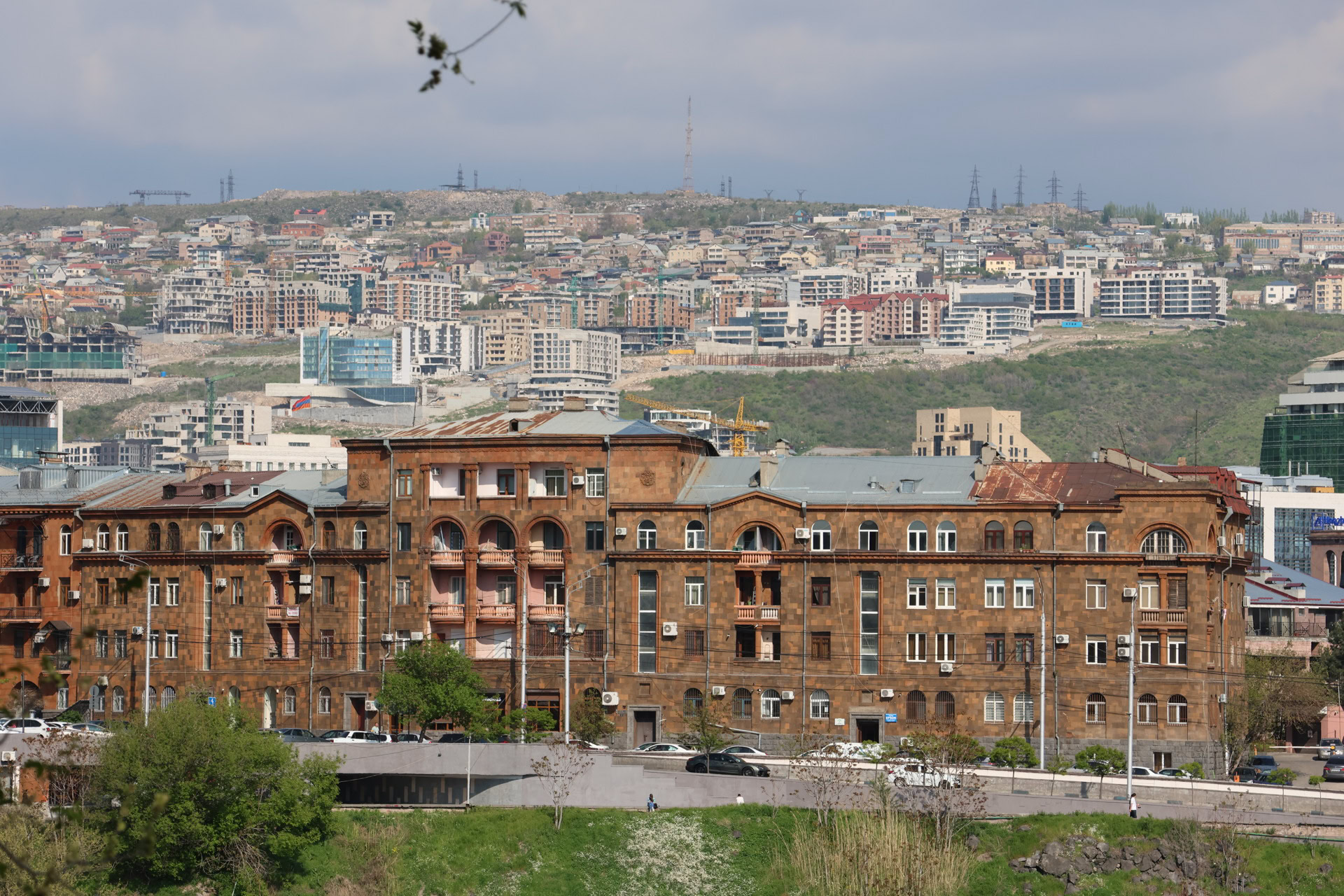
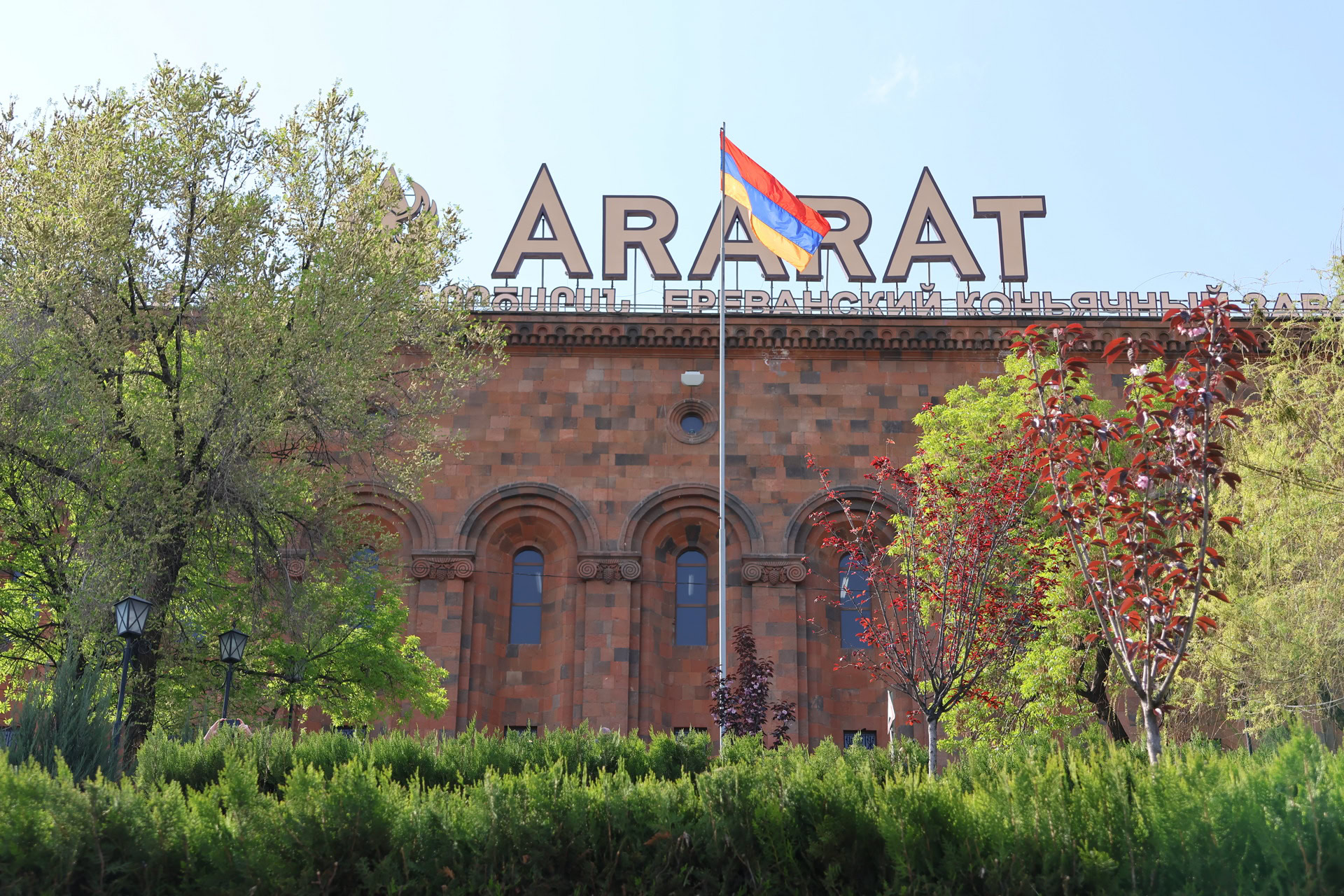
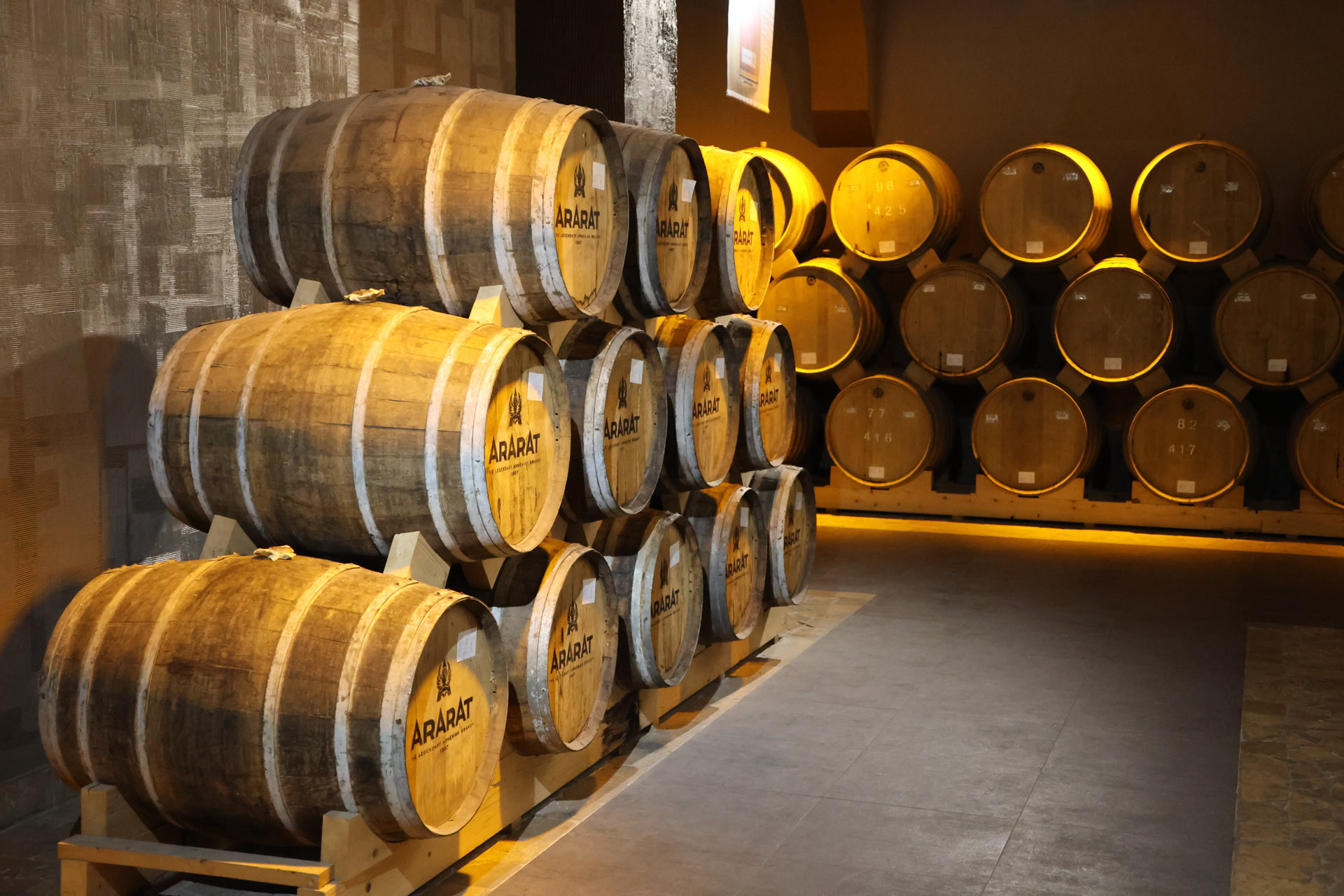
Our last visit for the day was in Yerevan city itself, the Ararat Brandy factory. It is located on a hill (just like one would expect for a monastery!) with a clear view across the Hrazdan River and the suburbs of Yerevan to Mount Ararat itself (which these days is across the border in Turkey). The factory was established in 1877 when Armenia was part of the Tsarist Russian Empire and has continued its operations ever since despite several changes of ownership. The tour of the museum attached to the factory was mildly interesting, and those who drink brandy seemed to enjoy the free tasting, but for me the highlight was the opportunity to get beautifully clear views of Yerevan in the clear, golden afternoon sunlight that emerged as we arrived at the factory. (Yes, I confess to being a geographer who loves photography, not a brandy drinker).
It was about sunset as we drove from the brandy factory to the venue for our dinner, the Yerankyuni Restaurant in Moskovyan Street, central Yerevan. Every aspect of the dinner was abysmally slow, and although the food was okay, the experience dragged on to such an extent that we left before everything had been served so we could check in to our hotel. We finally arrived for check in at 9:25pm at our last hotel for the trip, the Hotel Ani Central Inn.