The early arrangements looked grim after our late-night arrival the previous day: 6:00am alarm, 7:00am breakfast, and 8:00am departure from the hotel. The reason for the early start was to allow plenty of time for the often slow, sometimes tedious border crossing from Georgia into Armenia.
Leaving promptly at 8:00am, we drove south through green farmland and small villages to the to Bagratashen – Sadakhlo Border Crossing with Armenia. We arrived at the Georgian side of the border at 9:45am. Having cleared Georgian immigration procedures, we reached Armenian side at 10:20am. Although the four officers on the Armenian side were painstakingly slow, we all emerged by about 11:00am, farewelled our Georgian guide (Tammy) and met our excellent Armenian guide, Ani.
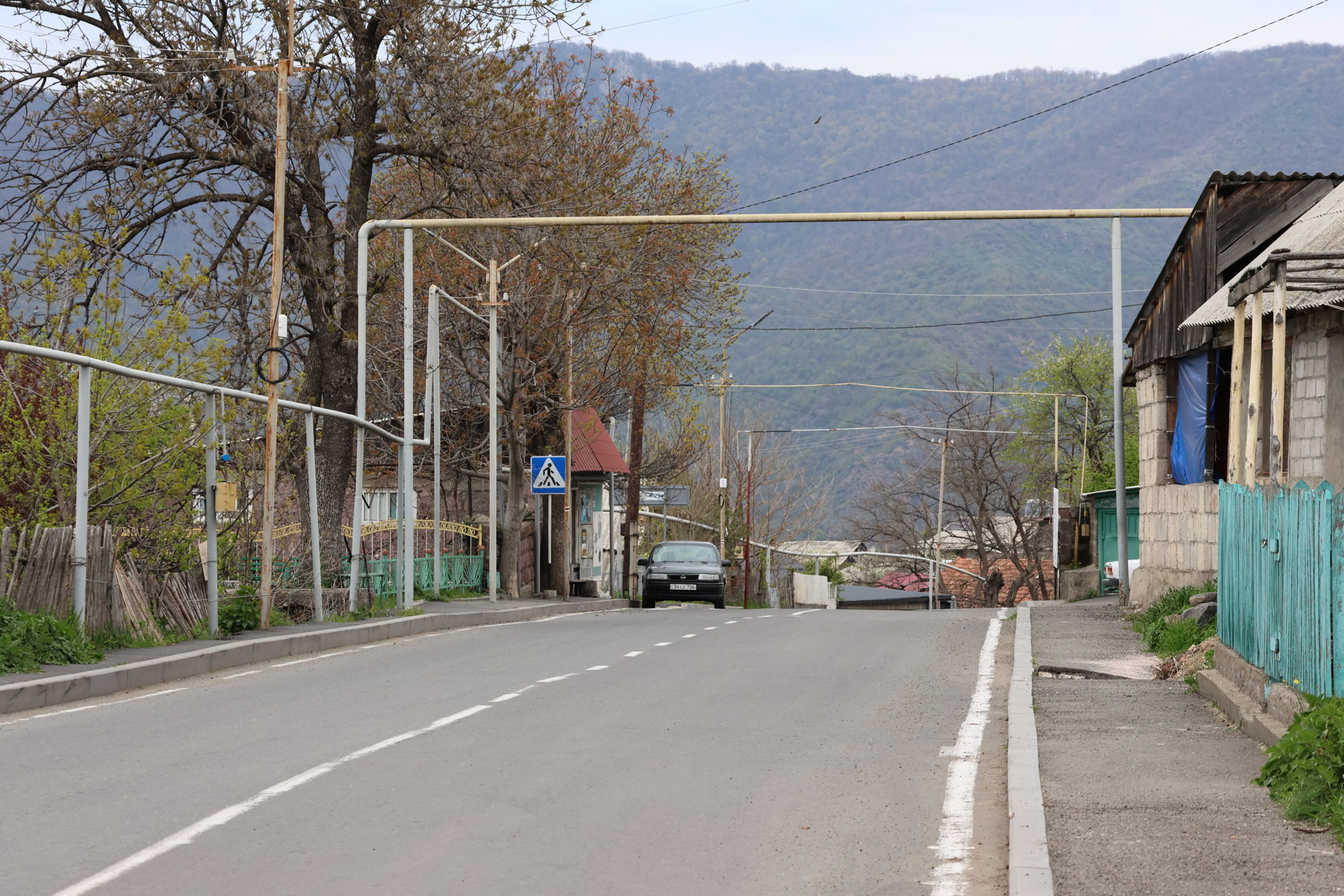
The border was situated in the beautiful, green, mountainous scenery of the Lesser Caucasus Mountains. This stunning scenery became even more beautiful as the highway continued southwards following the Debed River, a turbulent mountain stream through deep green forest land.
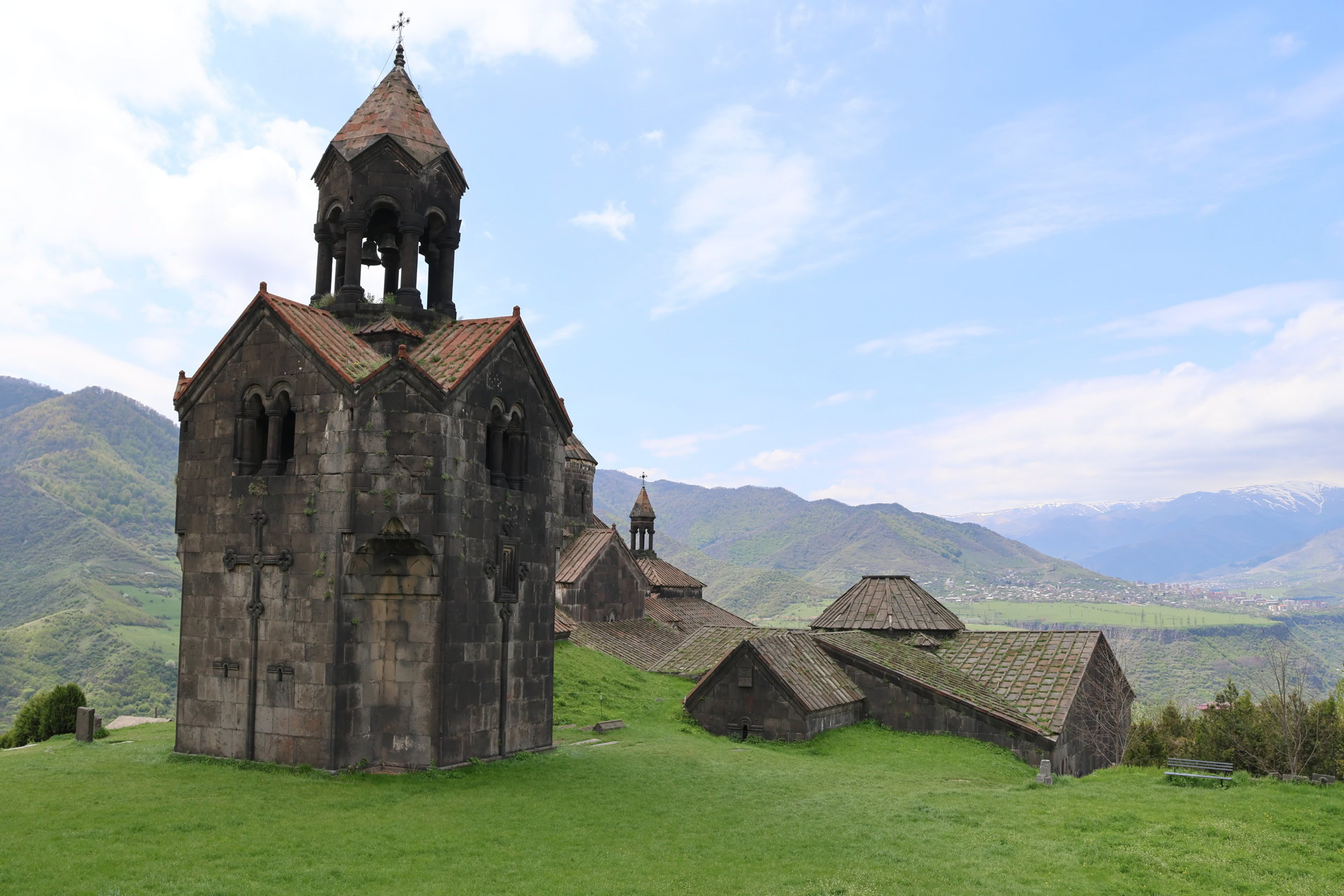
Our first stop was the UNESCO-listed Haghpat Monastery Complex, also known as the Haghpatavank Monastery. It was appropriate that our first stop in Armenia was a Christian monastery as Armenia was the world’s first country to embrace Christianity (in the year 303). Construction of the Haghpat Monastery began around the year 967 and has been active ever since. Given its location on a historical international highway between Europe and Asia, it has seen major events in world history including the Crusades and the Mongol invasion. Today, given its hilltop location (of course), it offered fabulous views across the rugged green, mountainous landscape, peppered with deep gorges and tiny villages.
After our first Armenian lunch at the nearby Kefilyan Family Hotel and Restaurant, with more spectacular views over the canyon and nearby mountains, several of which were snow-capped, we continued our drive south through the Debed Canyon, including the sensationally horrific, abandoned Soviet-era copper and other metal processing factories and associated town of Alaverdi.
Our drive continued past several villages of ethnic Russians known as Molokans (“Milk Drinkers”), conservative Russian Christians who have settled in Armenia for over 200 years. Likened by some to the Amish in the United States, the Molokans shun modern technology, lead an insular existence, dress conservatively (beards for men, long dresses for women) and maintain a unique, separate identity.
Our journey continued south, gaining altitude until we reached the 3-kilometre-long tunnel under the Lesser Caucasus Range which brought us through snow covered hills to the other side of the mountain range. A long descent then took us past the modern, impressive campus of the United World College (UWC) and into the picturesque village of Dilijan, where we stopped for a half-hour walk around the old town.
Further driving brought us to the shores of Lake Sevan, the largest body of water in Armenia (and indeed the Caucasus region) with a surface area of 1,242 square kilometres. We stopped at the 9th century Sevanavank Monastery overlooking Lake Sevan. Once located on an island, the Monastery is now connected to the shore as the height of the lake has dropped by about 20 metres from its natural level due to water allocations implemented during Stalin’s leadership.
As darkness descended and the temperature fell to 4 degrees, we proceeded to our lakeside accommodation, the quirky Hotel Bashinjaghyan near the village of Chkalovka. We enjoyed a lovely dinner of white salmon from the lake at the hotel, after which we unfortunately we had what was probably our worst sleep of the trip.