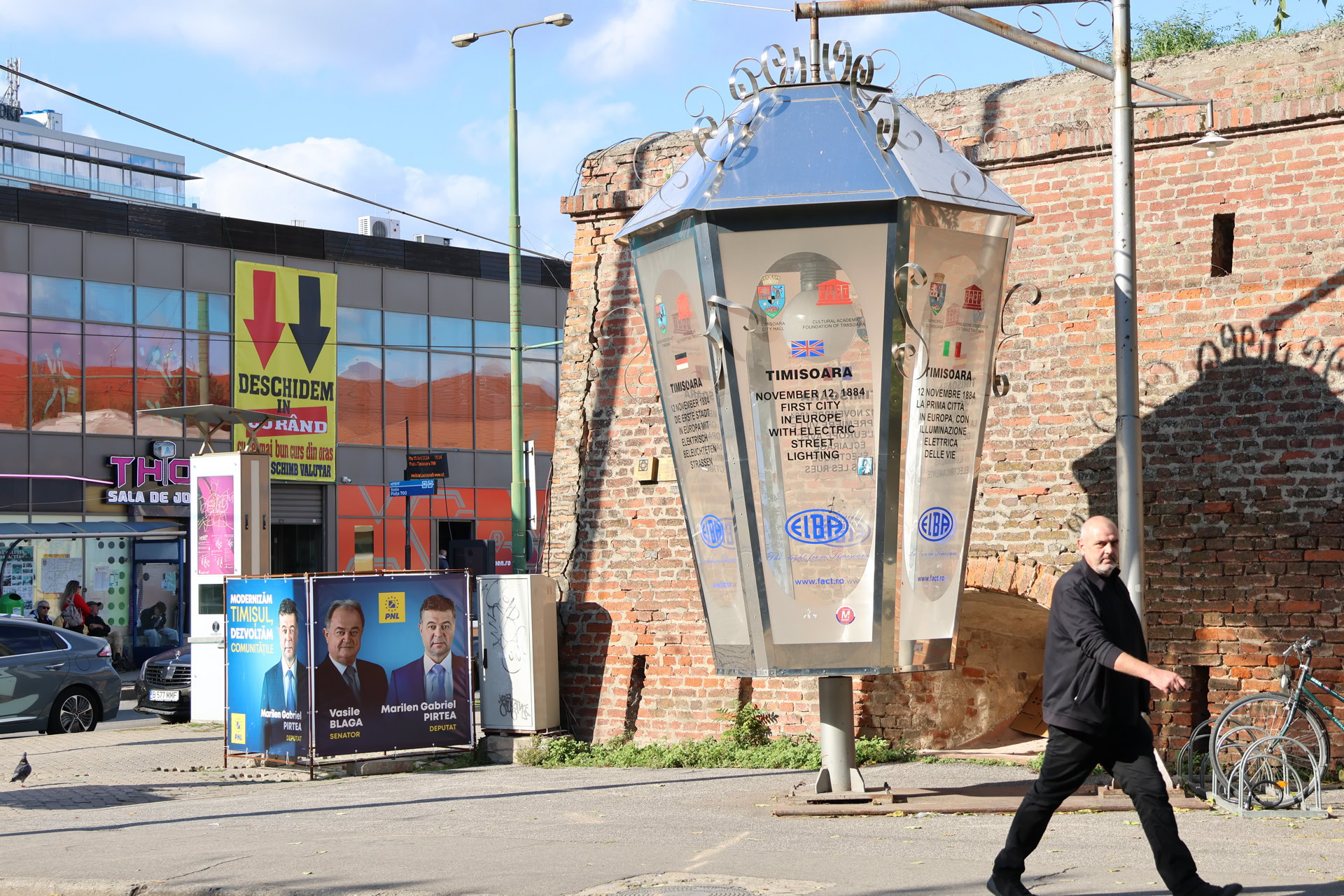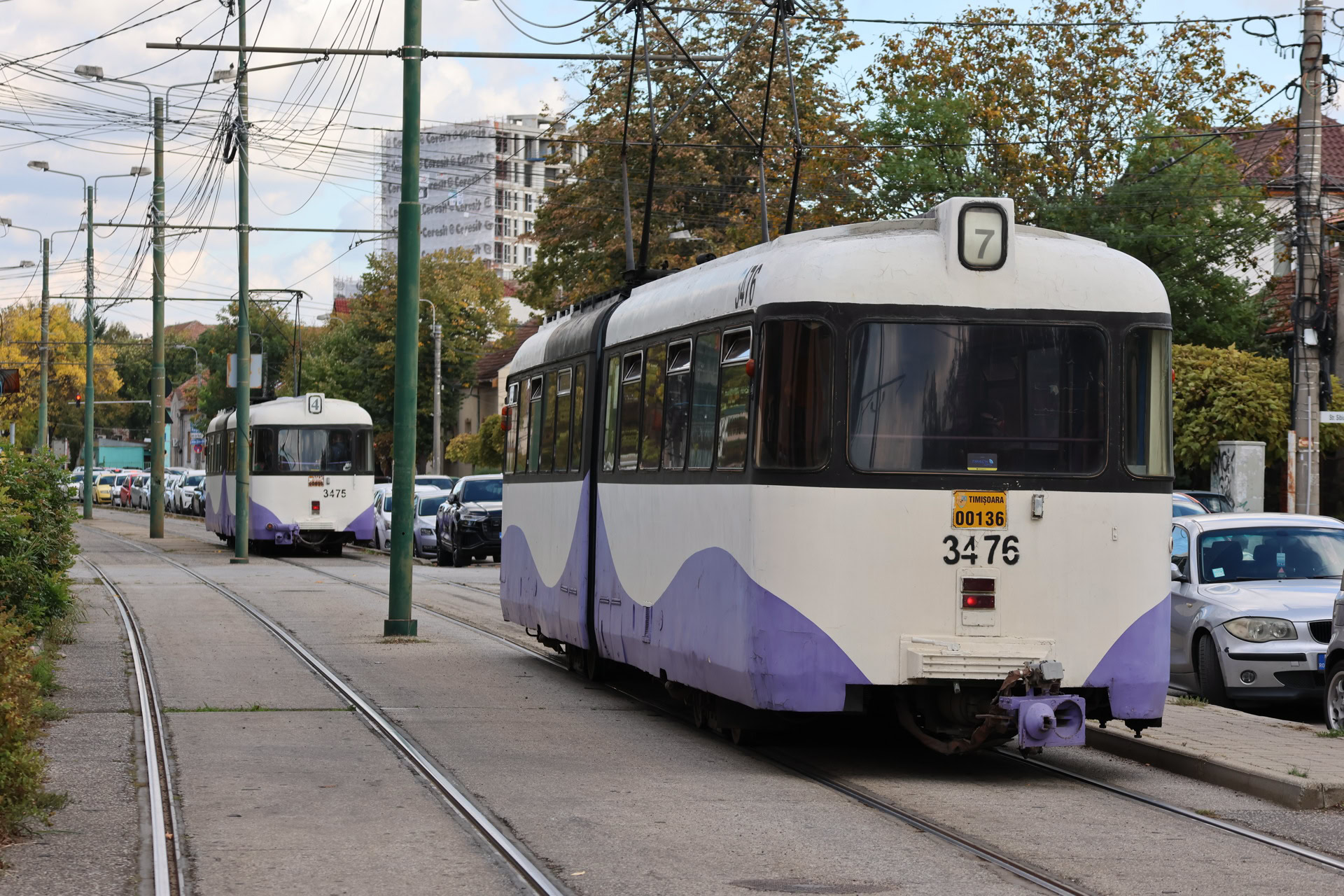
Tuesday 15 October 2024
Oradea to Timișoara

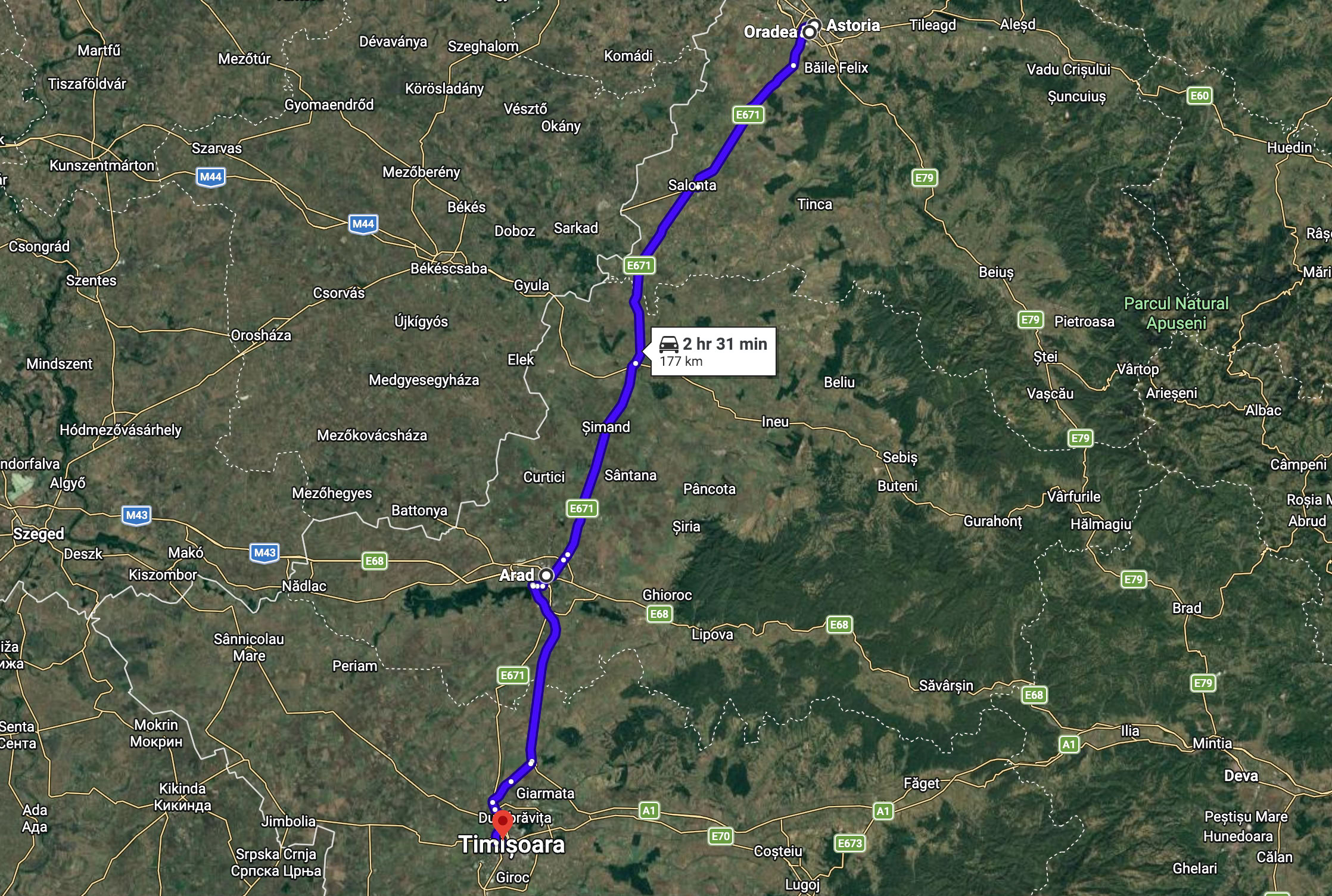
Although today’s drive to the city of Timișoara was not a long one, being about 180 kilometres and taking two and a half hours of driving time, I only wanted to make one intermediate stop on the way. This was because I wanted to allow plenty of time to explore Timișoara (which I had never visited previously) in the afternoon. My one stop was in the city of Arad, about 115 kilometres south of Oradea – a drive of about two hours.
I had visited Arad briefly in 1987. We had driven into Romania from Gyula in Hungary through the Vǎrşand border crossing following a long and intense period of scrutiny by the border guards. In the Ceauceşcu era, travel by Westerners was heavily regulated and had to be pre-arranged. We had booked accommodation for that first night in Romania in Târgu Jiu, almost 400 kilometres from the border requiring a drive of some five and a half hours. We needed to collect our pre-arranged travel vouchers and currency vouchers at the first major city in Romania we came to, which was Arad.
So what I remembered of my previous visit to Arad was not sightseeing. It was patiently – and then impatiently – waiting for the inefficient bureaucracy to issue the documents and vouchers we needed so we could drive and arrive in Târgu Jiu before sunset. That was not a preference; it was Romanian law at the time that foreigners could not drive after sunset.
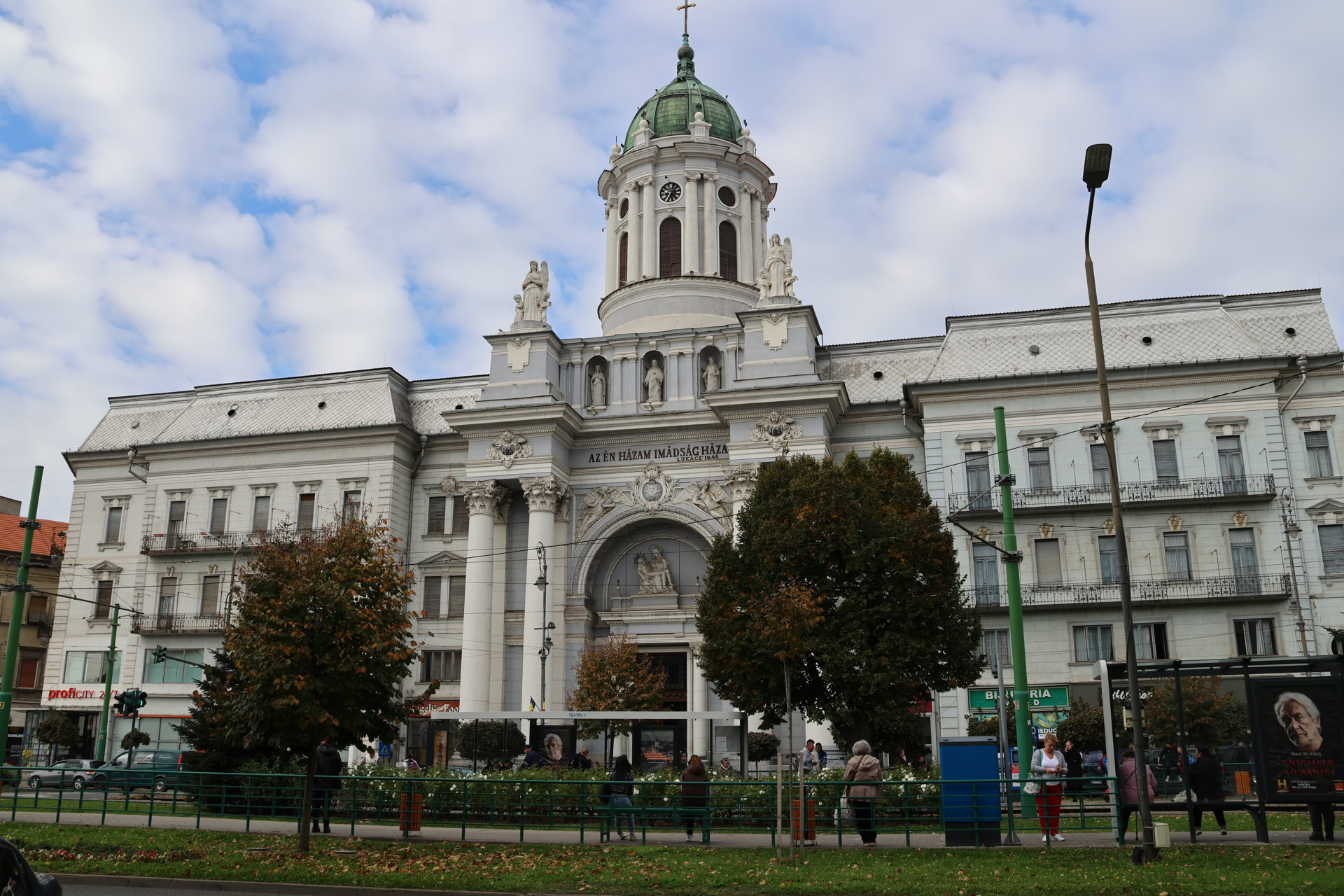
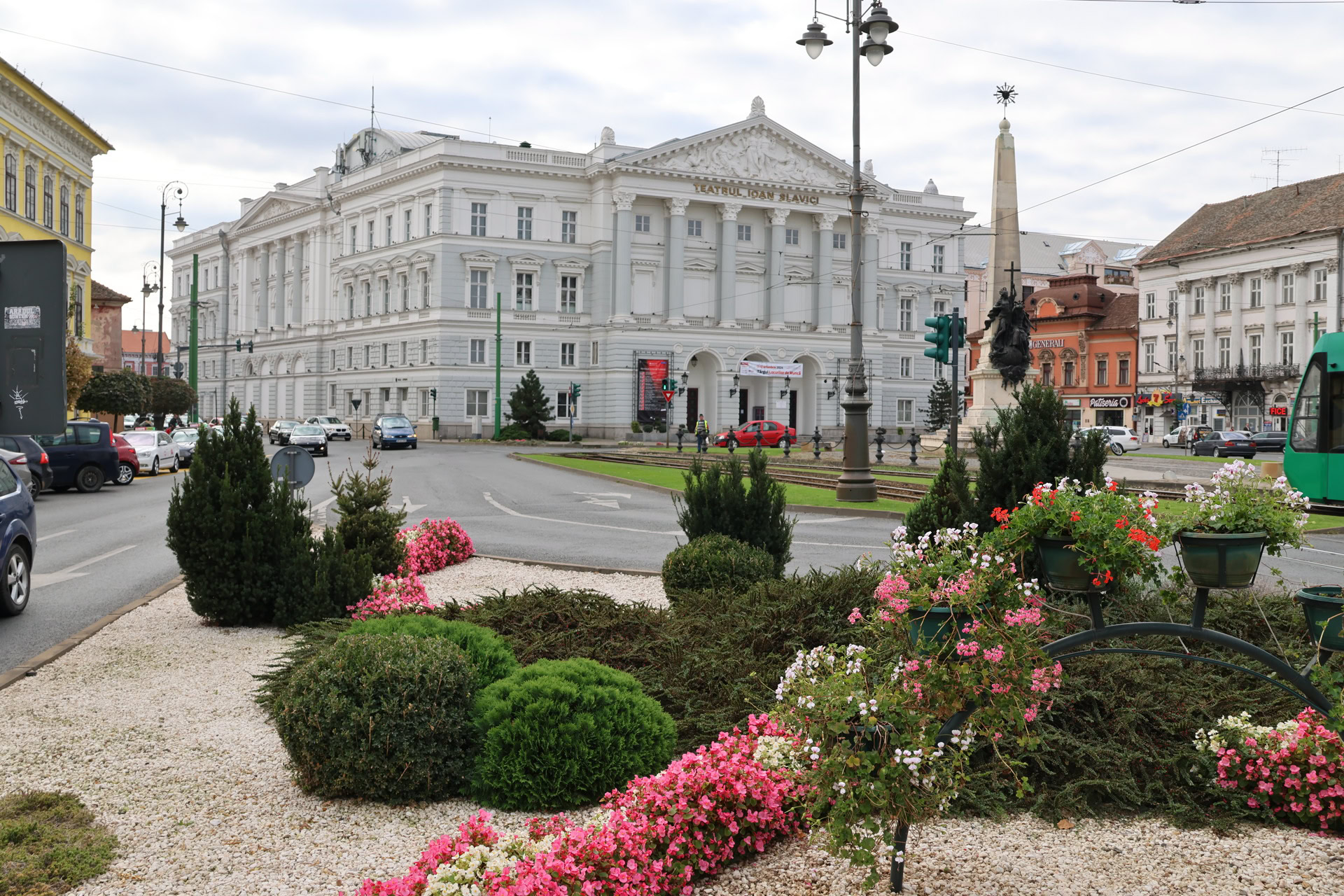
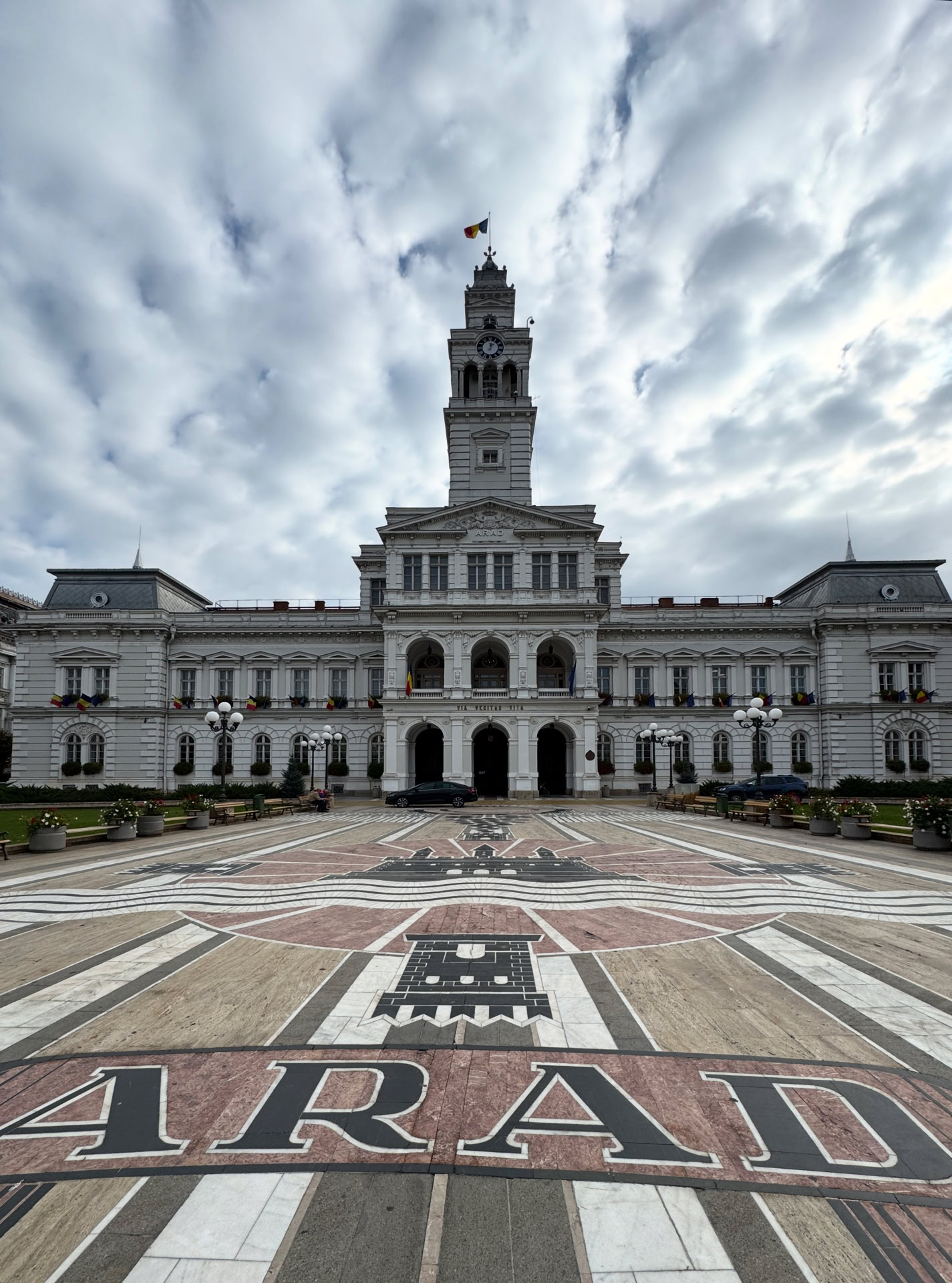
When I arrived in central Arad, it did seem vaguely familiar, but as my previous stay of several hours was inside a building, there was nothing specific that I was able to recall. To be honest, my main desire in visiting Arad this time was to stretch my legs after driving for a couple of hours, so my walk comprised a 2.1-kilometre walk down one side of the main street, Bulevardul Revoluției, and then back to my car along the other side of the street. My impression of Arad was not helped by the grey, overcast skies; it is not a city which I am in any hurry to re-visit.
Fortunately, I was much more impressed with my destination for the day, the city of Timişoara, about 60 kilometres south of Arad. I was especially interested in seeing Timişoara because it had been the centre of the demonstrations that overthrew Nicolae Ceauceşcu in 1989, bringing one of Europe’s most savage dictatorships to an end. I have written about this in one of my online articles at https://optimalschool.com/knowing-when-it-s-time-to-go.html.
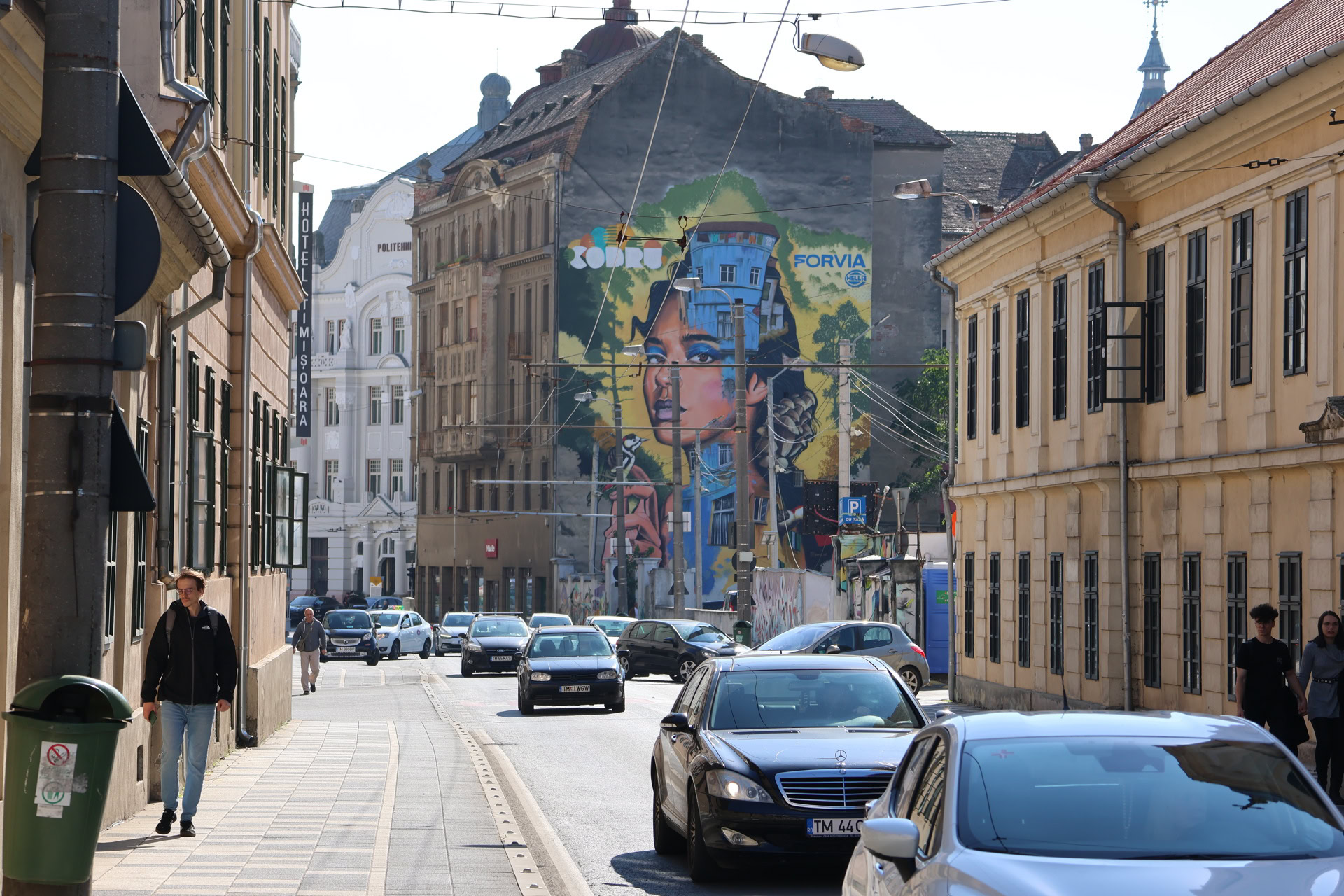
Unlike most of my other stays on this trip, I had booked a hotel a little away from the city centre. I found my hotel, the Hotel del Corso on Calea Bogdǎneştilor fairly easily, and checked in. The walking distance from the hotel to the centre of the city was a very manageable 1.5 kilometres, so I happily set off to explore Timişoara. My route took me a total of 6.1 kilometres by the time I had explored the central city area and returned to my hotel.
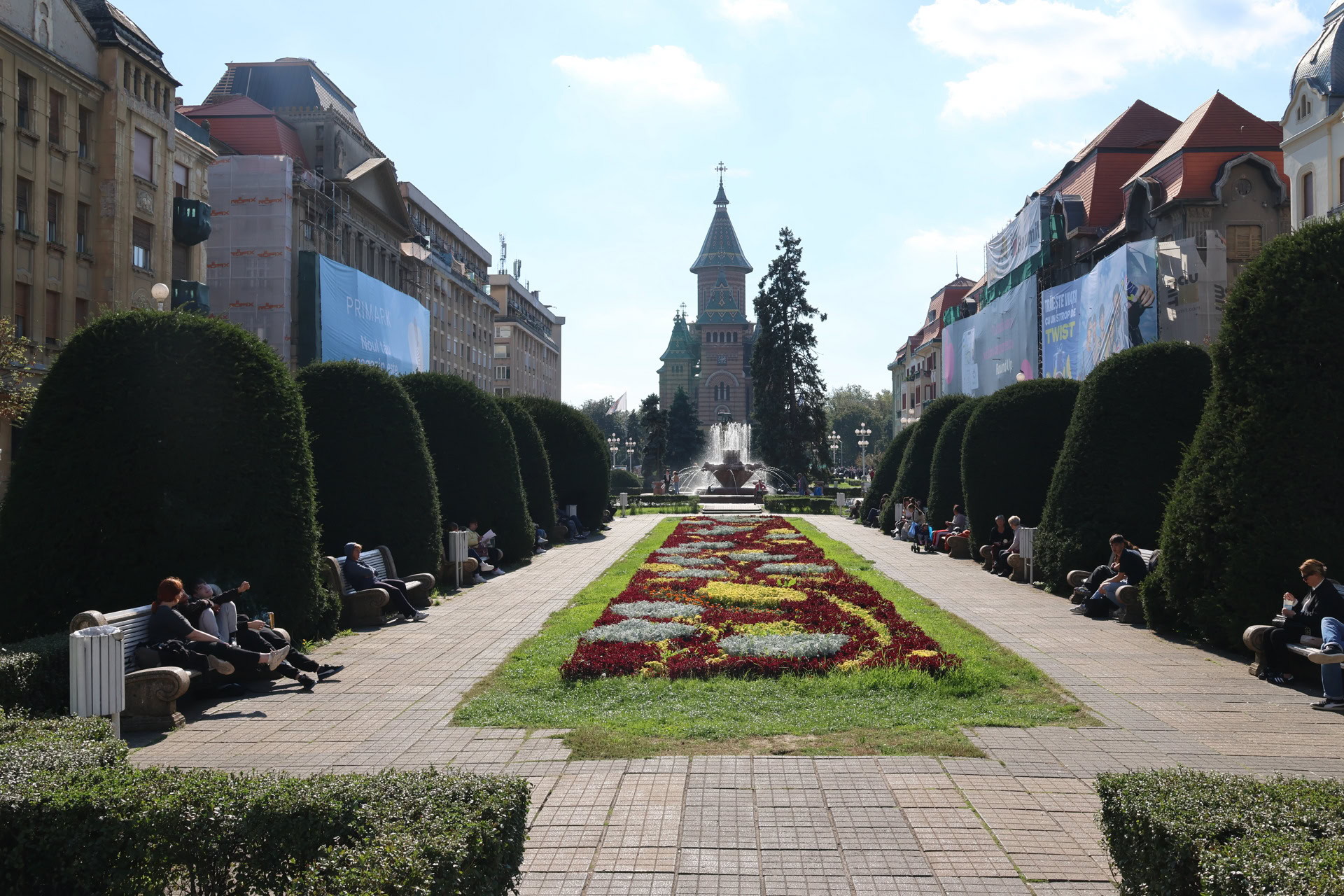
My walk took me east from my hotel east along Calea Bogdǎneştilor to Strada Sfântul Ioan, the ring-road that defines the limits of the old city centre. I turned right (i.e. south) and walked along Strada Sfântul Ioan to enter Piața Victoriei (Victory Square), the large open square where Timoşoara was proclaimed as the first city free of Communism on 20th December 1989. Five days later, Ceauceşcu had been overthrown, judged guilty of multiple crimes including genocide and subversion of state power by a hastily arranged court, shot in the head and heart multiple times in an execution shown on television later that day. Romania had overthrown Communism five days after the uprising in the square where I was now standing.
I continued my walk to the end of Victory Square, reflecting on the momentous events that had occurred there less than two and a half years after I had visited Romania with my family in late July 1987. At the southern end of Victory Square, I crossed the street and went into The Three Holy Hierarchs Metropolitan Cathedral. In case you didn’t know (as I had to learn), the Three Holy Hierarchs after which the Cathedral was named were Basil the Great, Gregory the Theologian, and John Chrysostom. This Romanian Orthodox Cathedral was constructed between 1936 and 1956 in an unusual architectural style known as Neo-Moldavian, which is a mix of Renaissance, Ottoman and Byzantine styles. The interior of the Cathedral was tall and soaring, and as one would expect in any Orthodox cathedral, lacking in seating but replete in elaborate iconography.
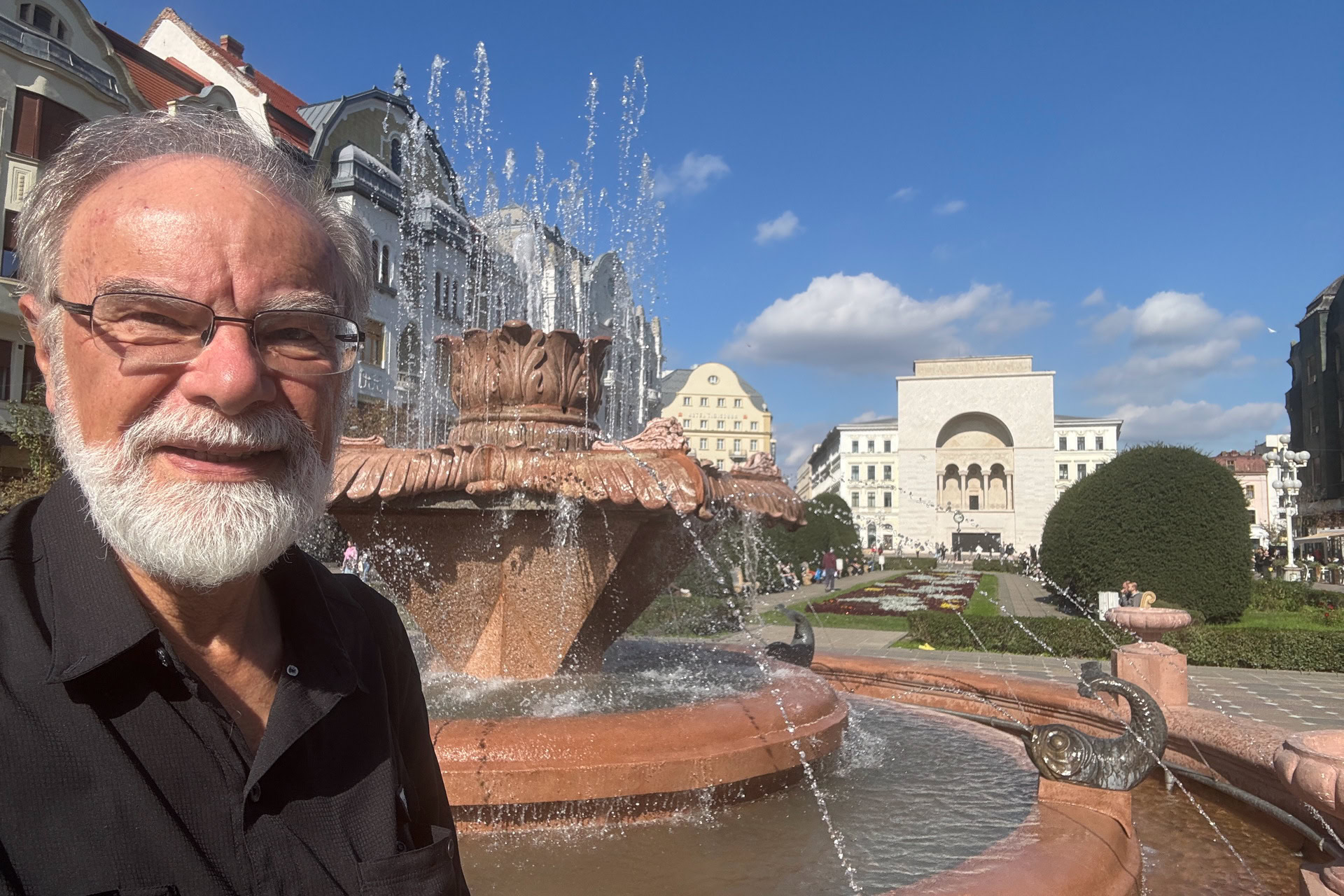
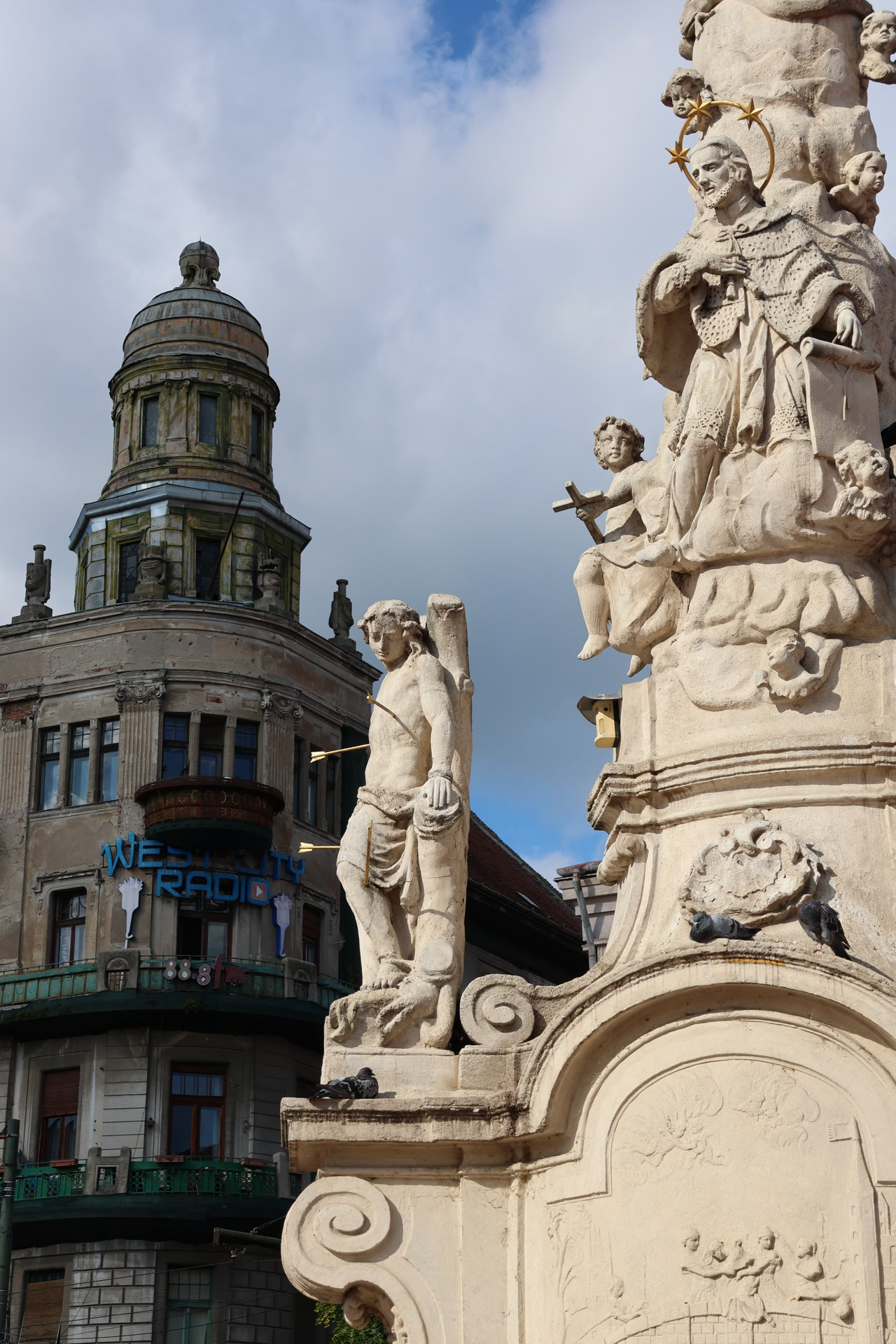
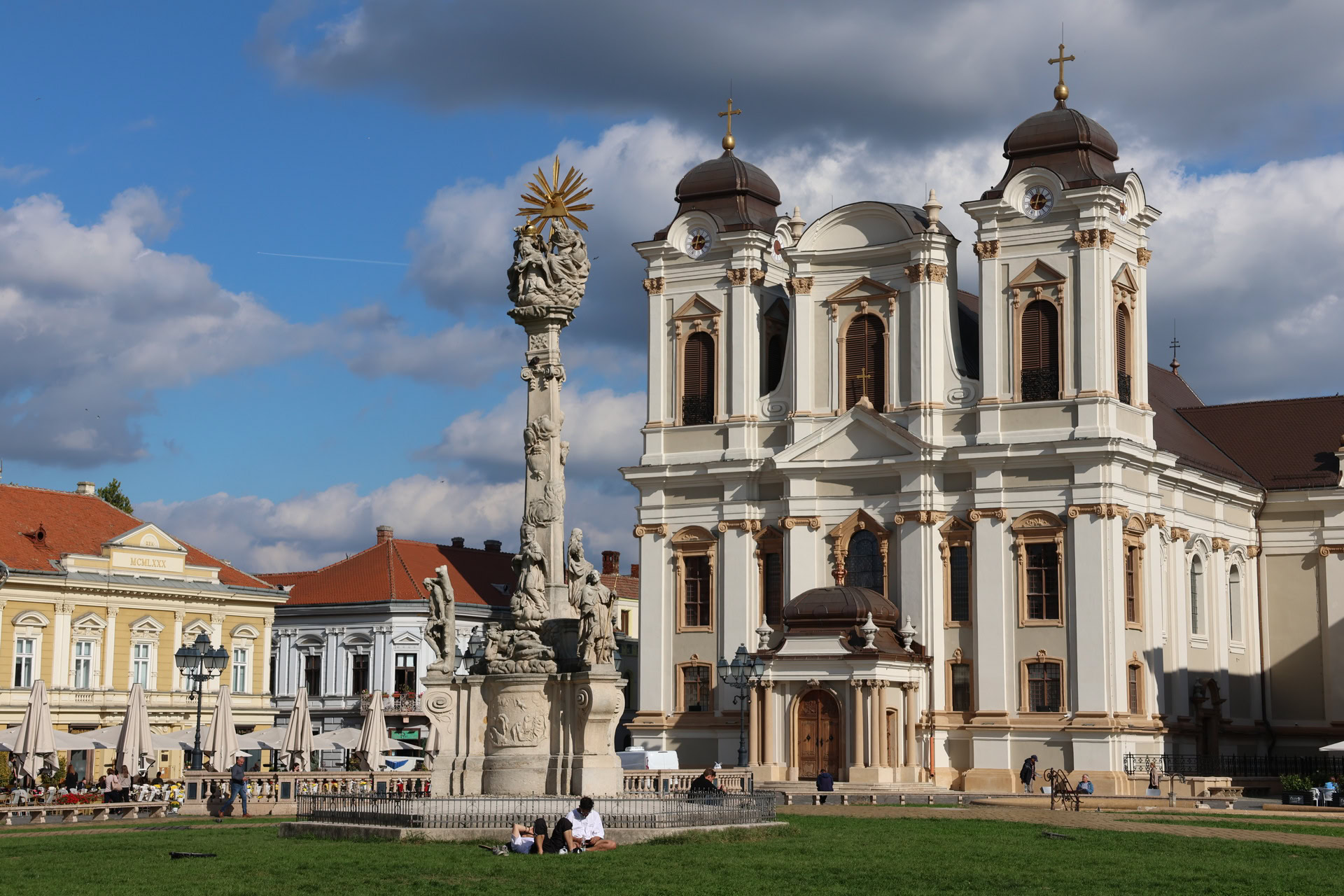
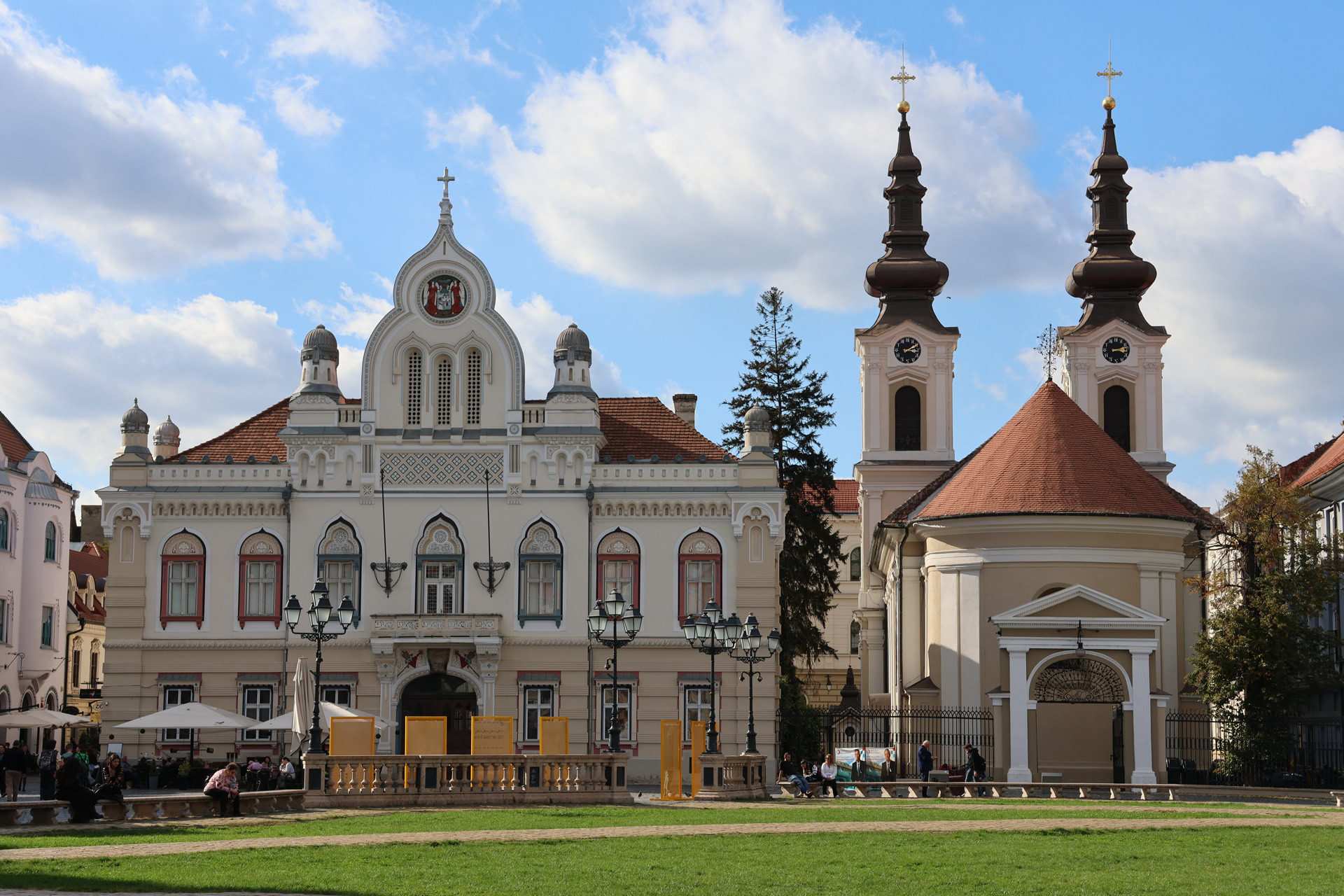
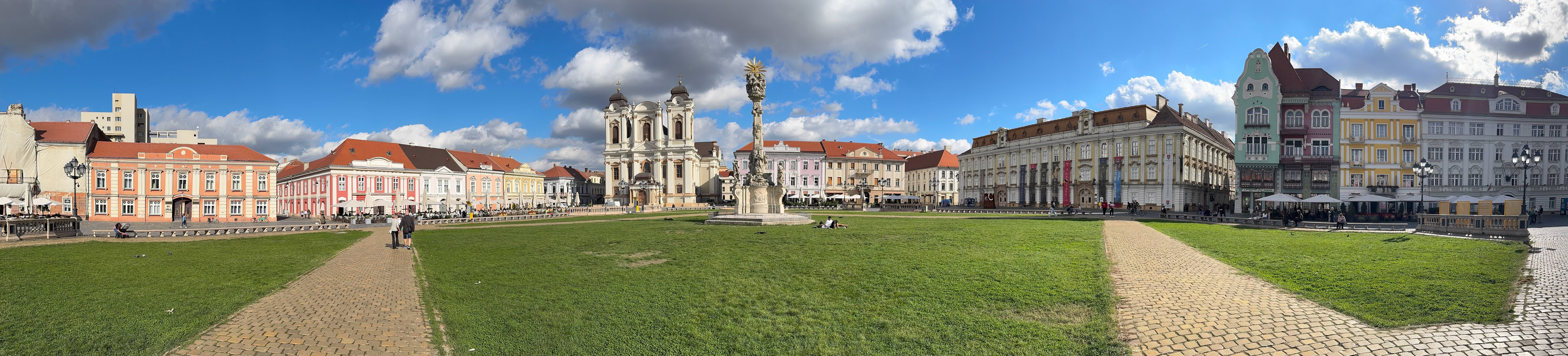
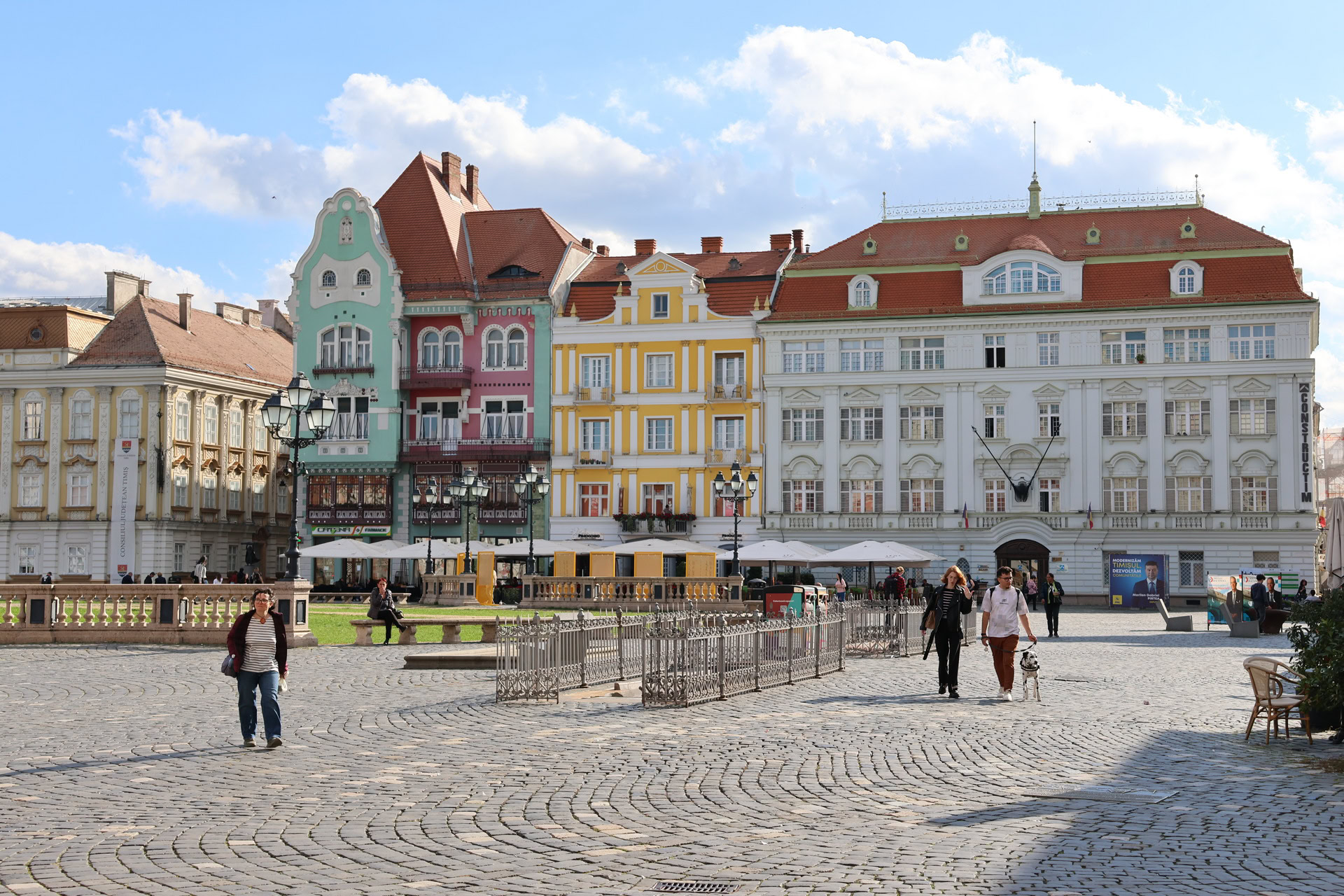
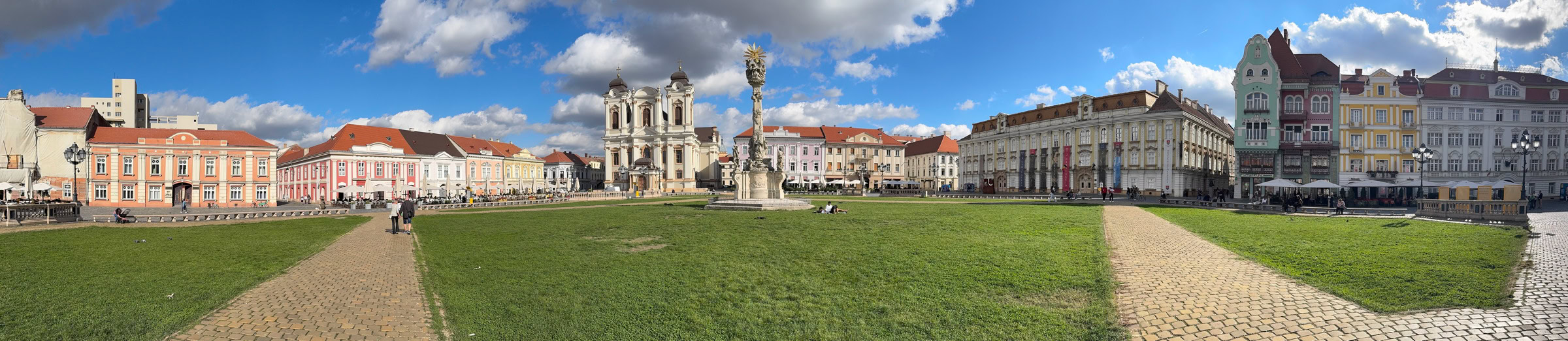
I continued my walk towards the south-east through Cathedral Park to the Bega River (yes, the same name as the mighty river in south-eastern New South Wales, Australia) before turning north-east into Strada 20 Decembrie 1989 (you can probably guess what event lent that street its name). I continued northwards along Strada Lucien Blaga to the magnificent large open square known as Piața Unirii (Union Square), and what a sight it was! Measuring 100 metres by 150 metres, the square was surrounded by an eclectic collection of multicoloured Baroque buildings that were simply too numerous to list in their entirety: the Serbian Orthodox Bishop’s Palace, the Serbian Orthodox cathedral, St George’s Catholic Cathedral, the Steiner Palace, Brück House, the Three Hussars House, the Baroque Place, the Swabian bank – you get the idea.
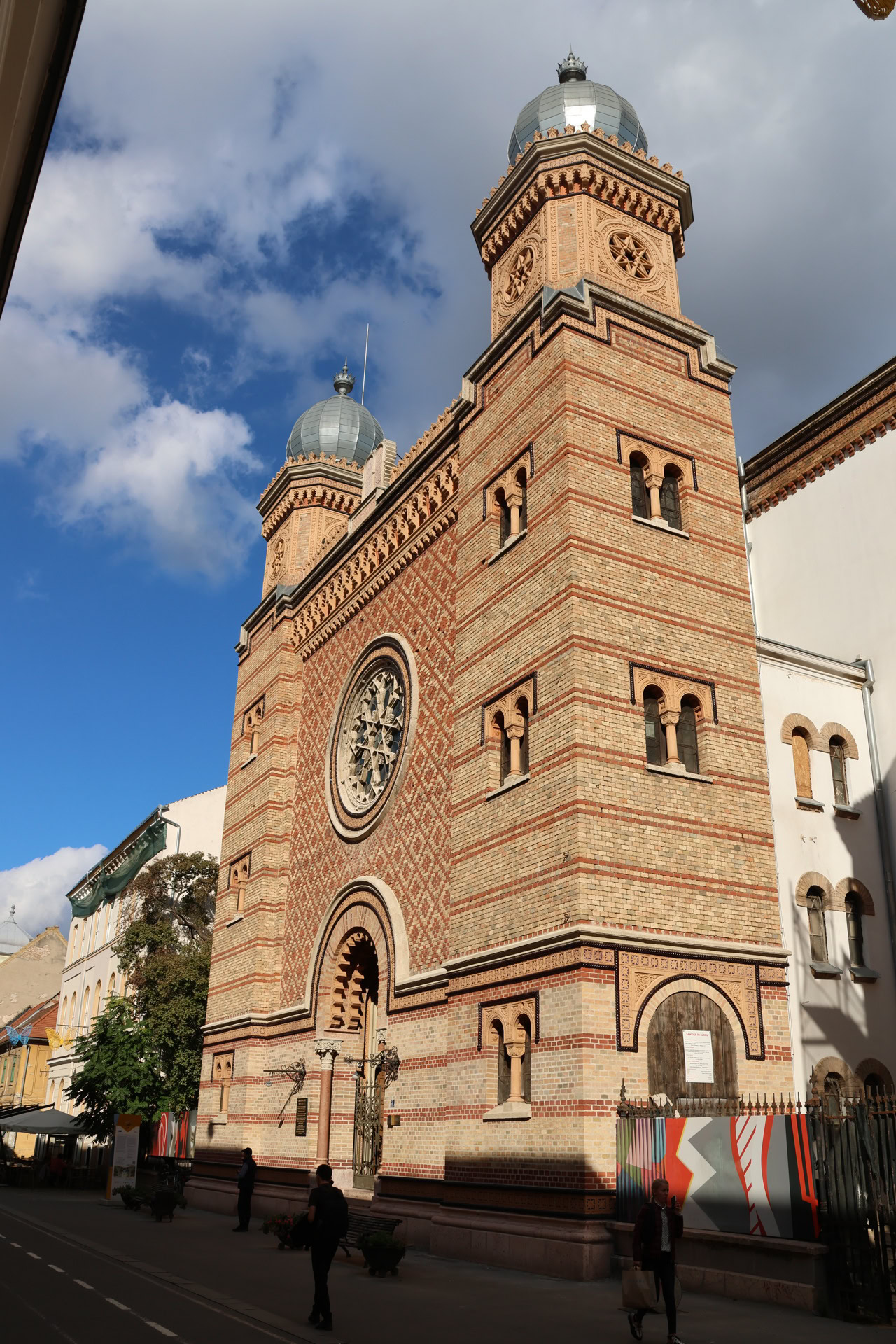
Although Union Square was probably the scenic highlight of my walk through Timişoara, the rest of my walk continued to be thoroughly enjoyable. From Union Square I walked north to Piața Mǎrǎști roundabout, and then turned southwards to walk along Strada Mǎrǎșešti past the city’s synagogue (the Stronghold Synagogue, built in 1860) before returning to my hotel along Calea Bogdǎneştilor.
I loved my afternoon in Timišoara and was really pleased that I had made the effort to come here.