Unlike the fine (but cold) weather we had been enjoying, we woke this morning to a heavily overcast sky with steady rain. Today was designed to be a day of travelling from Baku to Sheki (300 kilometres), but given the poor weather, we made very few stops on the way. We left the hotel at 9:00am, and were very pleased that we had a large, comfortable bus (with heating) for the long journey as the maximum temperature for the day was only 11 degrees.
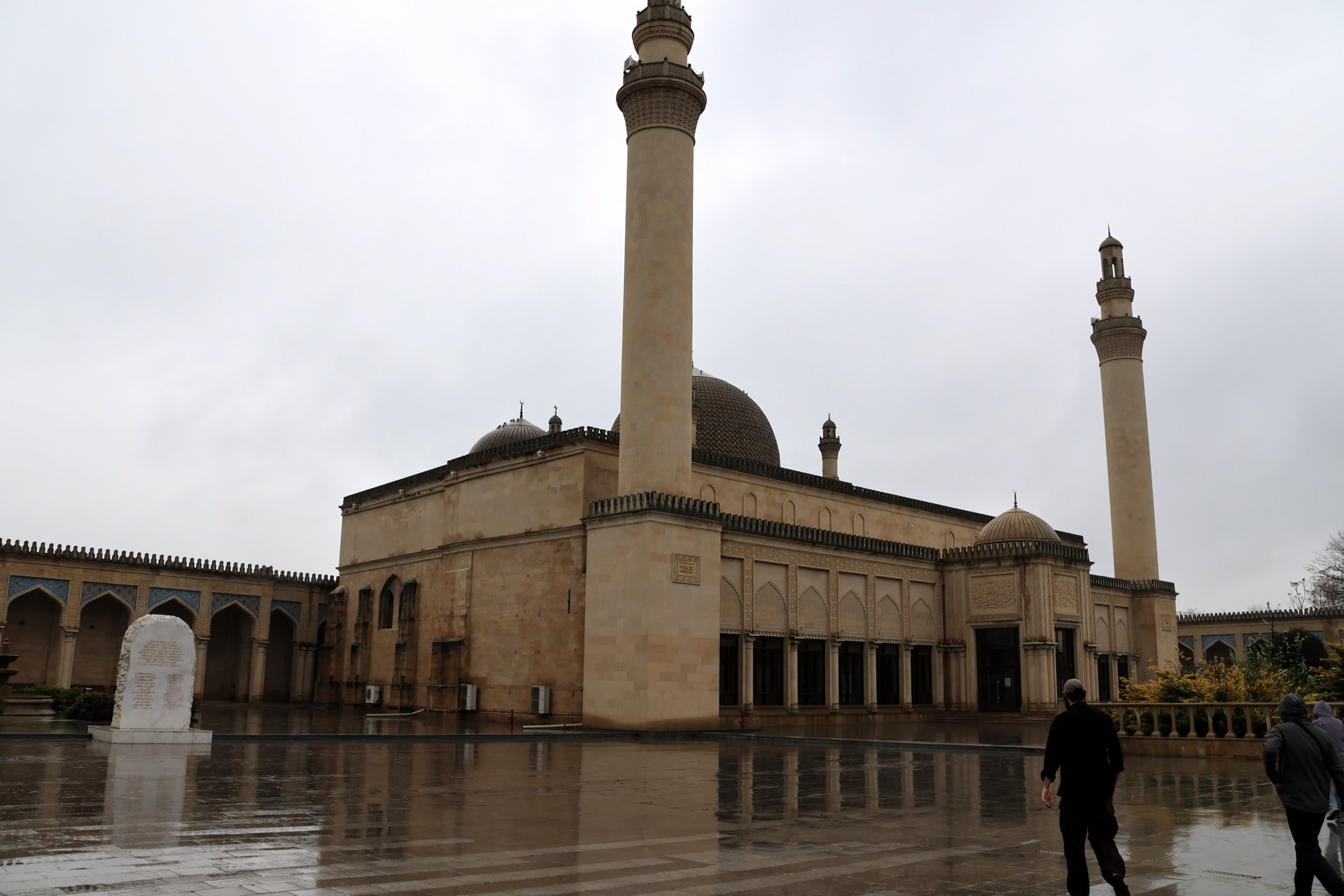
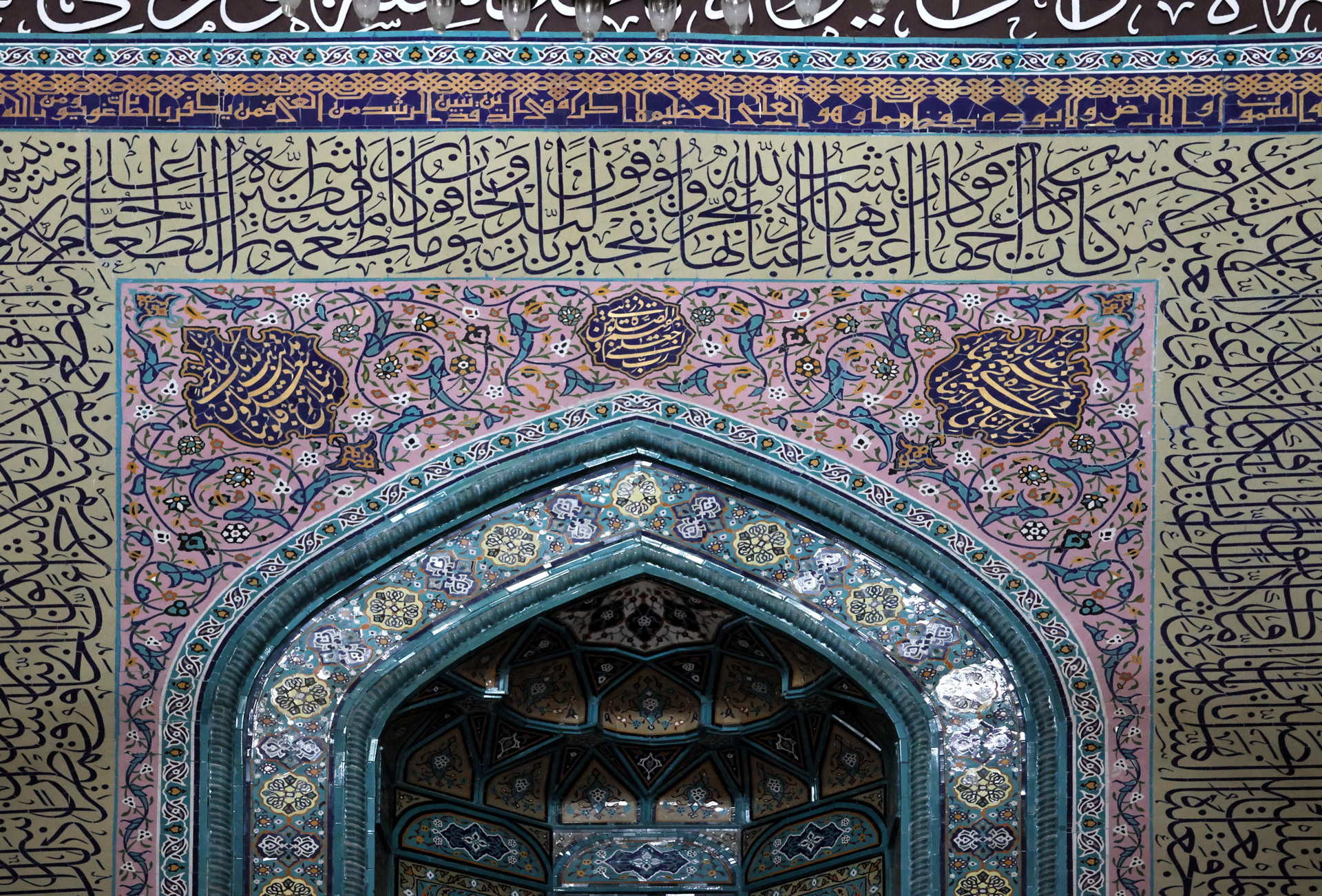
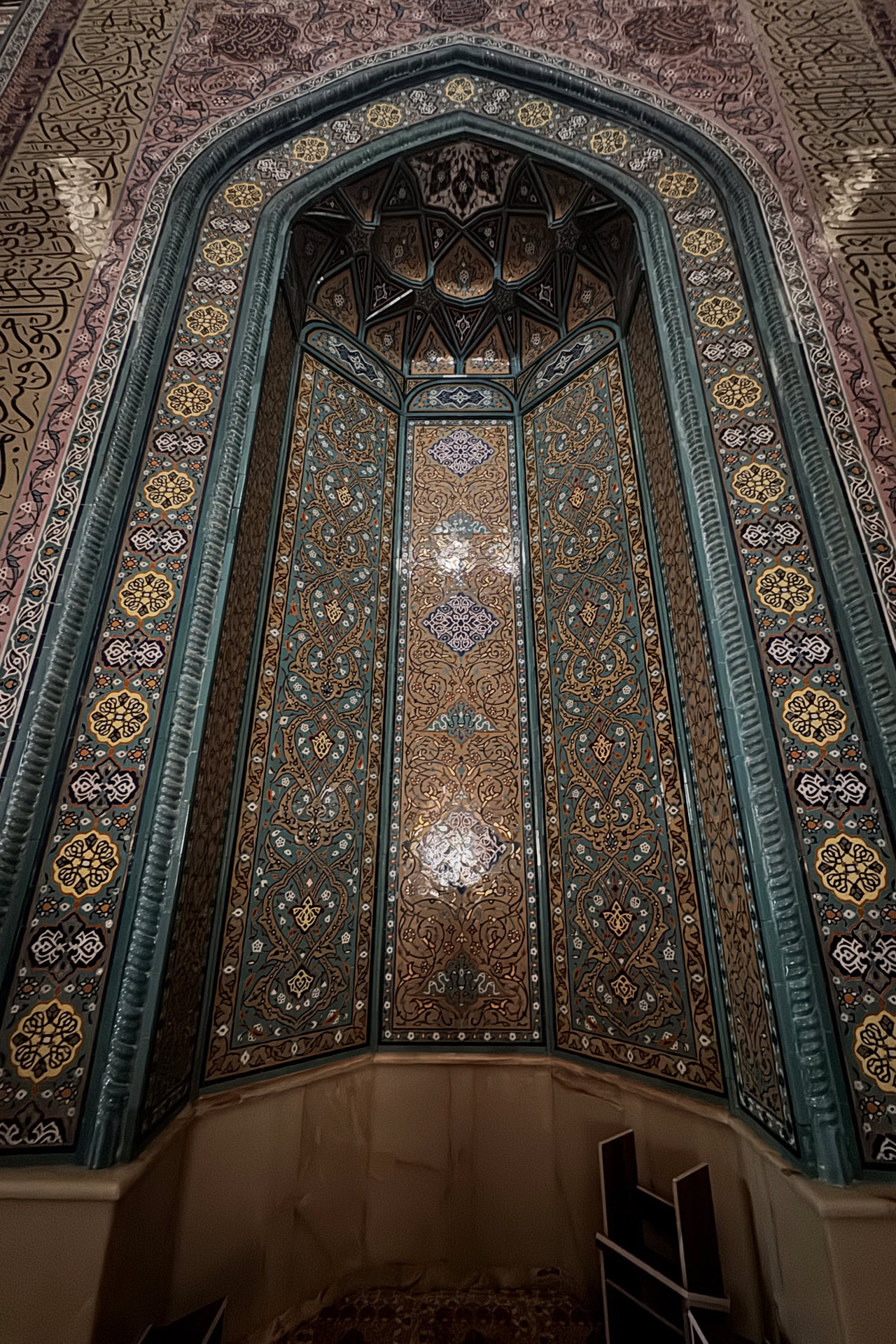
Our main stop for the day was in the town of Shamakhi (sometimes spelt Samaxi), 125 kilometres from Baku, at the Jummah (or Juma) Mosque. Regarded as the second oldest Mosque in the Caucasus, having been established in the year 743, it has been destroyed several times by earthquakes, so the current building (which was extensively restored from 2010 to 2016) hides its long history. Nonetheless, despite its new appearance, it was a lovely building and a great opportunity to visit the interior of a large, highly esteemed, functioning mosque.
After the visit to the mosque, we stopped at 11:30am to have an early lunch on the outskirts of Shamakhi. Like all our meals in Azerbaijan, this was a lovely mix of local Azerbaijani food.
The last time I visited Azerbaijan (in 2018), we made several additional stops on the drive to Sheki. These were fascinating – the Diri Baba mausoleum in Maraza village, Yeddi Günbaz Complex on the outskirts of Shamakhi, and best of all, the outrageously picturesque village of Lahic. We simply stayed on the highway today, missing all these stops, although given the heavy rain I expect that visits would have been at best disappointing, and at worst a complete waste of time anyway. It was even hard to see the scenery out of the bus window because of the heavy rain.
We made just one further, brief stop before reaching Sheki, which was a toilet stop at a service station near Bucaq. I did appreciate the lovely line of vintage Ladas (one of which was a luxury-model Zhiguli) parked there, but otherwise it was an uneventful if highly appreciated stop.
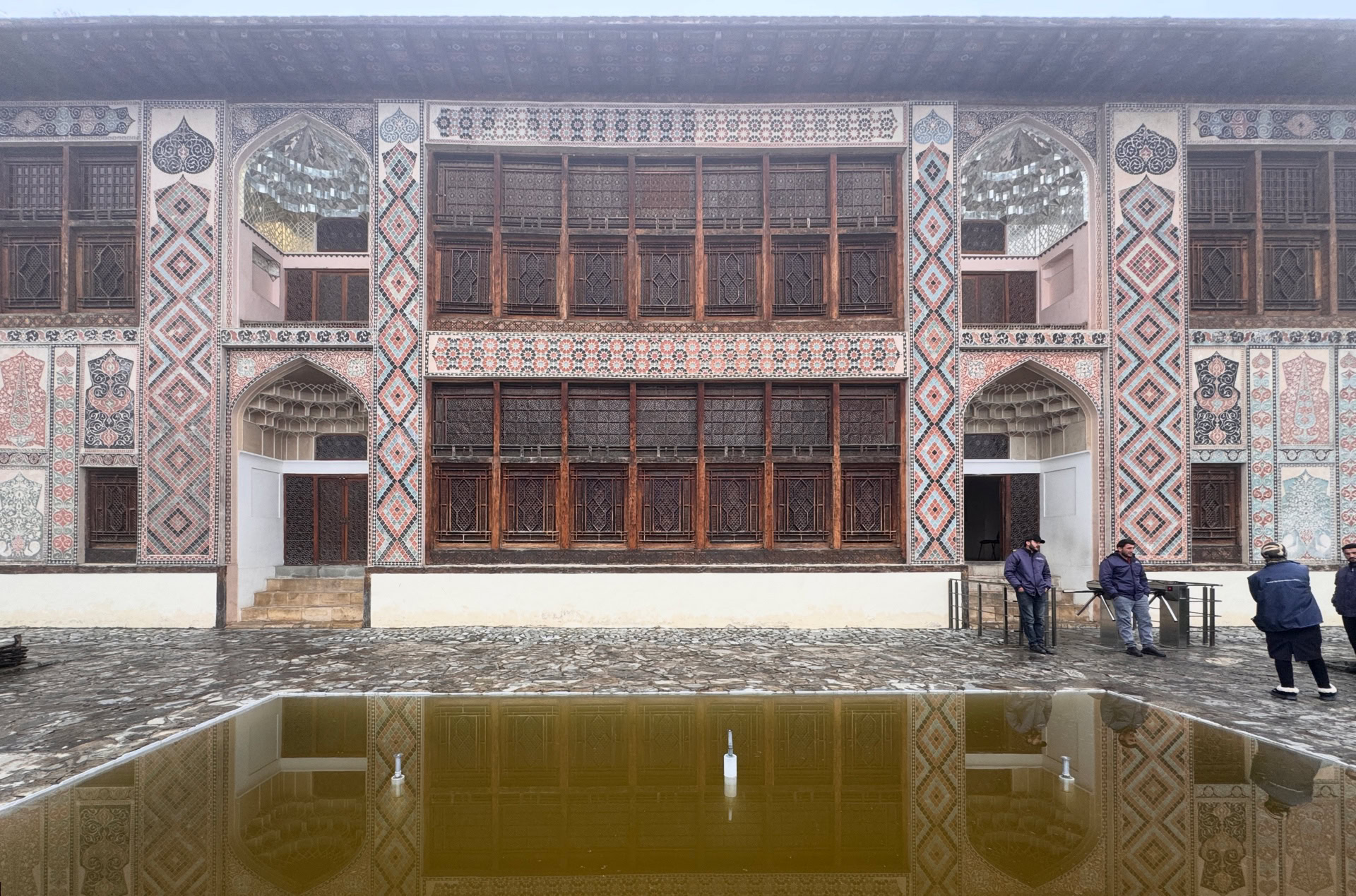
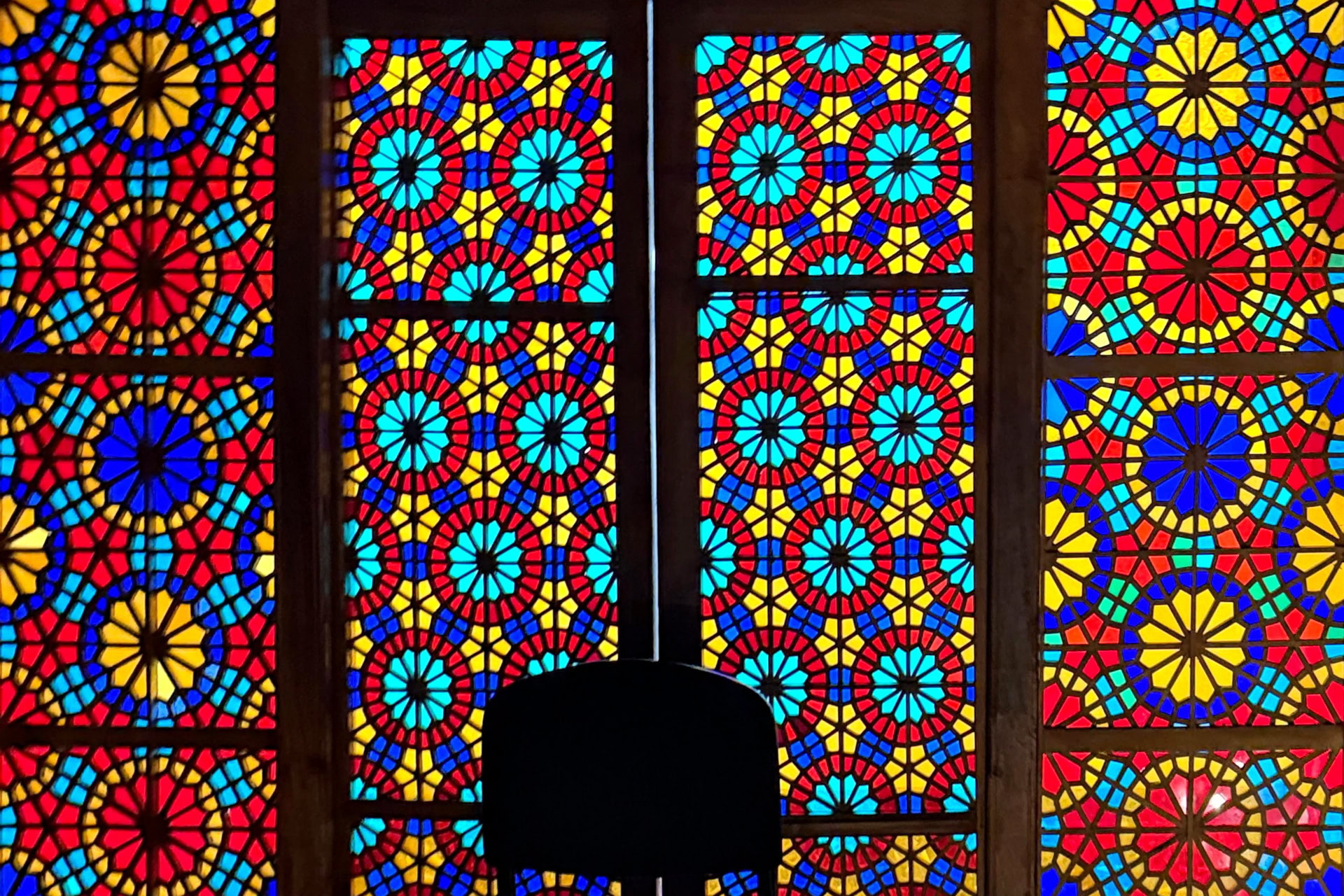
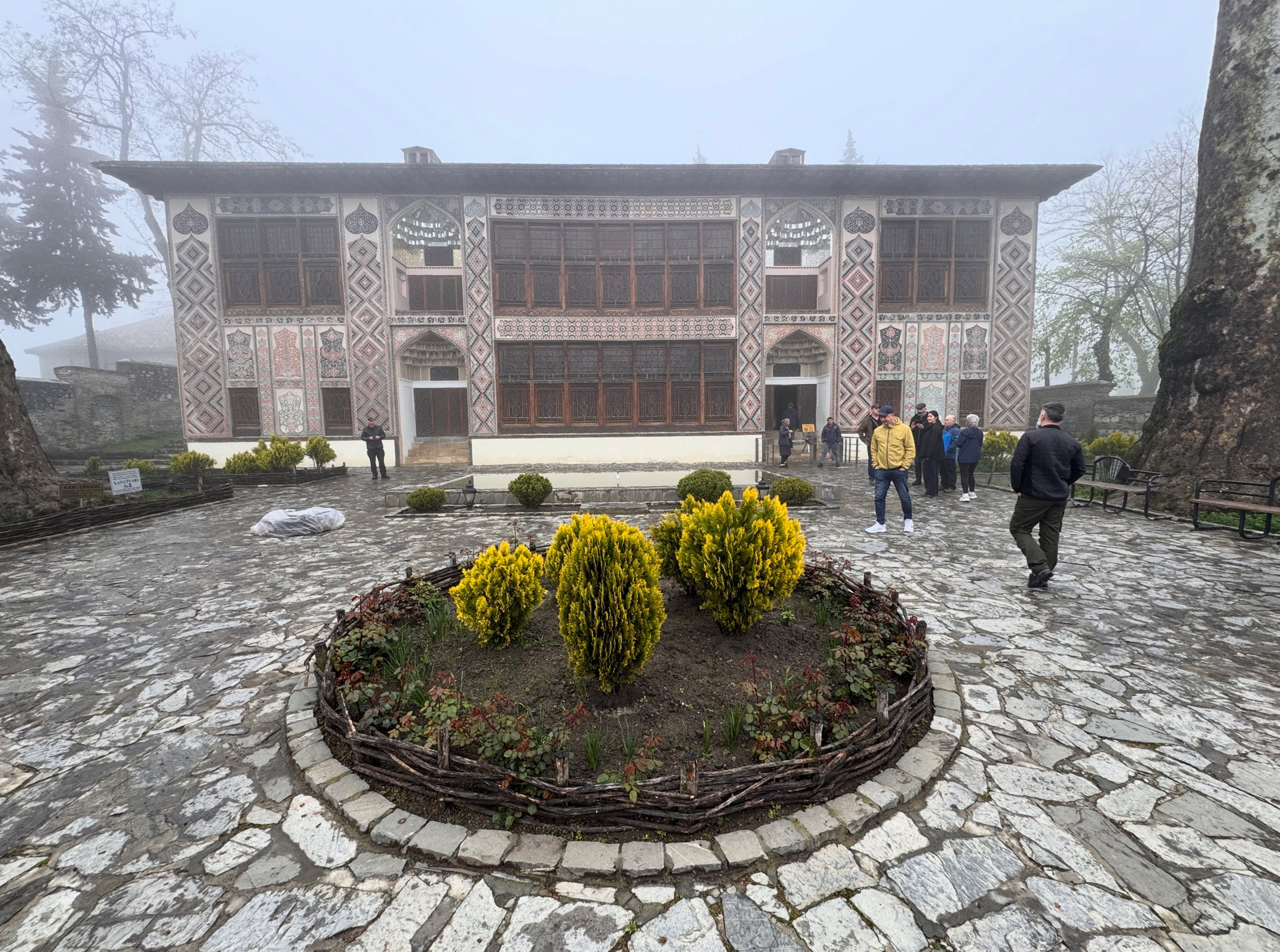
We arrived in Sheki (also called Şǝki) at 4:10 pm and proceeded to the fog-shrouded Palace of the Sheki Khans. This complex was the residence of the Shaki Khanate, a Khanate that existed from 1743 to 1822 in control of the surrounding region. The palace is a UNESCO-listed heritage site, built without the use of a single nail. It is home to some exquisite wooden and stained-glass windows, amazingly detailed painted ceilings, and a fascinating ceiling built in the design of a Persian carpet. It is rightly claimed by many to be a lavish blend of Azerbaijani, Persian, and Ottoman styles, and it was indeed a magnificent building. Unfortunately, the exterior was shrouded in fog and no photos were permitted within the spectacular interior.
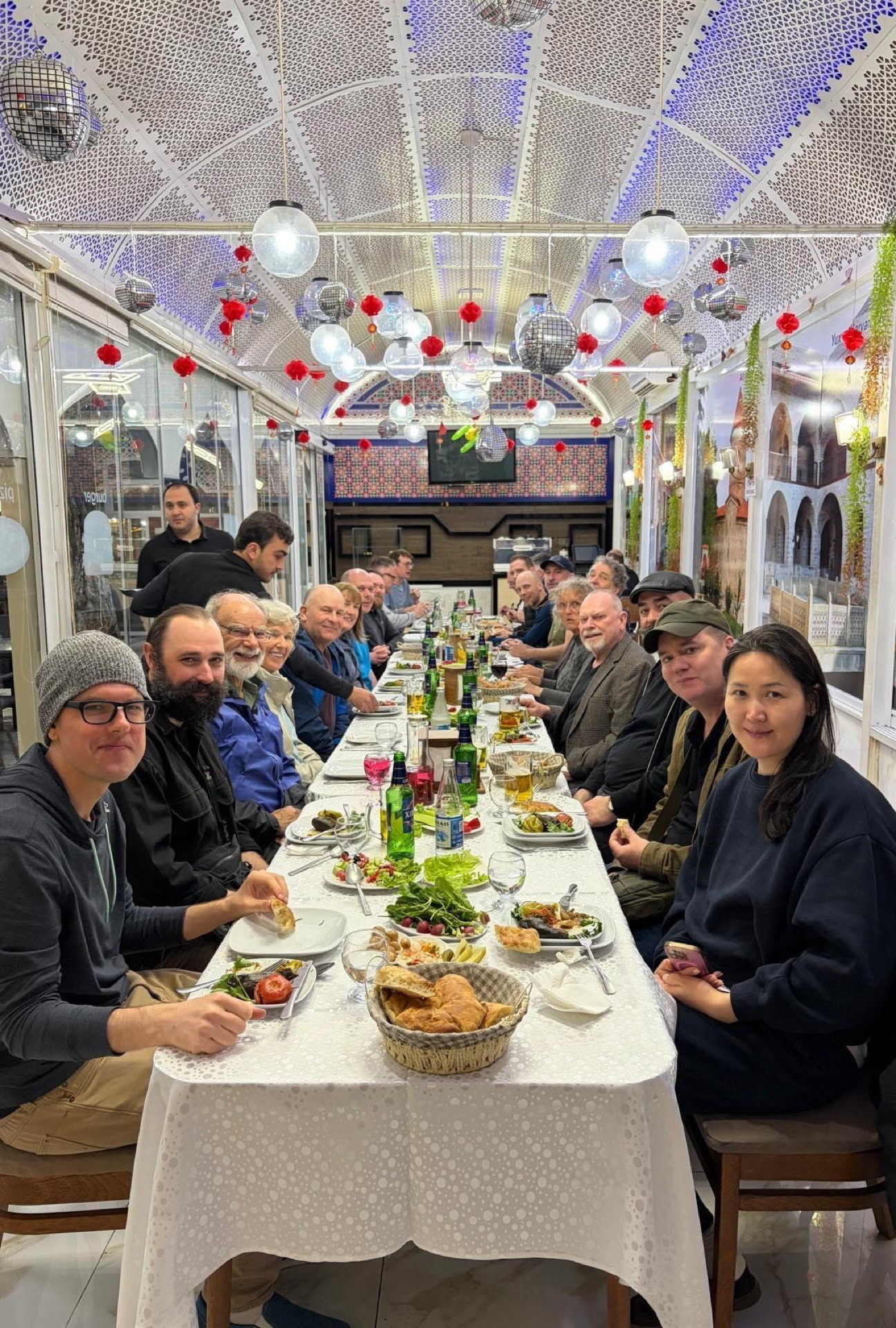
We finally checked in to our hotel, the Hotel Sheki Park, at 6:15pm, and shortly afterwards, we went into Sheki town for dinner at the Restoran Celebi Xan.