Today was a specially themed day to showcase some quirky facets of Armenia’s Soviet history.
Our first stop had taken a year to arrange and obtain the necessary permissions – a visit to the Orgov Radio Telescope, hidden in the hills near the village of Orgov, about 40 kilometres north-west of Yerevan. The drive to Orgov passed through beautiful farming landscapes backed by snow-topped mountains, including superbly clear views of Mount Ararat.
The Orgov Radio-Optical Telescope was a late Cold War-era scientific installation hidden in the mountains. Built between 1975 and 1985, this enormous and futuristic observatory once served cutting-edge research purposes and remains one of the largest of its kind in the world. We had special permission to head inside this marvel of Soviet ambition and explore what remains of the scientific legacy of the USSR.
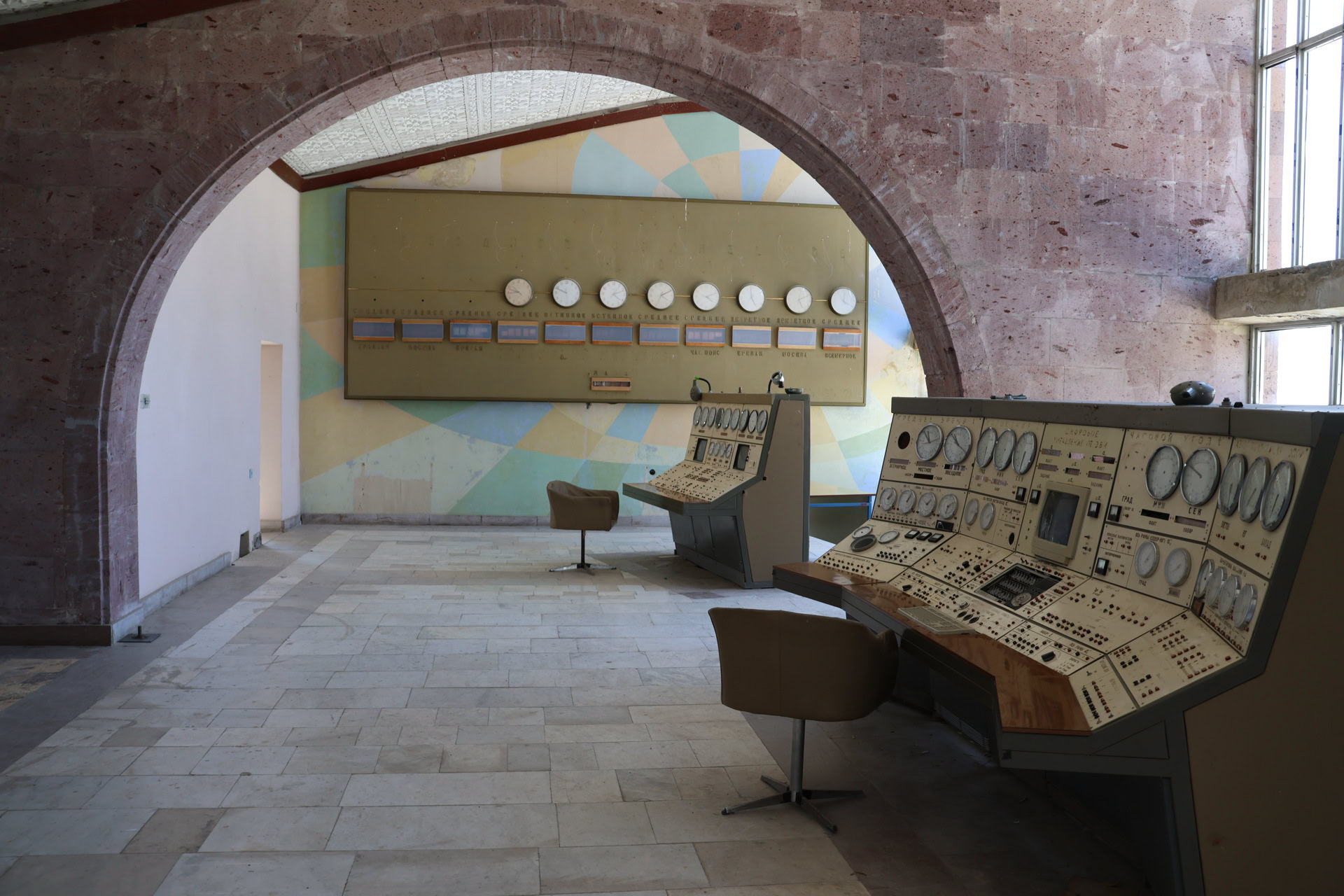
We spent almost two hours at the facility, officially known as “Radio Optical Observatory ROT-54). The scale of the main telescope was astonishing. Built into the ground of the hillside at an altitude of 1,710 metres, the main telescope has a diameter of 54 metres and comprises thousands of triangularly-shaped mirrors. It was active from 1986 to 1990 before its use was stopped, again becoming operational until ceasing in 2012. Today it is a disused (though still heavily guarded) site with abandoned buildings full of interesting equipment and control desks that were freely open for anyone who had passed through the guards at the front gate to explore.
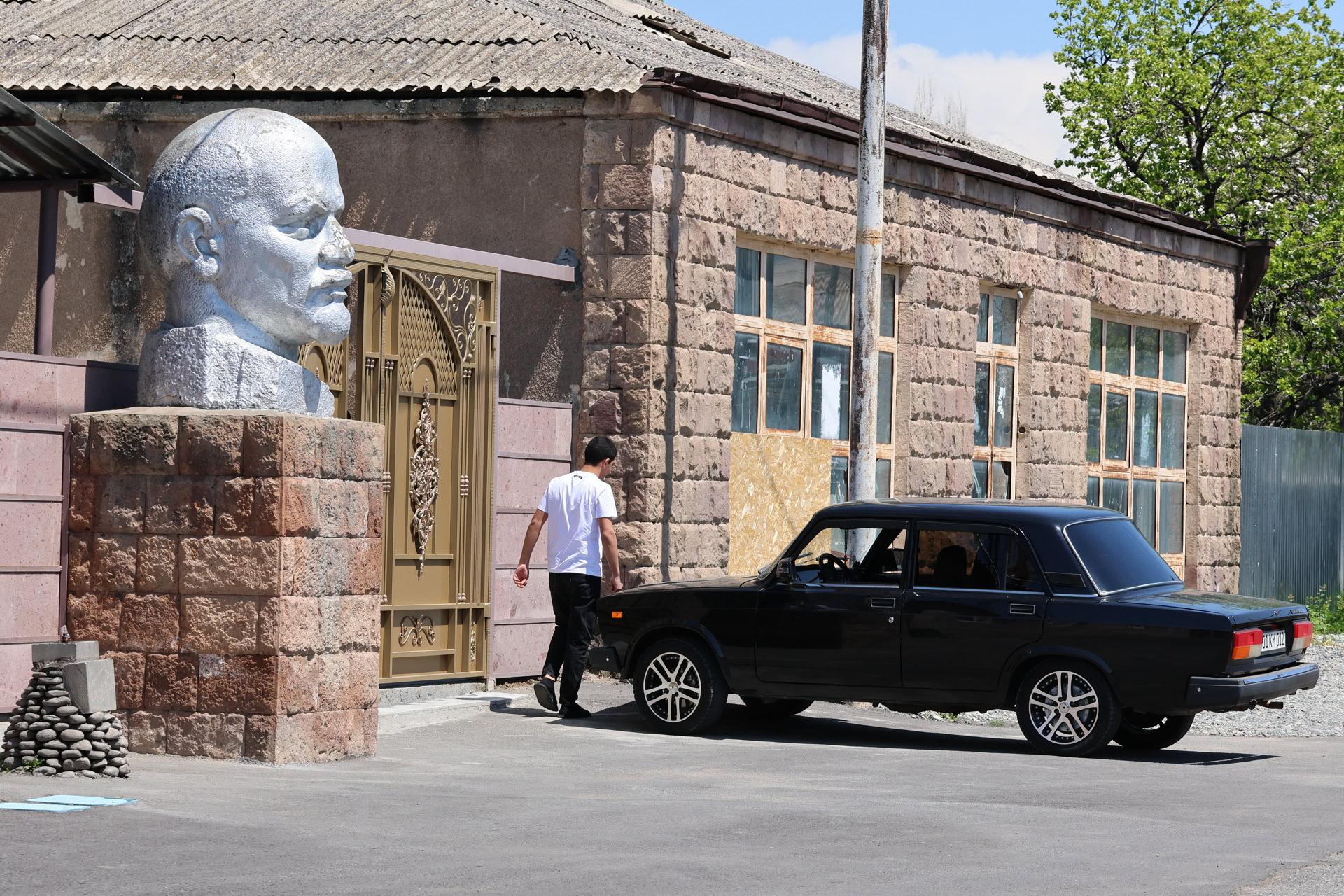
Having thoroughly inspected ROT-54 (ah, the romance of place names!), we drove for a little more than half an hour to the obscure little village of Lernamerdz. Surrounded by farming lands, Lernamerdz had a population of just 400 people. Apart from the plethora of overhead gas pipes running through the village, it was visually unremarkable apart from having one of the very few remaining Lenin statues in Armenia. Apparently, the villagers really miss the days of being in the USSR, and still conduct their village along Communist principles. To reflect their ideology, they rescued a discarded “Lenin head” from another village and brought it to their village to restore it by (almost) repairing its broken nose and painting it silver before mounting it on a plinth as a tribute to their Soviet past.
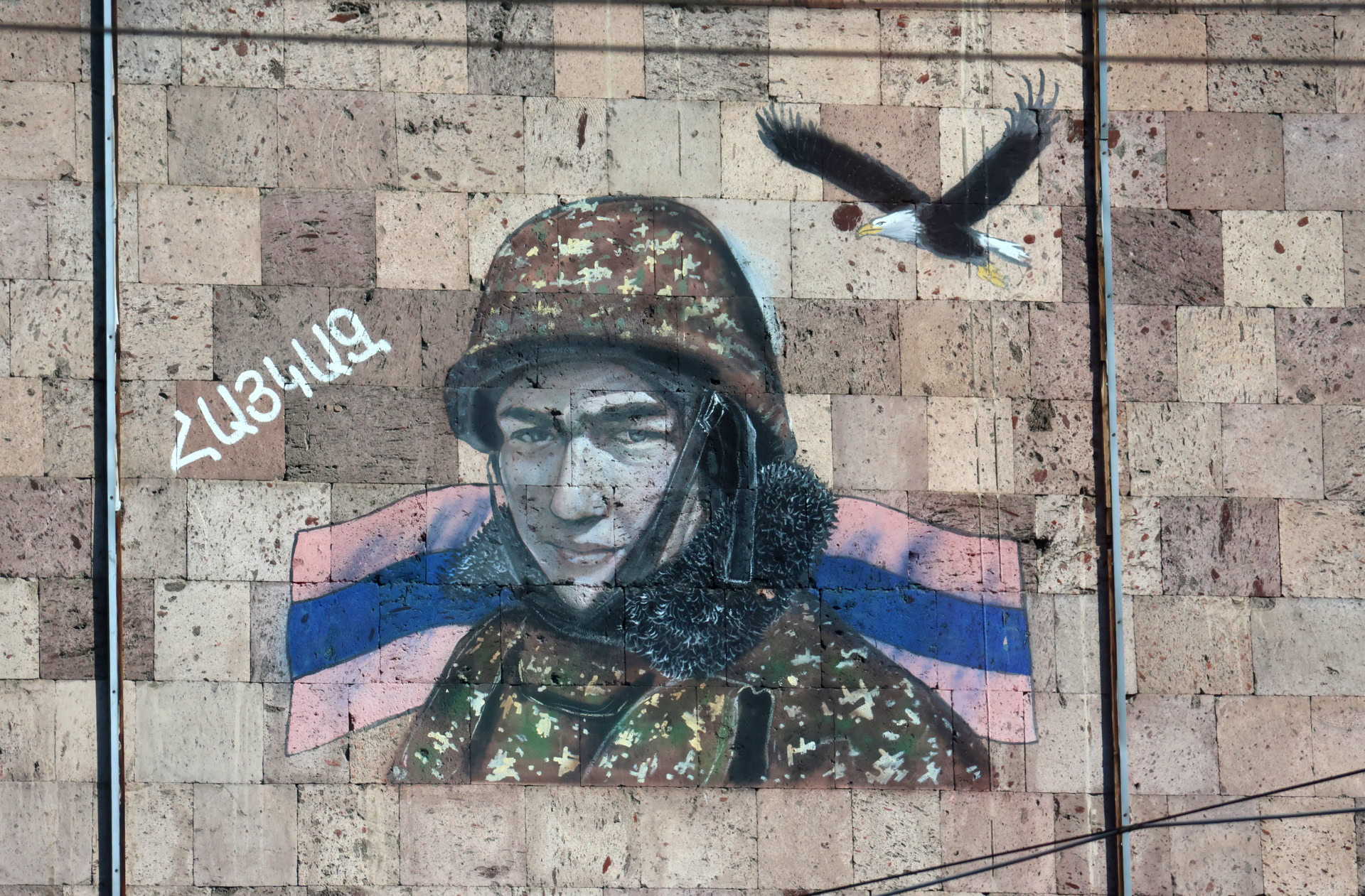
While we were admiring the statue, surrounded by Soviet-era Ladas and overhead gas pipes, an elderly woman who lived across the street came out to offer us candy. Through our guide, we learned that her son had gone to Russia for work, and being an ethnic minority (Armenian) there, he had been conscripted to fight in the war against Ukraine. Sadly, as tears trickled down her cheeks, we learned that he had been killed in action three months earlier. As we continued talking, she invited us all (23 of us!) into her home for snacks and coffee – quite remarkable, generous hospitality given the size of her small home. We accepted, and it was a real joy to us all. We tried to give her something as a gesture of thanks, but she was adamant that she would not accept anything in return for her generosity other than our farewell hugs.
A lovely lunch followed in the backyard covered of a family home Ashtarak (in Smbat Shahaziz Street to be specific), after which we returned to Yerevan. Perhaps surprisingly for a day devoted to “Soviet Armenia”, we did not proceed to Victory Park and the spectacular Mother Armenia Monument as I had hoped, but to the Vernissage Market near Republic Square so we could buy souvenirs. It was not an entirely fruitless visit, as I bought a T-shirt there, but it wasn’t really in the spirit of the day’s purported Soviet focus.
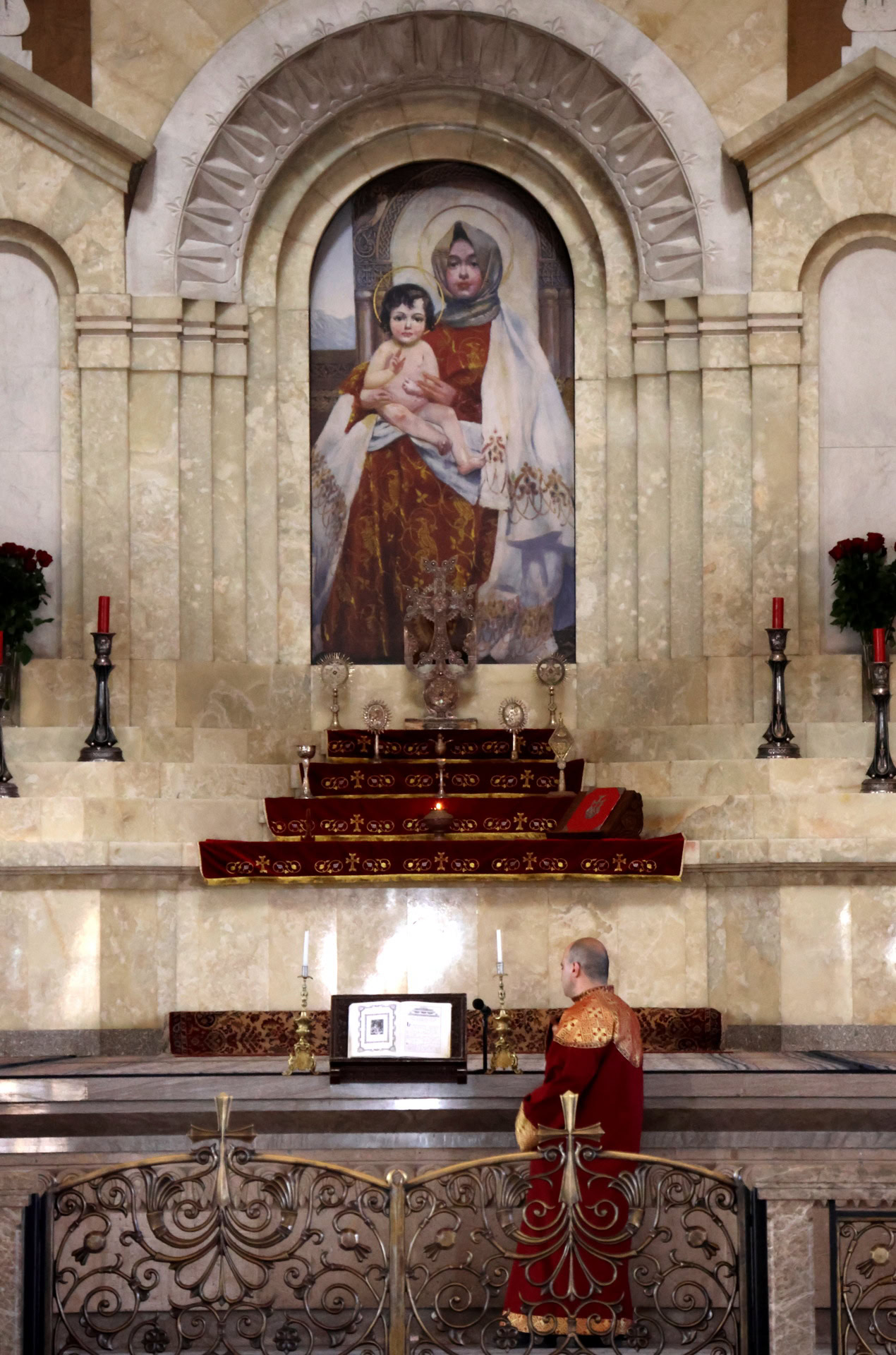
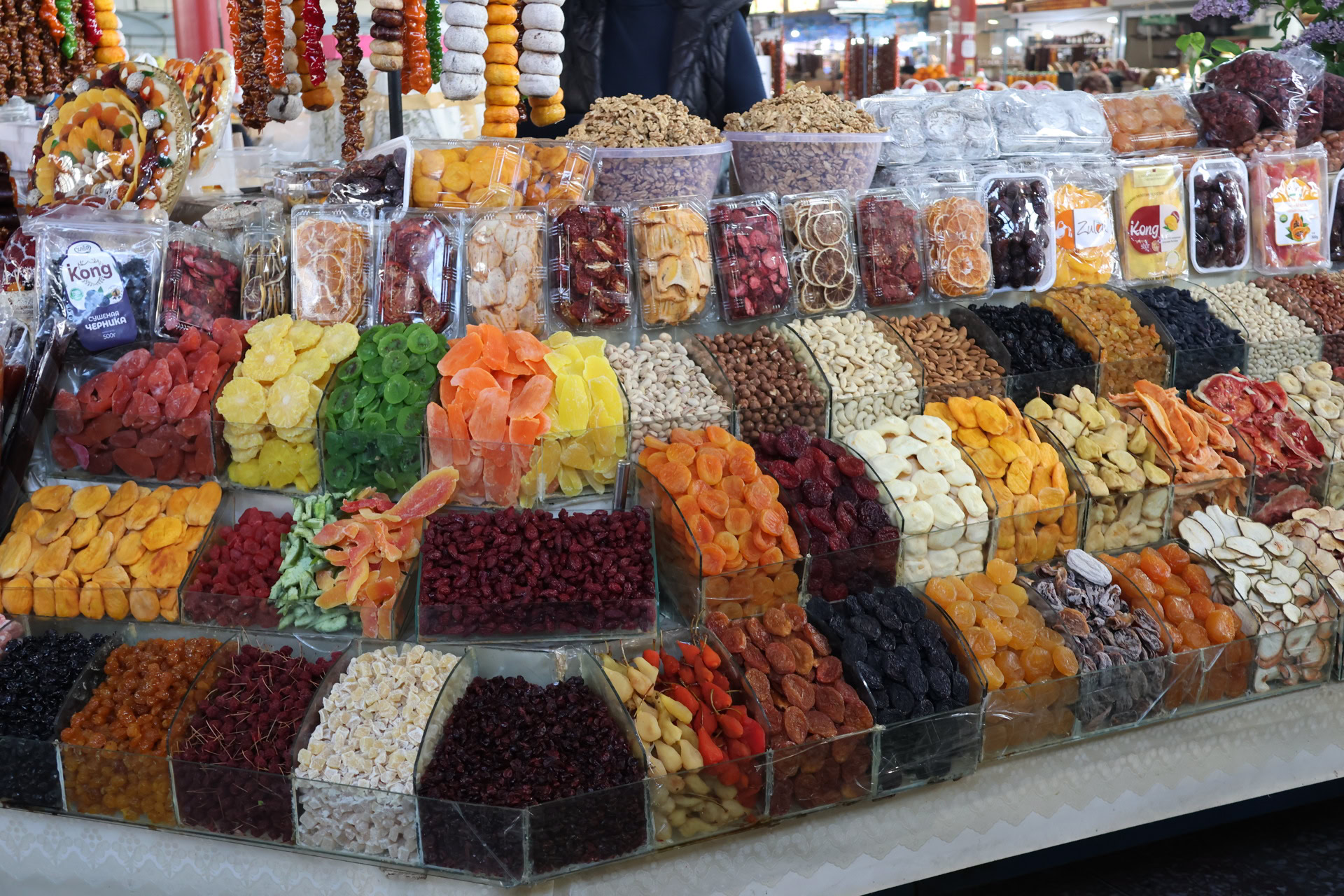
We were left with free time after the Vernissage Market (but not enough time to walk to Victory Park and back), so Di and I headed to back to our hotel with two stops on the way. The first was the relatively new but very tasteful and impressive Saint Gregory the Illuminator Cathedral, where a liturgy and a wedding were underway. Our second stop was the fruit market (also known as the Armenian Market) across the road from our hotel, where the dominant products sold seemed to be plastic cases of preserved fruit, arranged in very attractive, artistic designs.
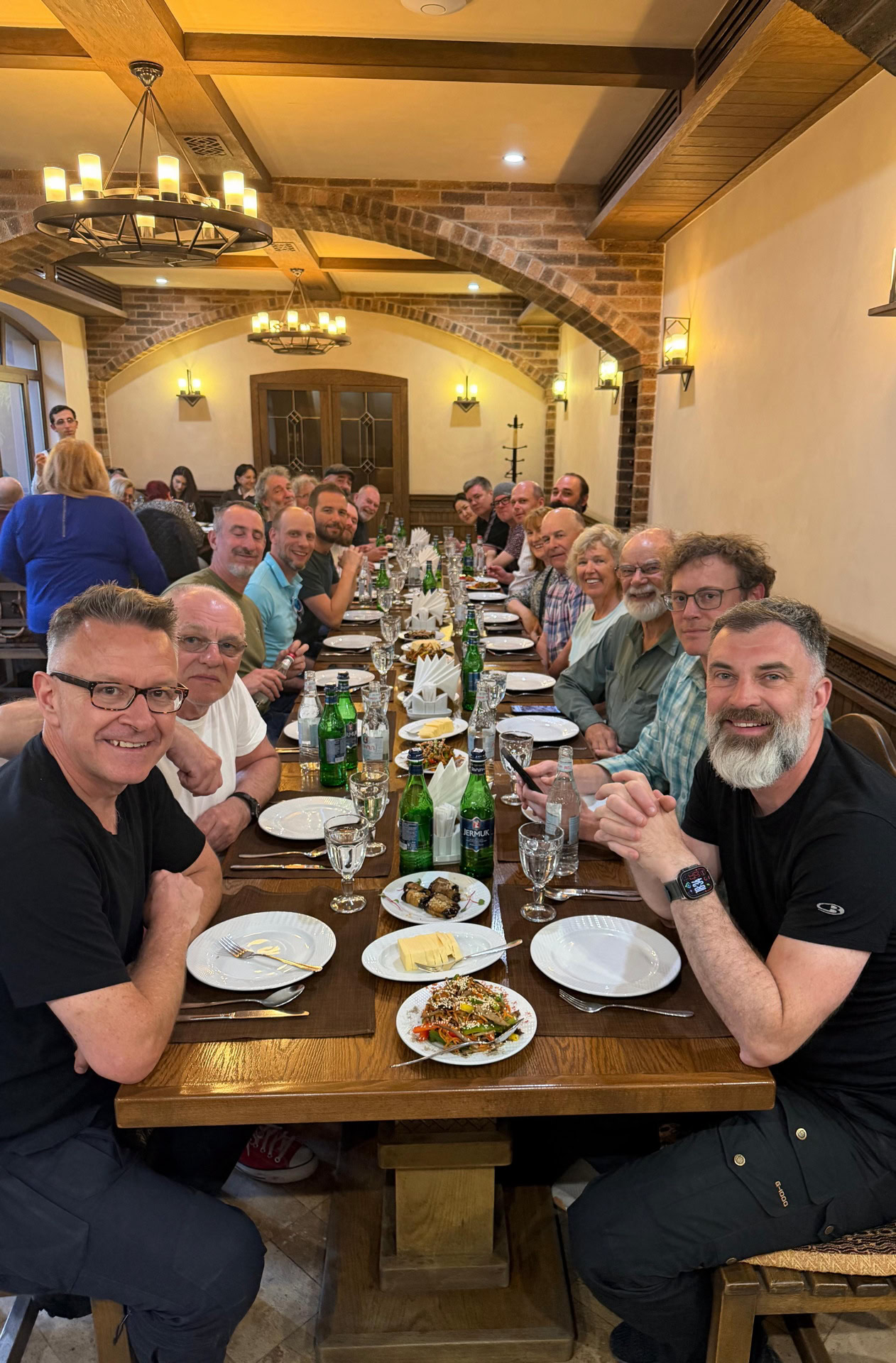
At 6:15pm we walked as a group from the hotel to the Tavern Yerevan in Movses Khorenatsi Street for our farewell dinner together. The food was fabulous and we even had live music from a traditional ensemble to accompany the meal. It was a great end to a memorable fortnight together with a fabulous diverse group of fascinating, curious, perceptive fellow-travellers.
Well – almost the end. At 12:30am, we took a minivan from the hotel to Yerevan’s Zvartnots International Airport to catch our 3:00am flight to Istanbul (Turkish Airlines flight TK359 in an Airbus A321neo, registration TC-LTE). When we arrived at our hotel in Istanbul, the Delta Levent (generously provided for three nights by Turkish Airlines for free), it was 5:45am (one hour time difference from Yerevan). Generously, the hotel allowed us to have an early check-in, for which we were deeply grateful. Di and I were certainly ready for our three days of rest and sleep-ins in Istanbul despite the cold, windy, wet weather. It proved to be a great opportunity to reflect on the previous fortnight’s fairly hectic but absolutely wonderful travels, the tremendous experiences and the new friends we had made.