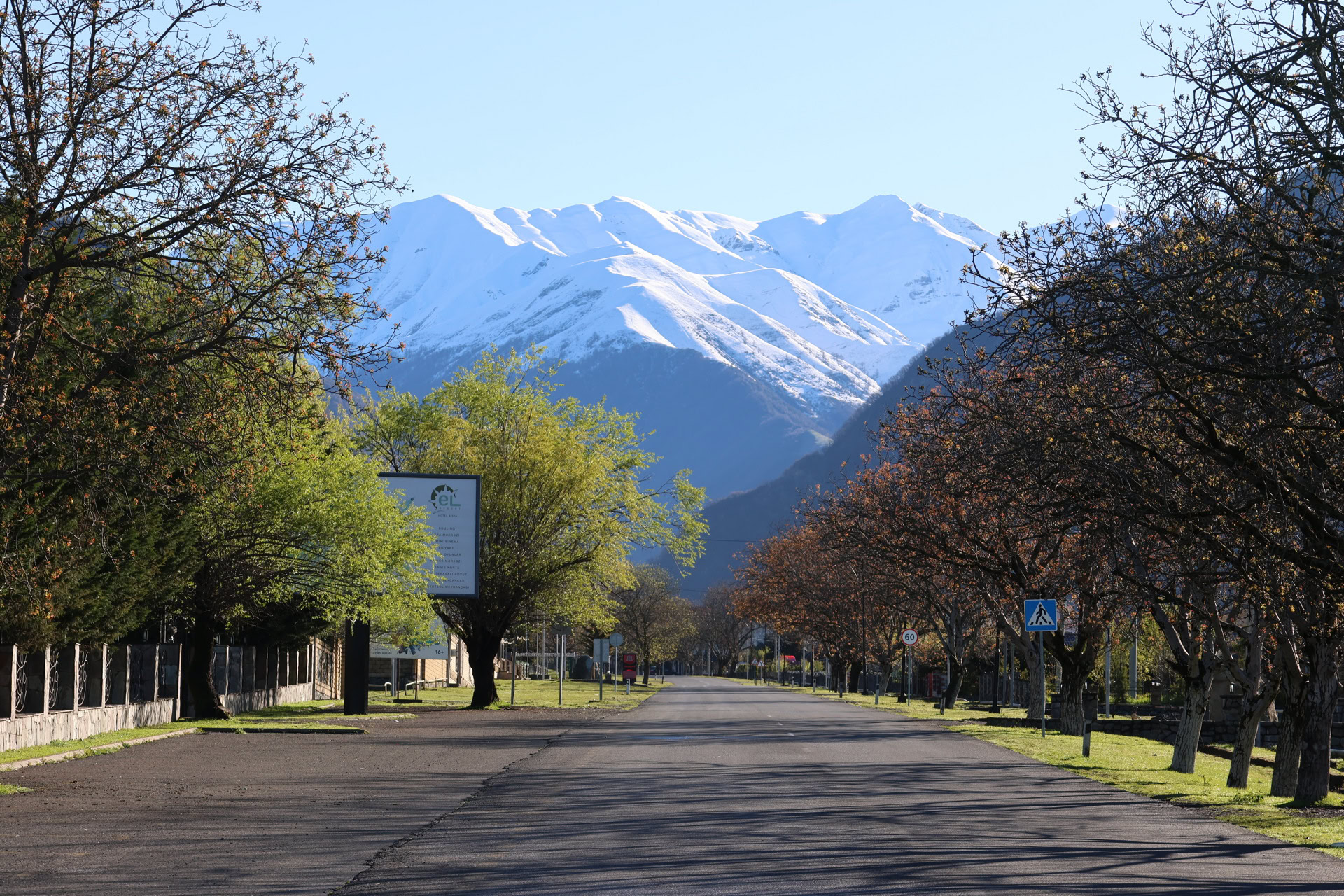
After a couple of days of truly lousy weather, we were thrilled to wake up to crystal clear (if still chilly) weather with fine views from our window of overnight fresh snow on the surrounding mountain tops.
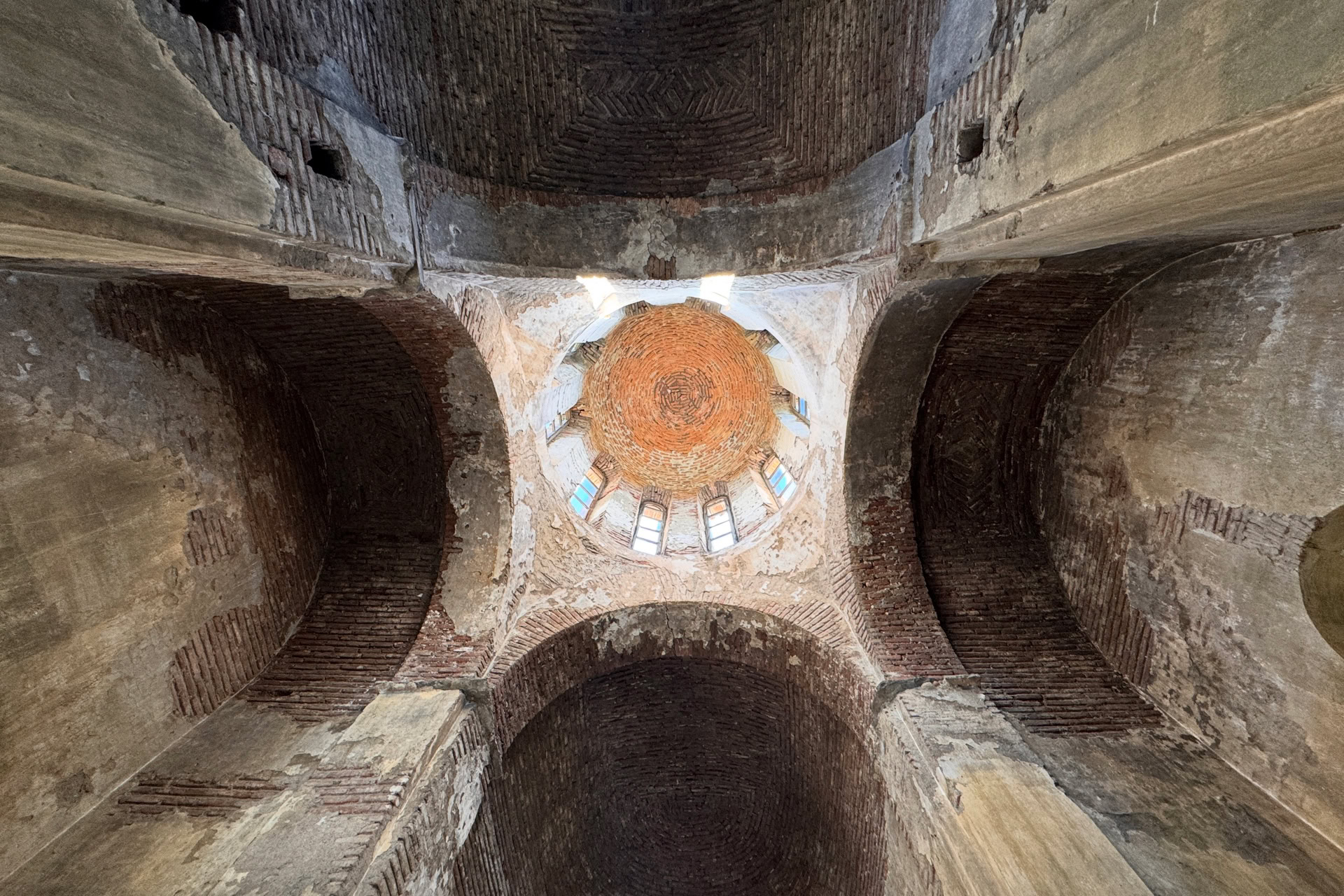
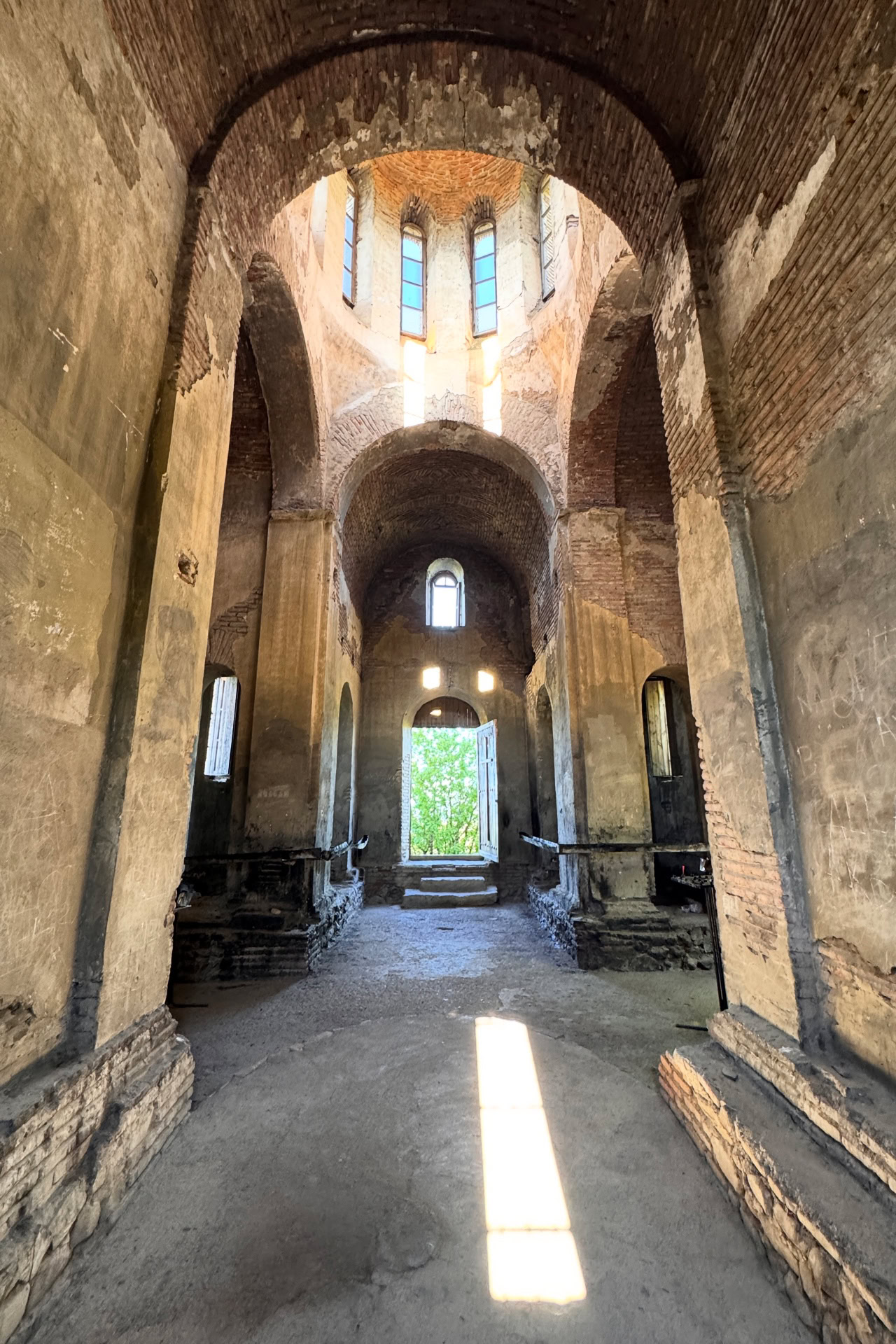
Compensating for the previous day’s abandoned visit to Kurmukhi Church, we drove to the foot of the short 800 metre walk near the edge of Gakh and hiked up the short track to the building. This Georgian Orthodox church was first built in the 12th century and offered beautiful views over the surrounding rolling green hills. It is still used for an annual church service by Georgian Orthodox worshippers, and interestingly, also has a nearby cliff wall stained black where animistic sacrifices are sometimes conducted by locals.
Descending the 800-metre track back to our bus, we then drove north-west to the border crossing between Azerbaijan and Georgia at Lagodekhi, a drive of 75 kilometres that took almost an hour and a half. The border crossing was fairly painless, despite having to walk almost a kilometre between the Azerbaijani and Georgian Immigration stations across the bridge that spans the Matsimistskali (or Matsimistsqali or Matsimi) River which forms the international border. (This is the Georgian name; Azerbaijanis call it the Ganikh, or Qanıx, River – transliterations of place names are complicated in the Caucasus!).
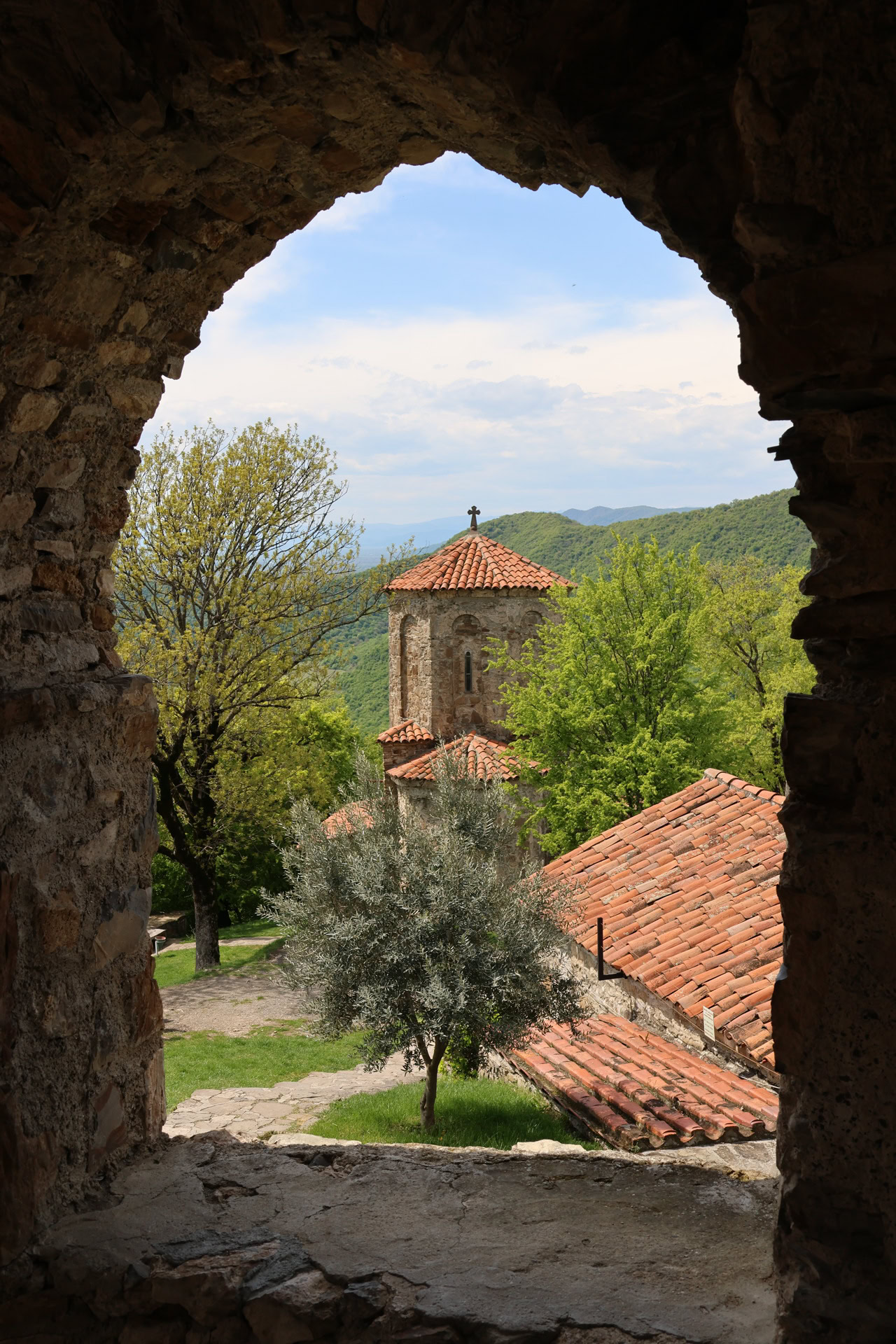
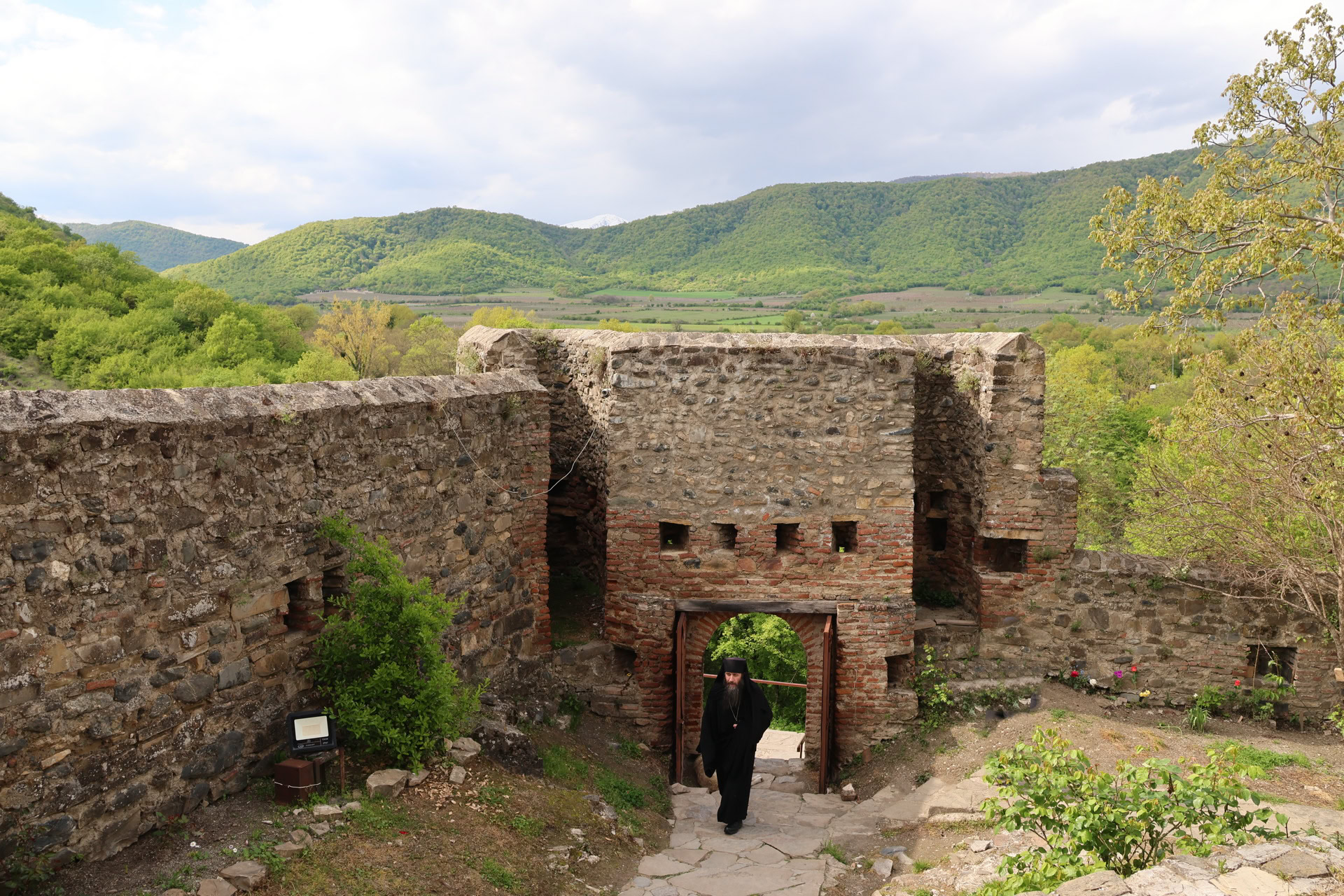
After converting currency from Azerbaijani manat into Georgian lari, a further hour and a half driving through beautiful green countryside and small towns brought us to Nekresi Monastery. This Georgian Orthodox monastery was fascinating. Set on a very steep hill, we used a local bus to cover the uphill two-kilometre journey up to the monastery, after which we were rewarded by fabulous views across the hilly countryside and equally fascinating interiors.
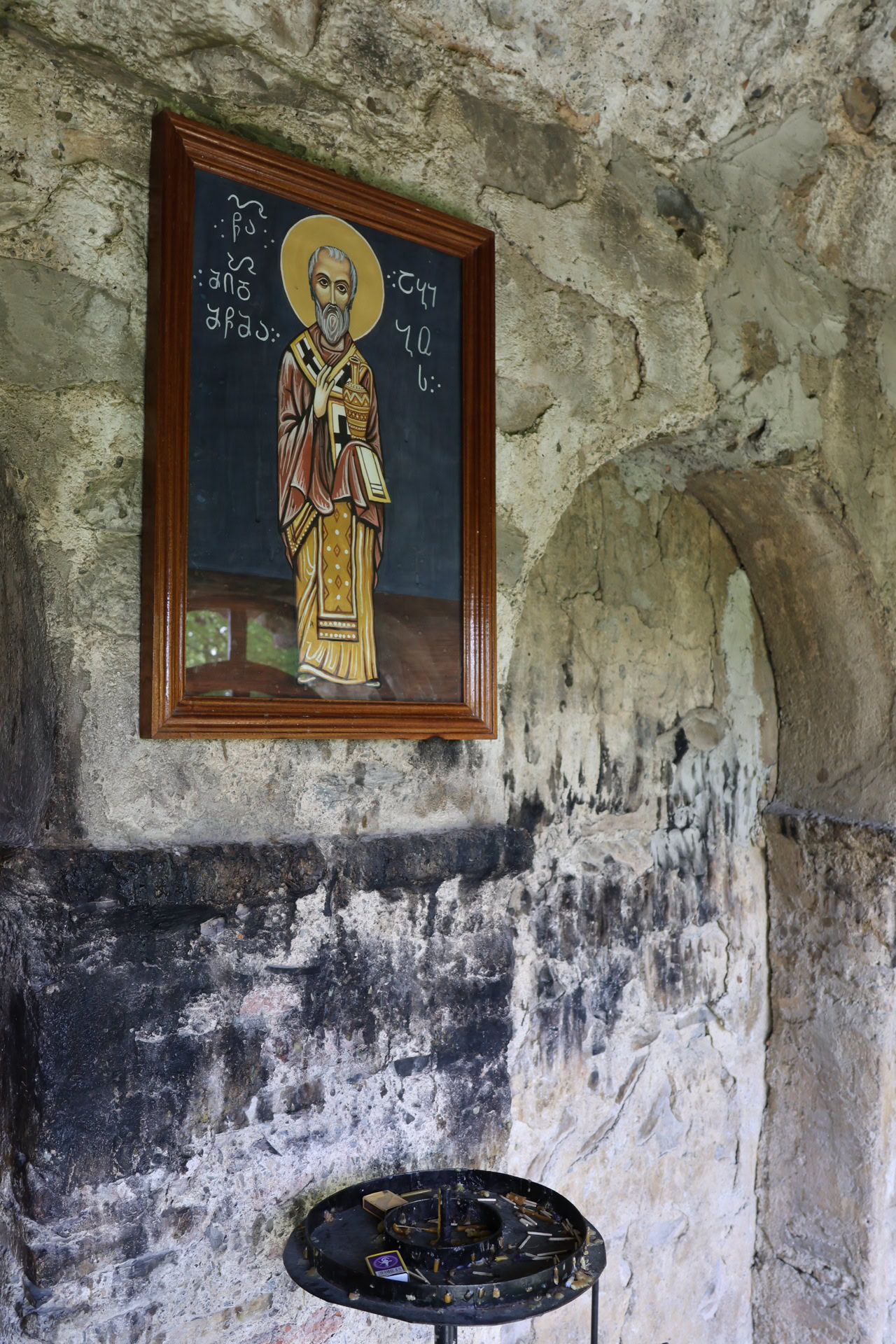
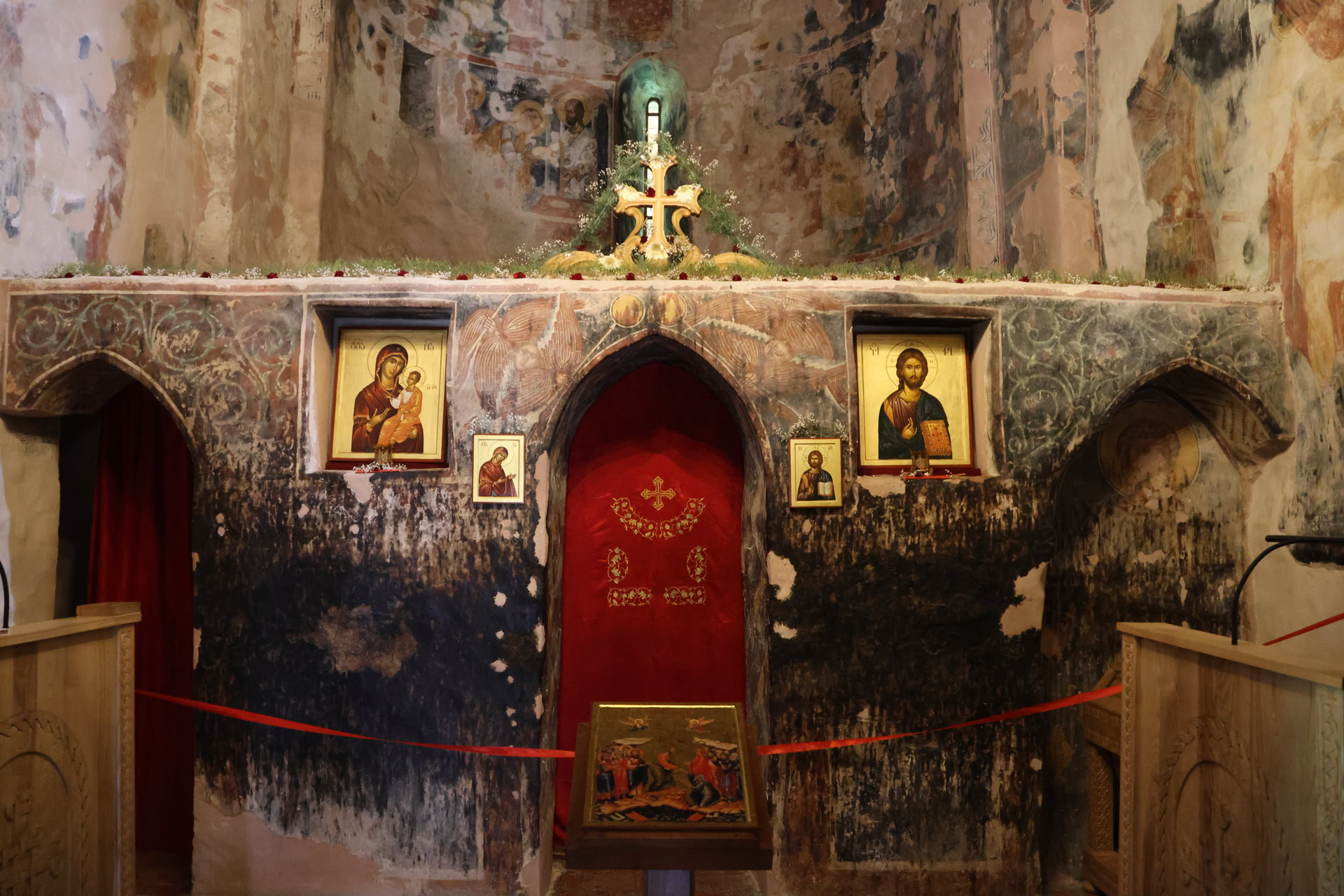
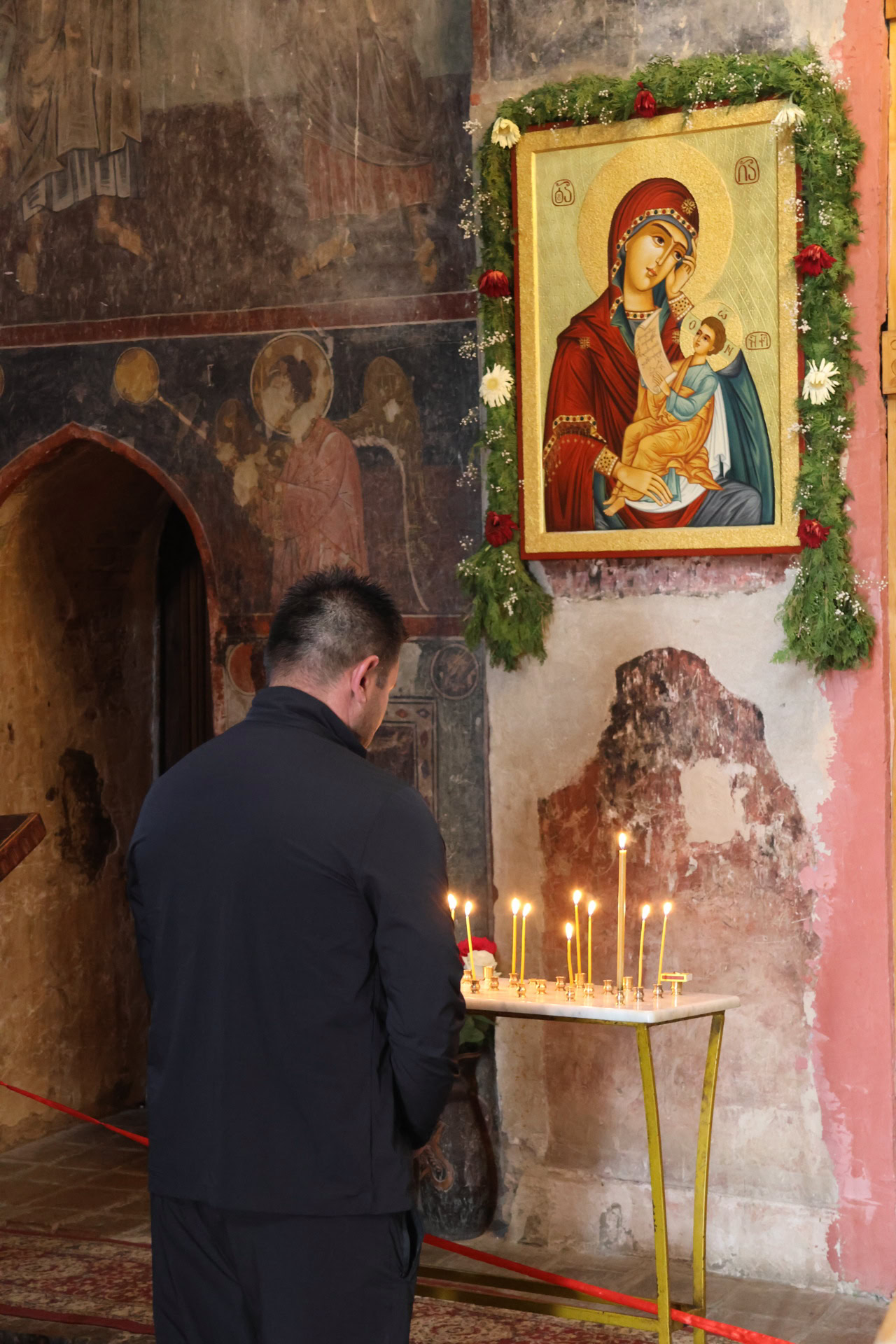
Founded in the 6th century, the monastery’s interiors featured colourful (if sometimes faded) frescoes of biblical scenes (and ancient donors and patrons), relics of saints’ bones, a mortuary chapel, wine-making cisterns, and lots more. It was a fascinating introduction to Georgian Orthodox beliefs that are central to Georgia’s identity, being only the fourth nation in the world (after Armenia, the Roman Empire and Ethiopia) to adopt Christianity way back in the year 330. Descending the steep track on foot to the base of the hill gave us further opportunities to admire the beautiful green countryside of the monastery’s surrounding region
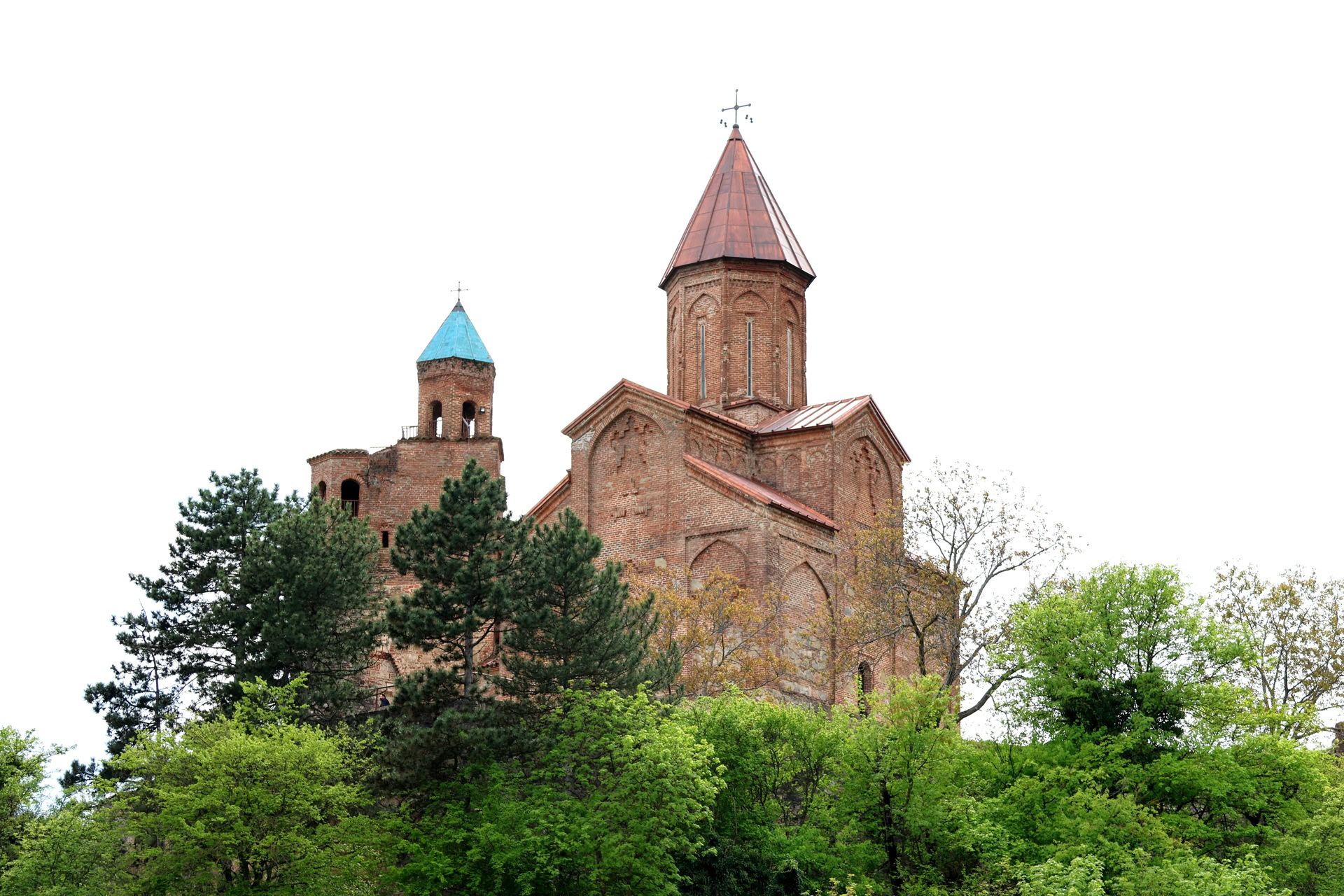
A short 15-minute drive brought us to Gremi, a 16th century complex comprising a museum (which I didn’t enter) and an active church which, like Nekresi, was situated on a hill with a magnificent view of the surrounding countryside. Although not as spectacular as Nekresi, Gremi was a worthwhile stop and an opportunity to see another Georgian Orthodox church with active worshippers.
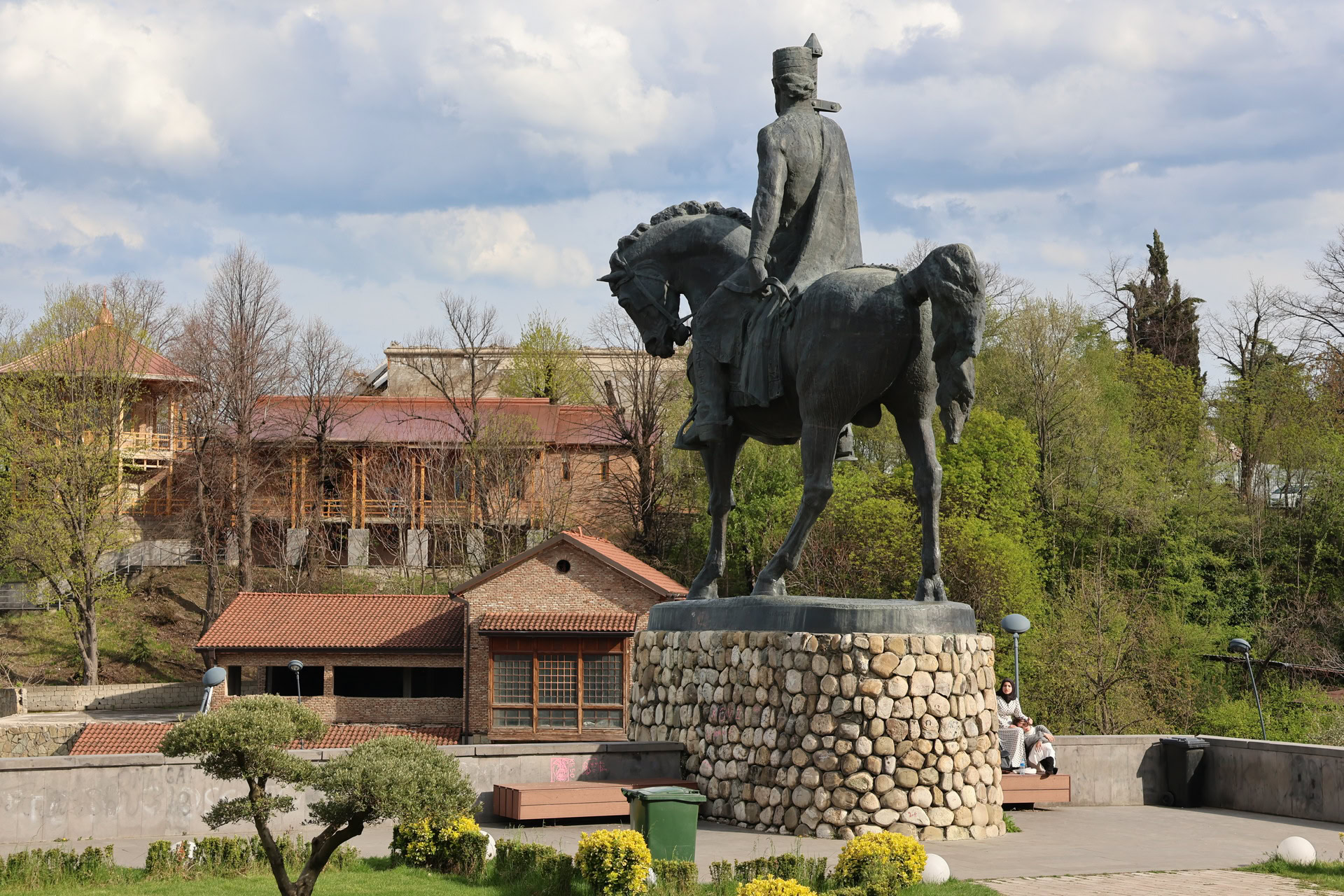
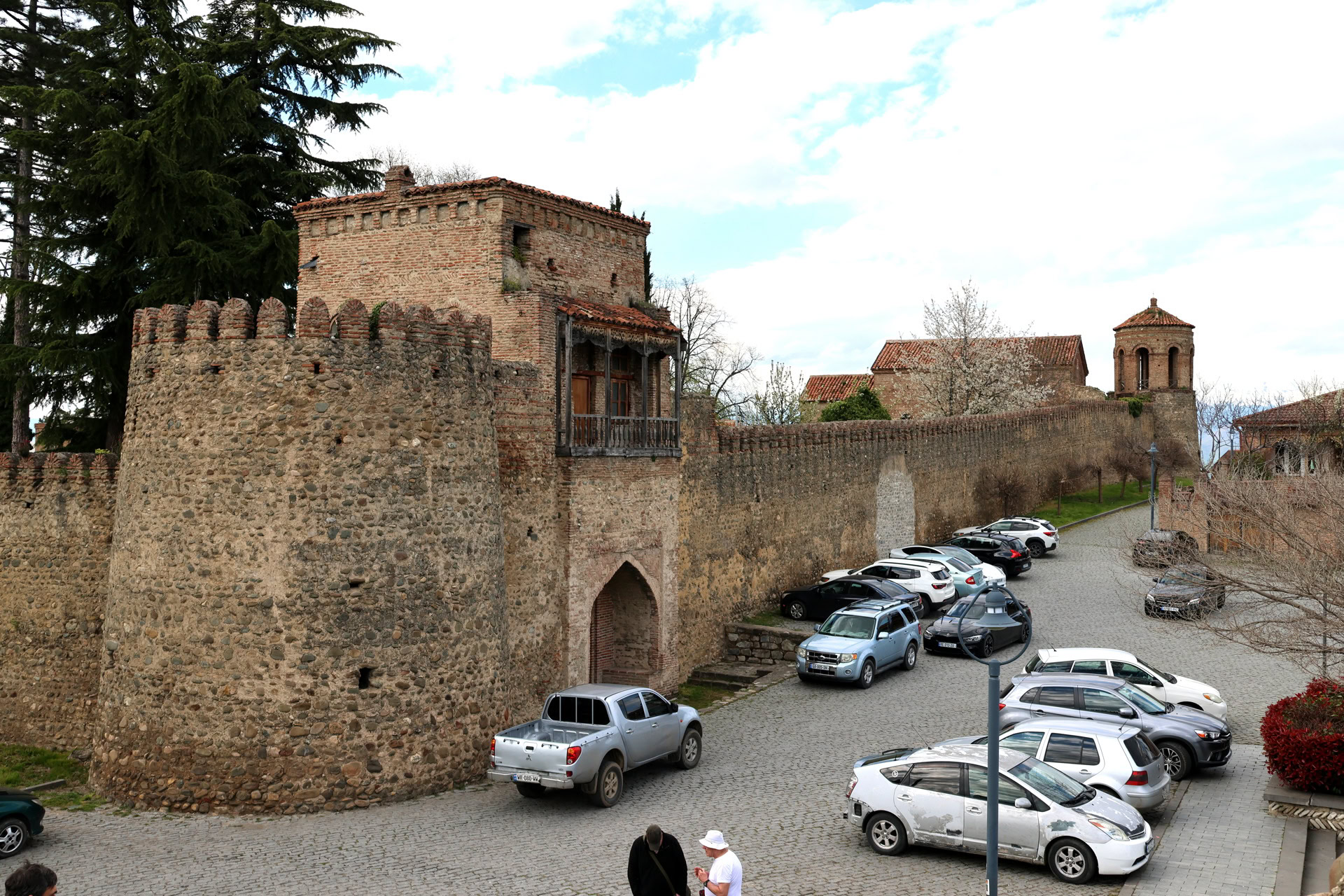
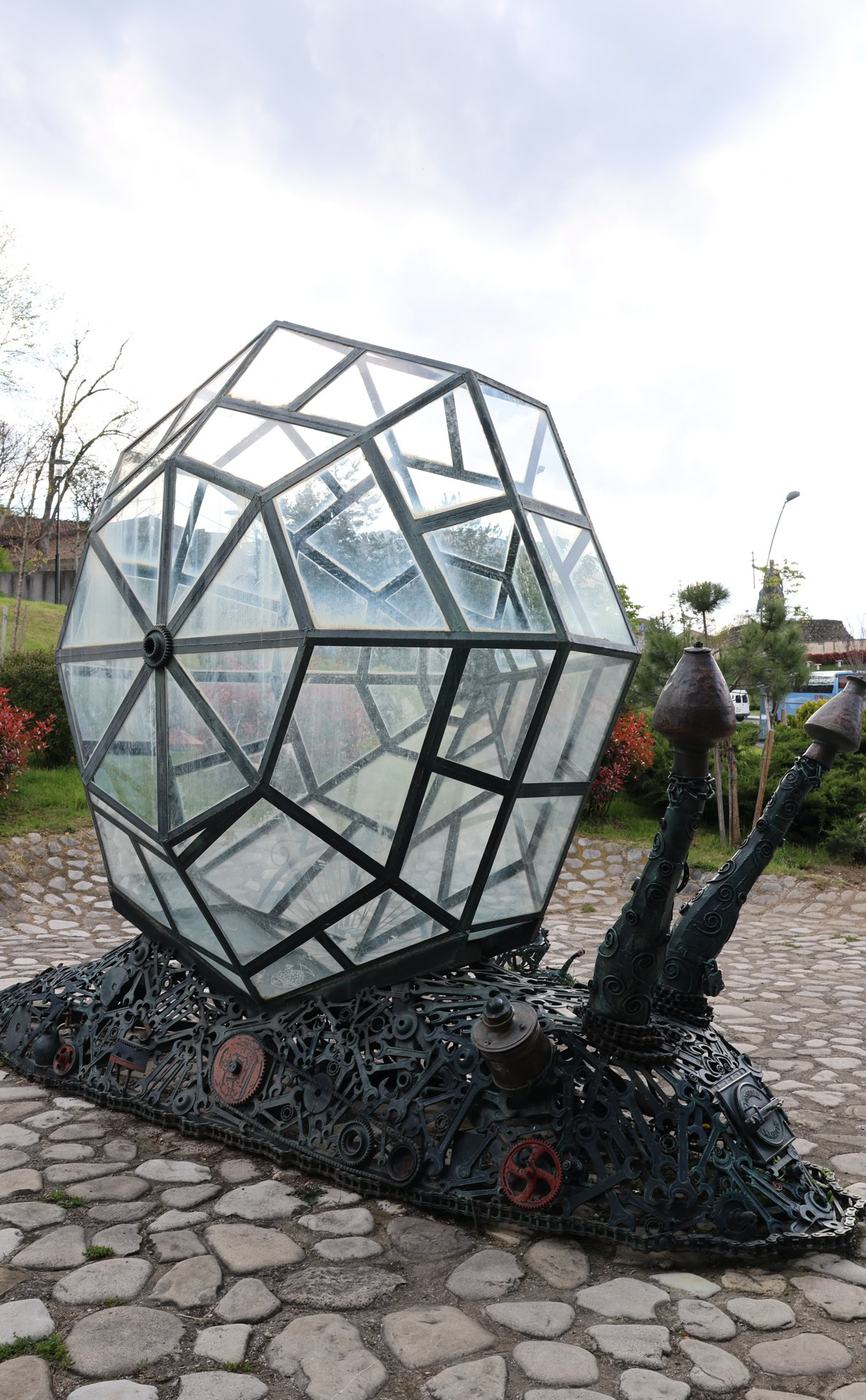
Our destination for the day was the small city of Telavi. With a population of about 17,000 people, Telavi is the administrative capital of Georgia’s Kakheti province. Upon arrival, we did a walking tour of the central city, visiting the wine spirit statue, walking around the exterior of the fortress walls, seeing the Edward II equestrian statue, the apparently famous 900 year-old plane tree, and finishing with the much newer ensemble of glass and metal sculptures of snails.
We checked into our hotel, the Hotel Alazani Valley, located towards the northern end of the city. Generously rated with 3 stars, our room had a good bathroom but woeful beds and a somewhat unstable wooden balcony, but nonetheless offered fabulous views across the run-down Brezhnev-era apartment blocks across the plains to the beautiful snow-capped range of mountains beyond.
Our dinner that evening was in a private resident’s house at 18 Daniel Chonkadze Street, in the southern end of the city. This was generally agreed to be the best meal of the entire three-country Caucasus trip, with very generous servings of home-grown, home-made Georgian food, accompanied (for those who wished) by wine from our host’s own vineyard. It was truly a meal to remember!