
I woke this morning to the clearest skies I had experienced so far in Budapest. The view from my hotel room was sensational with the morning sun illuminating the hills across the river to the west in glorious golden sunlight.
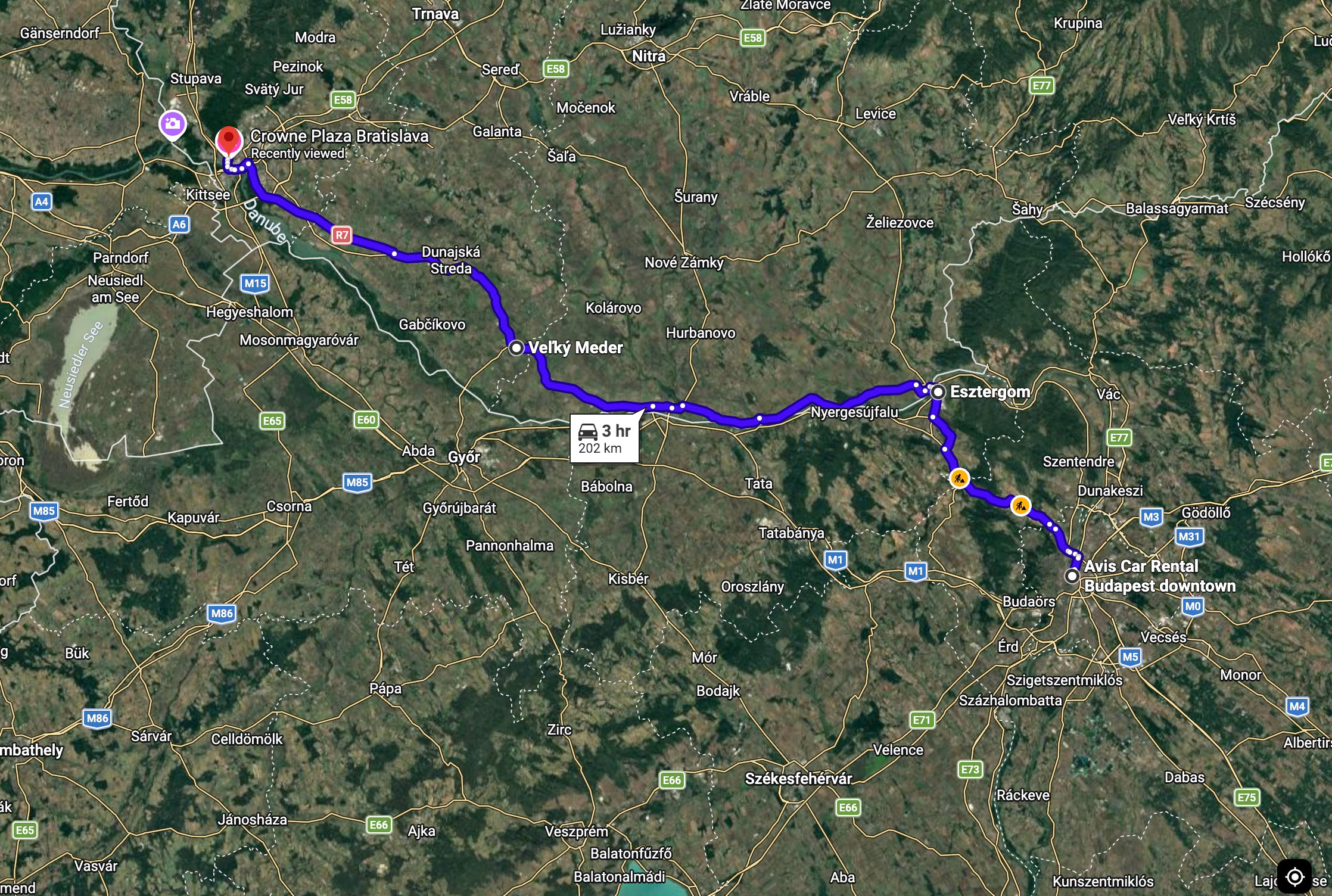
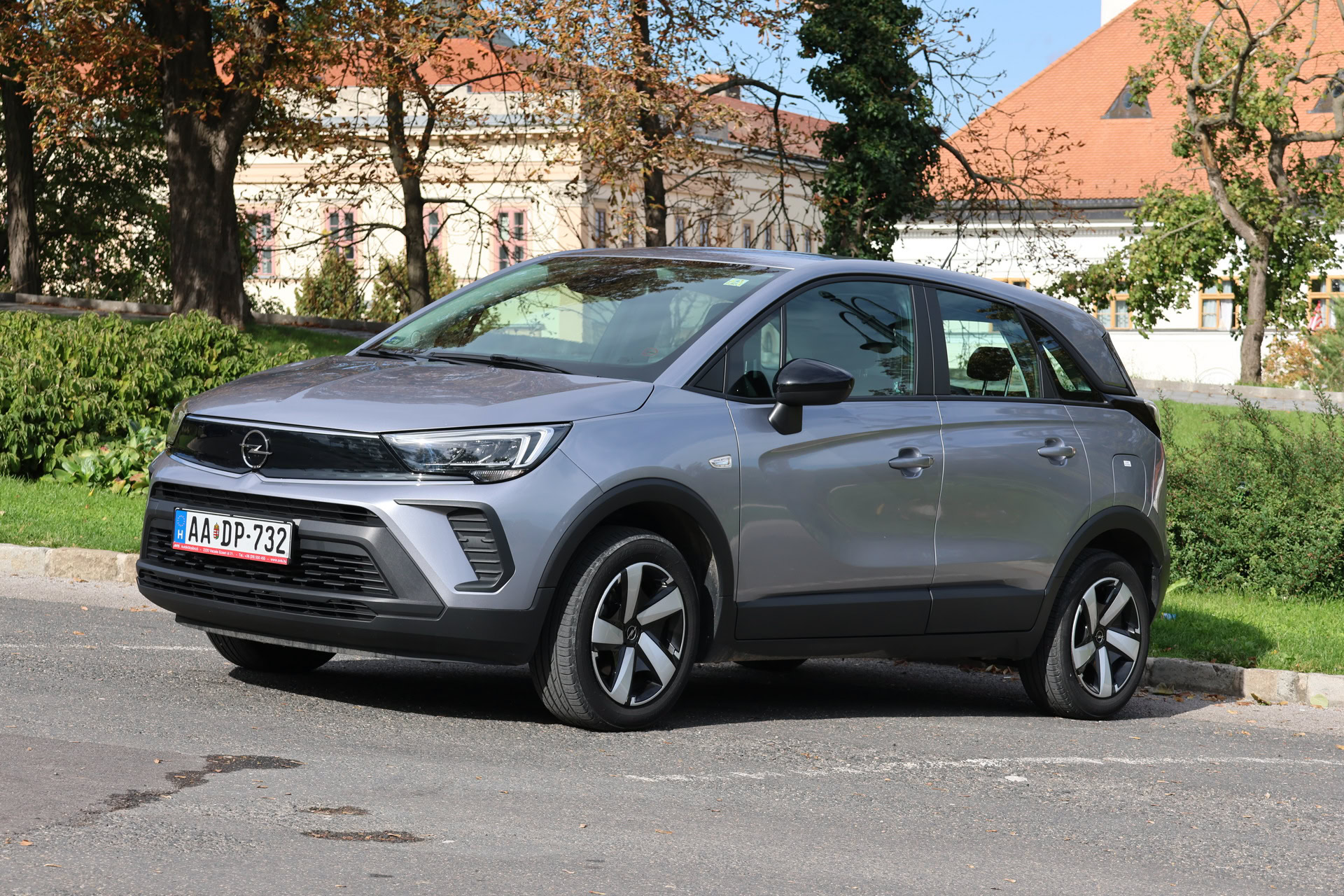
However, I could not stay long to admire the views as I had arranged to collect a rental car and begin my long drive. I had booked a car through the Avis office that was a relatively short 850 metre walk from the hotel. Having collected the car, it took longer to find the road I needed north from the city centre because the area near the Avis office was a dead zone for phones (and I was using Google Maps for navigation), and also because of the plethora of short, narrow one-way streets and dead ends. Eventually, drawing upon every instinct of my geographical training, I was able to get onto the highway heading north-west and I made my way on the 50-kilometre drive to the border city of Esztergom, a journey of about one and a quarter hours.
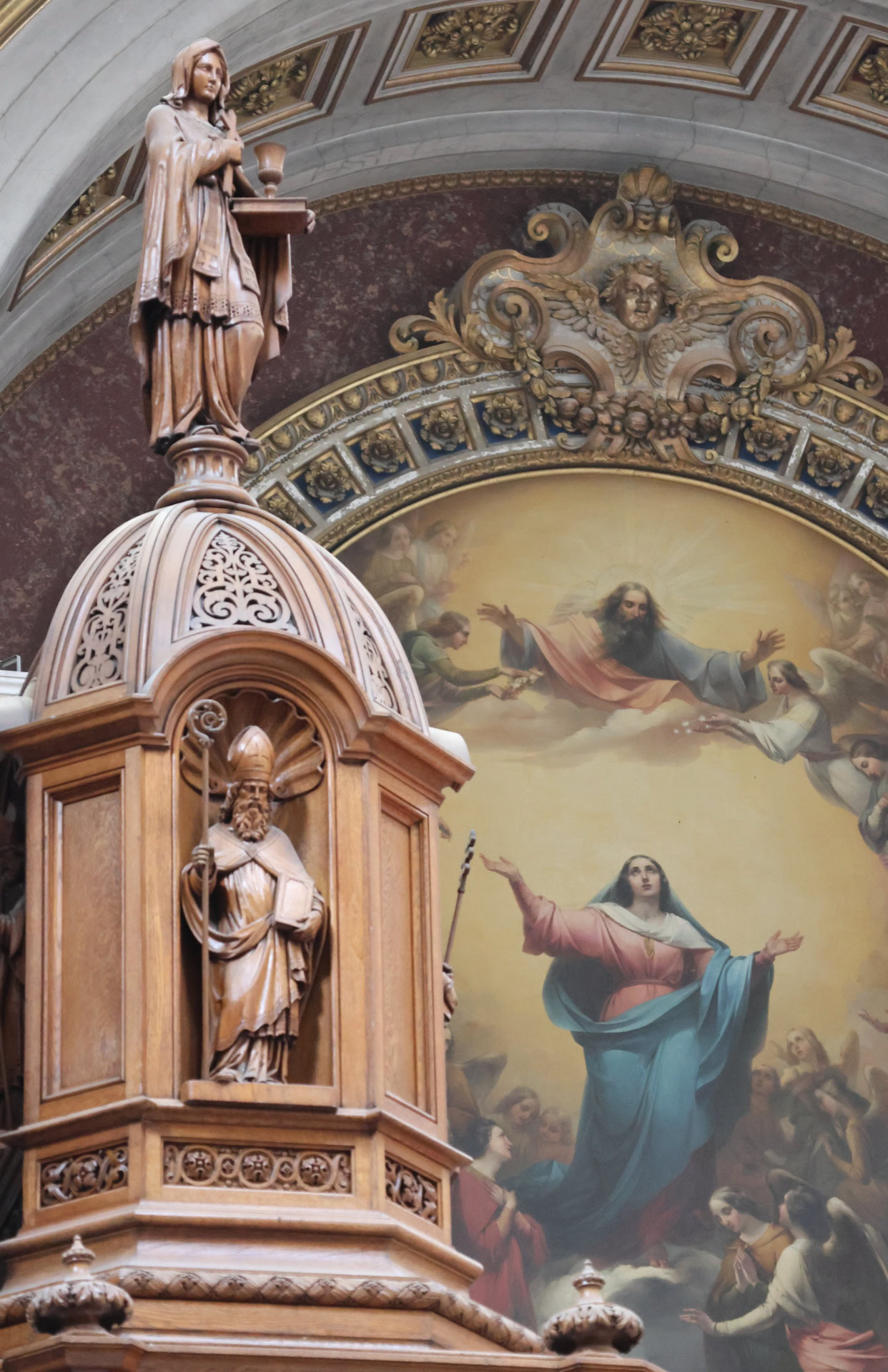
I had passed through Esztergom when driving with my family in 1987 and I was keen to see if I noticed any changes. With surprisingly little difficulty I found the place where we had stopped in 1987 (on 26th July to be precise), the elevated platform beside Esztergom Basilica that looked west across the Danube River which formed the national border with what was then Czechoslovakia (now Slovakia). I even found the stone wall where I had photographed my daughter and son that looked across to the broken bridge which had once spanned the river to join the two countries, still unrepaired after being blown up by retreating German troops in December 1944.
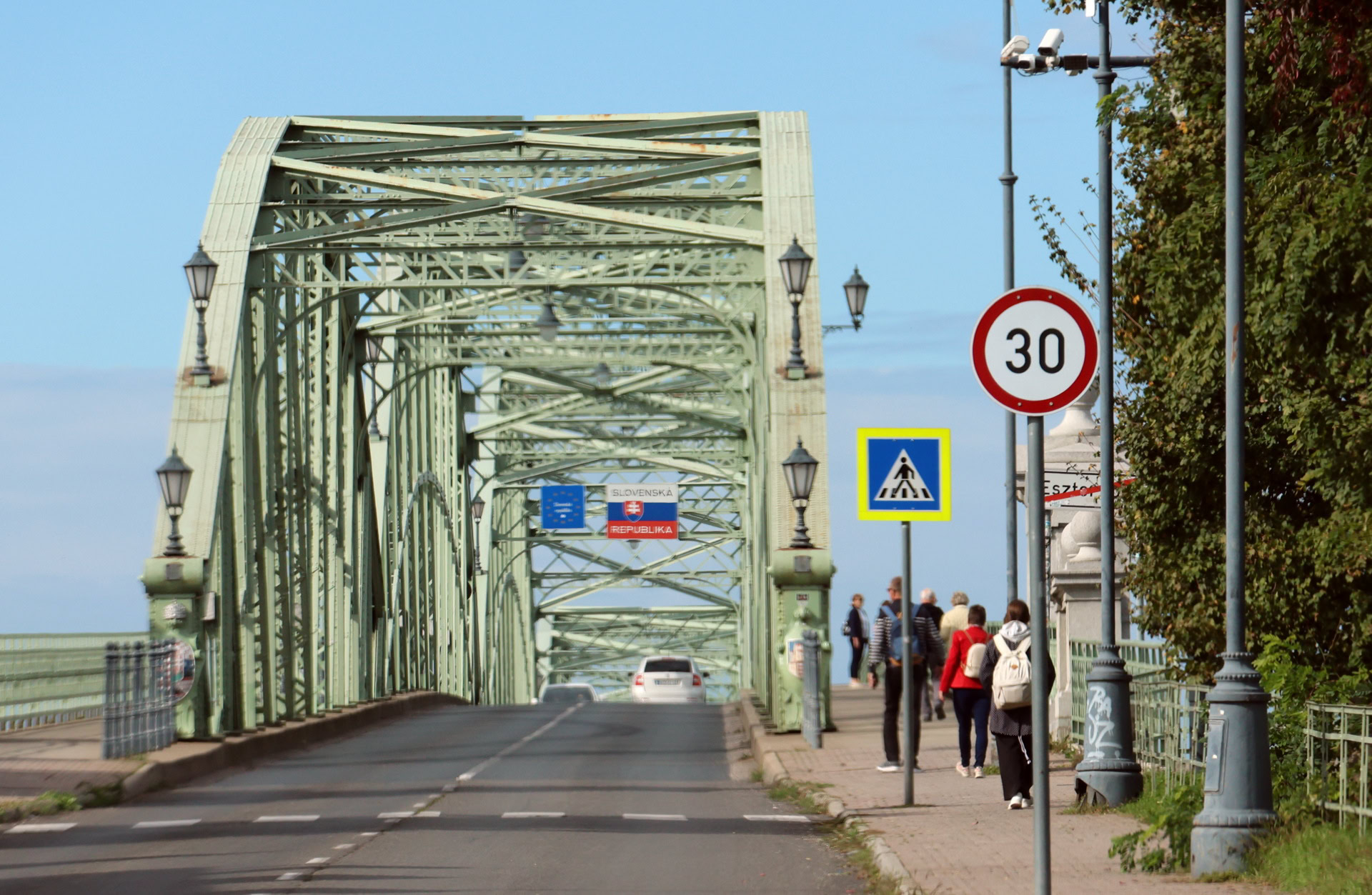
It was good to see that the bridge, now known as the Mária Valéria Bridge, had been repaired in the subsequent 37 years, because it was the route I intended to use to drive into Slovakia. I did so, and it was almost a surreal experience to be driving across a bridge that didn’t fully exist when I had last visited.
There were no immigration procedures required to enter Slovakia as both nations are now members of the European Union and members of the border-free Schengen area – vastly different to the strict visa requirements and intense entry procedures we had endured back in 1987. This time I simply drove beneath a sign at the halfway point on the bridge that read “Slovenska Republika” and I was in a different country.
There was, however, one procedure I had to fulfil upon entering Slovakia and that was to buy a vignette. This is the mandatory road toll payment required for driving on any motorways or expressways. It is fully electronic and no physical sticker is needed, being tied directly to the car’s number plate. However, it had to be purchased from a petrol station (theoretically the first one seen after crossing the border), and I soon discovered that not all petrol stations sell them. I finally succeeded in securing my vignette at the third petrol station I came to, none of which had personnel who spoke English (and, spoiler alert, I don’t speak Slovak).
The two-hour drive from Štúrovo (Slovakia’s border city with Esztergom) to Bratislava, the nation’s capital, was one of the most unremarkable I have ever undertaken. It was reminiscent of the flat drive in Australia from Hay to Balranald, but greener – although even the green colour was muted to a dull olive colour by the heavy grey clouds that had covered the skies overhead.
It was raining by the time I reached Bratislava in the mid-afternoon, and the city looked quite dreary as a result. I saw more of Bratislava’s roads than I had expected on my way to the hotel as there had been a huge effort to construct new freeways with limited off-ramps and even less signage, and Google Maps had not caught up with the changes. I eventually reached my hotel, the Crowne Plaza near the city centre, and spent the rest of the afternoon looking at the mists and heavy rain outside through my window. This was not a good time to go out for the exploratory walk I was hoping to undertake.
I was given hope of better weather the next day when the rain stopped and the skies cleared a little after sunset. That was when I saw I had a great view of Bratislava’s top landmark, Bratislava Castle, from my hotel window, beautifully floodlit against the night sky.