What teachers make
Sunday, 13 June 2010
I spent several days this week in Geneva attending meetings that focussed on educational leadership and management. It was a fascinating and energising experience, exchanging ideas with some highly impressive teachers and educational administrators, and in the case of several of the meetings, with some extraordinarily articulate, intelligent and wonderfully idealistic students.
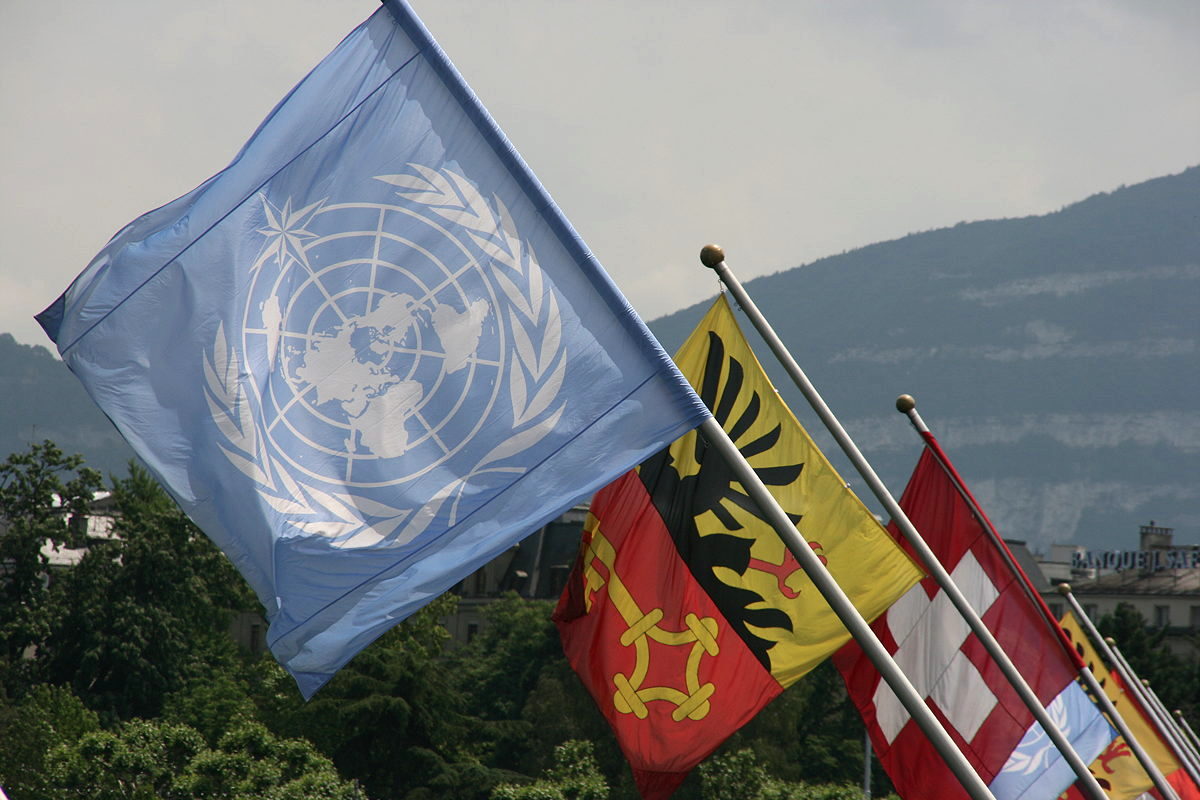
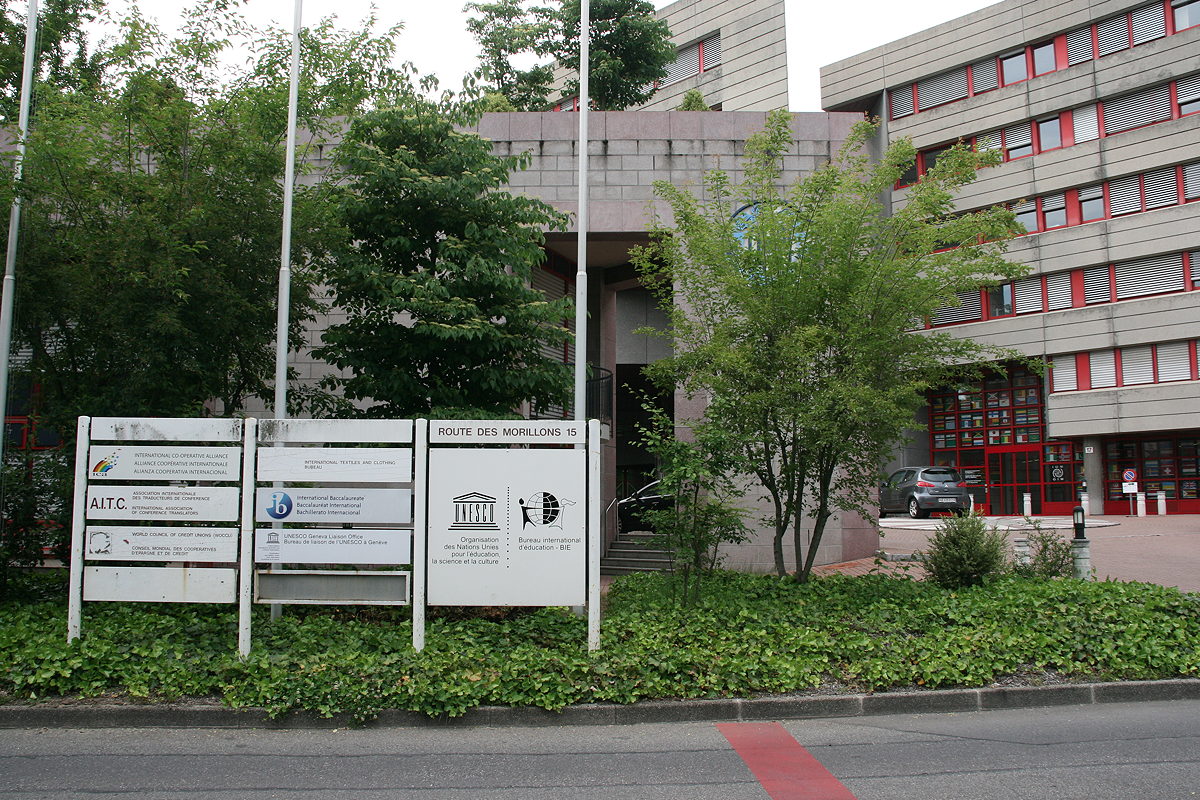
Geneva fascinated me for the unique role it plays in guiding international affairs, especially with respect to peace, development and humanitarian issues. Despite its small size, it houses the headquarters of the United Nations, the World Health Organisation, the High Commission for Refugees, UNESCO, the ILO, the Red Cross, and countless other organisations that are dedicated to improving the welfare of people across the globe. Not surprisingly, Geneva is also a centre of international education, housing the  headquarters of the International Baccalaureate Organisation. In fact, one of the minor delights of my time in Geneva was seeing the IB’s Geneva headquarters for the first time (see photo to the left).
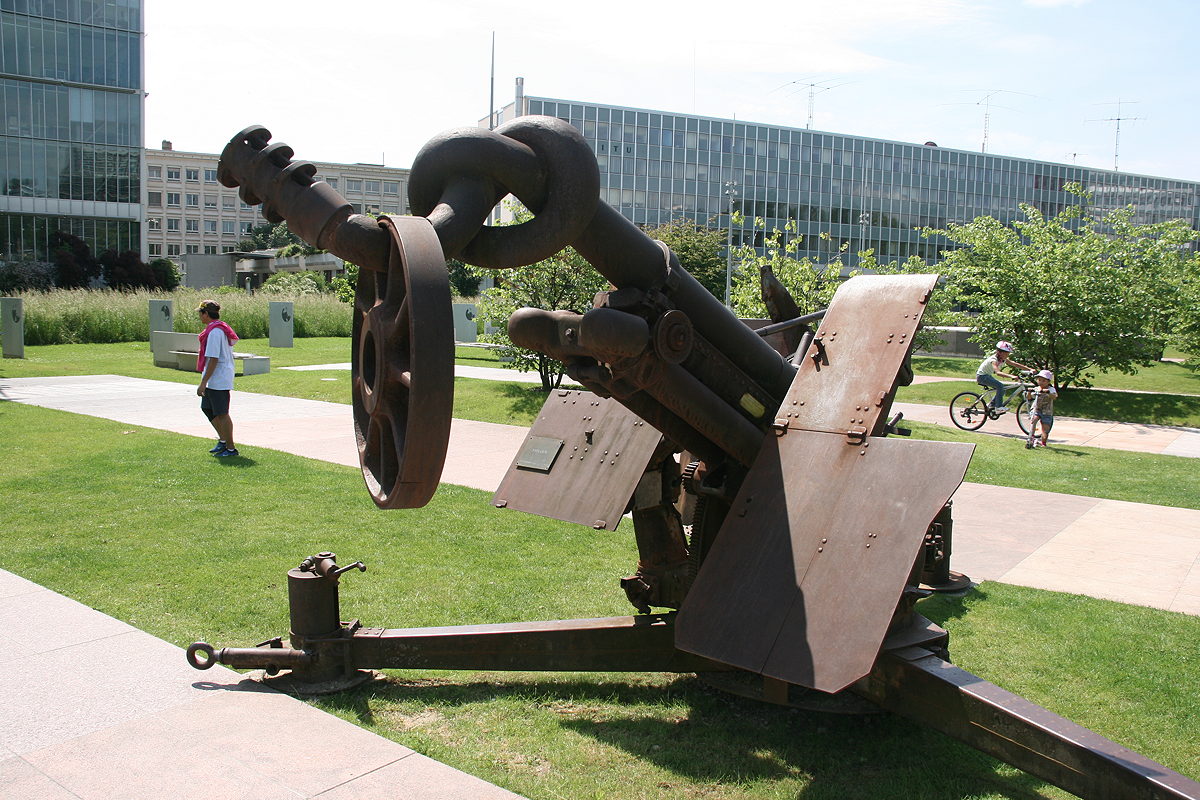
Education and peace are inextricably intertwined. As Maria Montessori famously said, “Establishing lasting peace is the work of education; all politics can do is keep us out of war.”
Working towards peace through education ought to be (and is!) one of the key goals of an international school such as mine in Hong Kong that was established with the explicit aim of equipping young people with the skills and the experiences to initiate change that makes the world a better place – not in terms of smooth or artificial rhetoric, but in authentic practice and practical reality.
What I found interesting in Geneva was to be reminded (yet again) of the extent to which the United World Colleges, and certainly Li Po Chun UWC, are so far ahead of ‘normal’ international schools in expressing and developing true global understanding. I suspect that many international schools, even those with excellent reputations, may not fully grasp the scope and potential of authentic international education. Certainly there are many around the world that tend to view their internationalism though fairly narrow and uncritical lenses such as their diverse student demographics, the fact that they teach one or more IB programs, or their bilingual or dual language programs.
In contrast, United World Colleges such as LPCUWC add several significant extra dimensions to their already wide national and cultural diversity. For example, we actively and specifically seek students from diverse economic, social, academic and cultural backgrounds through a process of selection that actually engineers what I call “diverse diversity” (or multi-dimensional diversity). Despite claims to the contrary, most international schools are financially selective and simply don’t consider enrolling refugees, or students who need full scholarships on the basis of financial need, or students who require that even travel and pocket money is provided by the school. From the perspective of financial viability this is understandable, but at United World Colleges, ‘diverse diversity’ is the norm, even down to the diverse ways in which the common philosophy is applied in our different contexts, and we are educationally much richer as a result. Nelson Mandela’s description of United World Colleges as “cells of innovation” is apt indeed.
Speaking personally for a moment, this is one of the key reasons that I love to be involved in international education. More specifically, it is why I delight in working directly with my students, taking groups to help in (for example) orphanages in Cambodia, leprosy villages in Yunnan and medical clinics in Guizhou. It is why I believe it is so important to organise the annual trips for students to North Korea, where issues of peace and conflict are so starkly confrontational that they demand deep consideration at a personal level by every student who participates.
It is obvious when you think about it that international education can only achieve this lofty goal of achieving peace, respect and understanding as a result of the hard work of inspired and dedicated teachers.
In that context, it is regrettable that so many governments, and amazingly even some school boards, seem to resent teachers’ remuneration and professional development as costs to be incurred with some antipathy. I see it very differently. Teachers are by far the most important resources that any school possesses, and therefore I feel quite strongly that remuneration and professional development should be regarded as investments rather than expenses - investments in the school’s future success, quality and viability.
A few years ago, a (former) teacher by the name of Taylor Mali summed up this notion with great eloquence in a recitation at the Bowery Poetry Club in New York. Entitled “what teachers make”, it recounted a hypothetical dinner conversation between a lawyer and a teacher about the worth of each profession. Fortunately someone was there to record the performance, which lasts only three minutes, and it has subsequently been uploaded to YouTube. Please let me share it with you through the link below ….